Tag Archives: innovation

When AI Becomes Too Powerful To Export: Anthropic, Fable 5, Mythos 5, and the moment AI became national security

There are moments in technology when you can almost hear the gears of history clicking into place.

Not loudly. Not with fireworks or a bloke in a shiny suit standing on stage telling us that everything has changed. More often, it happens quietly, in a blog post, a government letter, or a hurried statement published late in the day.

This feels like one of those moments.

Anthropic has announced that it is suspending access to its Claude Fable 5 and Claude Mythos 5 models after receiving a directive from the US government. The reason given is national security. The result is that Anthropic has had to abruptly disable the models for all customers, because the order reportedly prevents access by any foreign national, whether inside or outside the United States.

That even includes foreign national Anthropic employees.

Just pause on that for a moment.

We are not talking about a graphics card being shipped overseas. We are not talking about a missile guidance chip, a military radar system, or some piece of exotic lab equipment. We are talking about access to an artificial intelligence model.

Software has just been treated like a controlled strategic asset.

What are Fable 5 and Mythos 5?

Only a few days before this happened, Anthropic had announced Claude Fable 5 and Claude Mythos 5.

Fable 5 was presented as a highly capable model for general use, sitting above Anthropic’s previous Opus class models. It was described as being especially strong at software engineering, research, visual understanding, long running tasks and complex knowledge work.

Mythos 5, meanwhile, appears to be the more restricted version, intended for trusted partners, particularly in areas such as cyber defence and critical infrastructure. In simple terms, Fable 5 was the version with more safeguards. Mythos 5 was the version where some of those safeguards could be lifted for trusted users.

Anthropic’s argument was that these systems could do a great deal of good. They talked about helping cyber defenders secure important software, assisting with scientific research, and accelerating work in areas such as life sciences.

And that is where the difficult bit begins.

The same capability that helps a good actor find vulnerabilities in software can also help a bad actor find vulnerabilities in software. The same intelligence that can help researchers solve hard problems can also lower the barrier for people who should not be anywhere near those tools.

That is the uncomfortable dual use problem at the heart of advanced AI.

The jailbreak question

According to Anthropic, the US government’s concern appears to be around a possible way of bypassing, or “jailbreaking”, Fable 5’s safeguards.

A jailbreak in this context means finding a way to persuade the AI to ignore or work around its safety systems. Anyone who has used AI tools for a while will know that safety systems can sometimes be a bit clumsy. They can refuse harmless requests, misunderstand context, or behave like an over cautious supply teacher on a school trip.

But at the frontier end of AI, the stakes are rather higher than asking for a dodgy limerick or persuading a chatbot to roleplay as an unfiltered assistant. Here, the concern is that a model might be coaxed into helping with cybersecurity work in a way that could be misused.

Anthropic says it has only received limited evidence of a narrow jailbreak and that the vulnerabilities involved were already known and relatively minor. It also says other publicly available models can identify similar issues without needing any special bypass.

That is important, because it gets to the heart of the argument.

If every powerful AI model can be jailbroken in some narrow way, does that mean none of them should be released?

Or does it mean the industry needs layered defences, monitoring, responsible access programmes and clear rules?

Anthropic clearly believes the latter.

A sudden and very public clash

What makes this story so striking is not just the safety issue. It is the speed and bluntness of the response.

Anthropic says it received the directive at 5.21pm Eastern Time and that the letter did not give specific details of the national security concern. The company is complying with the order, but it also says it disagrees with the decision and believes the action was not transparent, fair, clear, or grounded in technical facts.

That is unusually direct language from a major AI company.

It is also a sign of the times. The relationship between AI labs and governments is going to become one of the defining technology stories of the next few years. These companies are building systems that may become essential to business, science, software development, education, defence, healthcare and almost every corner of modern life.

Governments are not going to sit back and treat that as just another app.

When AI Becomes Too Powerful To Export: Anthropic, Fable 5, Mythos 5, and the moment AI became national security

The export control problem

For years, the big AI export control story has mostly been about chips. Who can buy the most advanced GPUs? Which countries can access the hardware needed to train frontier models? How do you stop sensitive capability moving across borders?

This Anthropic story changes the focus.

Now we are talking about controlling access to the model itself.

That opens up a whole set of awkward questions.

  • What happens if a UK business builds a product around an American AI model and access is suddenly removed?
  • What happens to customers who have paid for a service?
  • What happens to employees of the AI company who are not US citizens?
  • What happens when powerful models are used through cloud platforms, APIs, apps and enterprise tools across dozens of countries?

For businesses, this is a bit of a wake up call.

Many companies are now rushing to bolt AI into their workflows. Customer service, coding, document analysis, marketing, finance, legal review, research, data extraction, the lot. But this story is a reminder that access to the most advanced models may not always be guaranteed.

It is not enough to ask, “Which model is best?”

You also have to ask, “What happens if it disappears tomorrow?”

The Gadget Man view

I find this fascinating because it marks a shift in how we think about AI.

For most people, AI still feels like a clever website. You type something in, it replies, and occasionally it makes you wonder whether the future has arrived slightly ahead of schedule.

But at the very top end, these models are becoming more like infrastructure. They are tools that can write code, analyse huge amounts of information, interpret images, reason through complex problems and assist in scientific work. They are no longer just novelty chatbots. They are engines of capability.

And that makes governments nervous.

Some of that nervousness is reasonable. A powerful AI system in the wrong hands could be dangerous. Nobody sensible should pretend otherwise.

But there is also a danger in sudden, opaque intervention. If companies are told to build safely, test thoroughly, work with governments, create safeguards and develop trusted access programmes, then the rules need to be clear. Otherwise, innovation becomes a guessing game.

Anthropic’s frustration seems to be that it believes it did many of the right things. It says it worked with government, carried out extensive testing, used strong safeguards and adopted a defence in depth approach. Yet it still found itself having to pull access almost immediately.

That will worry a lot of people in the AI world.

What does it mean for ordinary users?

For most casual users, probably not much today.

Access to Anthropic’s other models is not affected, and many people will not have been using Fable 5 or Mythos 5 yet. But the wider meaning is more significant.

This is a glimpse of the future of AI regulation.

The most advanced models may not be treated like ordinary software products. They may be controlled, restricted, monitored and sometimes withdrawn. Access may depend on who you are, where you are, what you are doing, and whether a government believes the system crosses a national security threshold.

That might sound dramatic, but it is not science fiction anymore. It is happening.

My closing thought

There is an old pattern in technology.

First, something looks like a toy.

Then it becomes useful.

Then it becomes essential.

Then it becomes strategic.

AI has moved through those stages at a frankly ridiculous speed.

The Anthropic Fable 5 and Mythos 5 story may turn out to be a misunderstanding, as Anthropic suggests. Access may be restored. The details may become clearer. The technical risk may prove to be less dramatic than the government feared.

But even if all that happens, the line has still been crossed.

A government has looked at an AI model and treated it as something powerful enough to restrict on national security grounds.

That is not just a story about Anthropic.

That is a story about where AI is heading next.

And whether we like it or not, the future of artificial intelligence is no longer just about clever prompts, faster coding, or shinier demos.

It is about power, trust, borders and control.

Welcome to the next chapter.


AI and the Future of Work: Are We Excited, Terrified, or Just Trying to Keep Up?

There are moments in technology when you can almost hear the gears of history turning.

I remember when having a computer in the office made you “the computer person”. I remember dial-up modems, fax machines, early websites, clunky email systems, and the strange magic of watching a machine do something that previously required a drawer full of paper, a telephone call, and usually someone called Janet who knew where everything was filed.

Artificial intelligence feels like one of those moments, except this time the machine is not just helping us type the letter. It is writing the letter, summarising the meeting, drawing the logo, coding the website, generating the video, and quietly eyeing up half the tasks we thought were safely ours.

AI and the Future of Work: Are We Excited, Terrified, or Just Trying to Keep Up?

A new report from The Policy Institute at King’s College London, AI and the Future of Work, gives a fascinating snapshot of how the British public, workers, students and employers are feeling about all this.

And the overall picture is not simple optimism. It is more like standing in front of a very clever robot vacuum cleaner that has suddenly learned accountancy.


We are wary, but we know it is coming

One of the most interesting findings is that the public are more negative than positive about AI, yet many people still expect to use it.

Almost half of the public say they would rather avoid AI-based technologies, 41% say they are afraid of AI, and only 24% think AI is positive for humanity. Yet 43% agree they will use AI in the future.

That feels very human to me.

It is the same feeling we had when smartphones began taking over our pockets. We complained about them, worried about them, said they were ruining attention spans, then used them to check the weather, order a takeaway, find a route, take photos of the dog and pay for parking.

AI may be following the same path, only with rather larger consequences.

Parents are looking at this very differently

The part of the report that really lands is the section about parents.

Half of parents with children under 30 say they are worried about how AI will affect their children’s career prospects. Yet only around three in ten parents of 11 to 29-year-olds have actually had a conversation with their child about how AI might affect their future career, and a similar number have encouraged them to learn how to use AI tools.

That gap matters.

Because whether we like AI or not, pretending it is not happening is not a strategy. The best advice we can give young people is probably not “avoid AI”, but “understand it, question it, and learn how to use it better than the next person”.

When I was younger, knowing your way around a computer gave you an edge. Then knowing the web gave you an edge. Then knowing social media, search engines, ecommerce, video, and automation gave you an edge.

Now the edge may come from knowing how to work alongside AI without becoming completely dependent on it.

The fear is not just science fiction

The report also shows that concern about jobs is widespread.

Seven in ten people are worried about the economic impact of job losses caused by AI, and majorities of the general public, young people, university students and workers believe AI will eliminate far more jobs than it creates.

That is not a small worry. That is not people muttering about robots in the pub. That is a mainstream concern.

There is also a particularly sharp anxiety around entry-level roles. The report notes that many people believe AI could eliminate half of all entry-level white-collar jobs within five years.

This is where I think the real danger lies. Not necessarily in AI replacing every professional overnight, but in it quietly removing the first rung of the ladder.

Most of us learned by doing the boring stuff first. We answered support calls, updated spreadsheets, wrote simple copy, fixed small bugs, processed orders, filed things, checked things, tested things, and gradually became useful.

If AI takes away the junior work, where exactly do the next generation learn?

You cannot become experienced without first being inexperienced.

Employers are more optimistic, but even they are worried

Employers are generally more positive about AI than the wider public, but they are not blindly cheerful.

According to the report, 63% of employers are worried about the economic impact of job losses caused by AI, even while many are excited about new jobs opening up.

That is the strange contradiction at the heart of this whole debate.

AI is both an opportunity and a threat. It can help small businesses move faster, reduce admin, improve customer service, generate ideas, speed up research and make previously expensive tasks accessible to people working from a spare room.

But it can also concentrate power.

One of the starkest findings is that 65% of the public think the economic benefits of AI will mainly go to wealthy investors and large companies, while just 7% think the benefits will be shared fairly across society.

That is probably the bit we should be talking about more.

The question is not simply “will AI be clever?” It clearly will be. The question is “who benefits?”

My view from the Gadget Man shed

I use AI. I find it fascinating, useful, occasionally infuriating, sometimes astonishing and often a little unsettling.

It can be like having an enthusiastic assistant who has read everything, forgotten where it read it, and sometimes confidently hands you a screwdriver when you asked for a banana.

But used properly, it is powerful.

For people like me who create websites, write content, tinker with servers, make videos, build odd little systems and generally chase ideas down rabbit holes, AI can be a genuine productivity boost.

It can help you get from “I wonder if this is possible?” to “here is a working prototype” much faster than before.

But I do not think we should confuse productivity with progress.

If AI helps a small business survive, brilliant. If it helps a student learn, excellent. If it helps someone with a disability communicate, create, work or live more independently, fantastic.

If it simply allows large companies to employ fewer people while making a handful of shareholders wealthier, then we have built something clever but not necessarily something good.

The future is not automatic

Technology does not arrive with a moral compass fitted as standard. We decide how it is used.

That means schools, parents, businesses and government all have some catching up to do.

Young people need to understand AI not as magic, but as a tool. Workers need training, not vague reassurance. Employers need to think about responsibility as well as efficiency. And the rest of us need to keep asking awkward questions.

AI is coming into the workplace whether we welcome it with open arms or hide behind the photocopier.

The important thing now is not to panic, but not to sleepwalk either.

We have been here before with big technological shifts, but this one feels faster, wider and stranger.

The machine is no longer just on the desk.

It is in the conversation.


Source: King’s College London, The Policy Institute, “AI and the Future of Work”, May 2026.

SAYPH: The Smartphone That Isn’t Trying to Be Everything

There’s a quiet shift happening in the world of tech. For years, smartphones have been on a relentless march toward doing more, showing more, and demanding more of our attention. Now, a UK startup called Sayph is heading in the opposite direction… and it’s rather refreshing.

Sayph has unveiled what it describes as the UK’s first responsible smartphone for children aged 8 to 16. Not a cut-down adult device. Not a standard handset wrapped in layers of parental controls. Instead, this is something altogether different, a phone designed from the ground up with a very specific purpose in mind.

A Middle Ground That Actually Exists

For many parents, the decision is a familiar dilemma. No phone at all, or a fully fledged smartphone with all the baggage that comes with it. Social media, open internet access, endless notifications… it’s a lot.

Sayph positions itself squarely in the middle.

Out of the box, the device focuses on the essentials. Calls, one-to-one messaging, and location tracking. That’s it. No social media apps. No app store. No web browser unless a parent explicitly decides to enable it.

This isn’t about locking things down after the fact. It’s about starting from a place of simplicity and control.

Built Different, Not Bolted On

What makes this interesting is the philosophy behind it. Most devices rely on add-ons and restrictions layered over a standard smartphone experience. Sayph flips that approach completely.

Everything is intentional.

Contacts must be approved. Communication is controlled. And instead of navigating endless menus and toggles, parents use a companion web app designed to give clear oversight without turning into a full-time job.

It’s less about surveillance, more about structure.

Independence Without the Noise

Co-founder Ben Humphrey sums it up neatly, describing the challenge many families face today: giving children independence without exposing them to the pressures of always-on digital life.

Walking to school. Visiting friends. Staying in touch. These are the real-world use cases Sayph is built around.

Not scrolling. Not chasing likes. Not being pulled into the endless gravity of online platforms.

Fellow co-founder Ami Penolver frames it slightly differently, positioning the device as pro-childhood rather than anti-technology. It’s a subtle but important distinction, and one that feels increasingly relevant.

Pricing and Positioning

At £189 for the handset and £5 per month for the parental platform, Sayph is clearly aiming to sit in an accessible space. Not a premium luxury device, but not a disposable gadget either.

It’s a considered purchase. One that reflects a shift in thinking about what a child’s first phone should actually be.

Tech With a Social Angle

There’s also an interesting layer beyond the hardware itself. Sayph has built a social impact model into its rollout.

For every ten devices purchased within a school, one is donated to a pupil premium child. For every hundred devices sold overall, another is provided to a looked-after child.

It’s a small touch, but one that hints at a broader ambition. Not just selling devices, but shaping how children access technology in the first place.

There’s something quite compelling about a product that deliberately does less. In a market obsessed with features, specs and endless capability, Sayph feels like a bit of a reset button.

A phone that knows exactly what it’s for… and more importantly, what it isn’t.

And in today’s world, that might just be its biggest feature.

Available now at Sayph

Formnext 2026 Names the UK as Partner Country and That Is a Big Deal for Additive Manufacturing

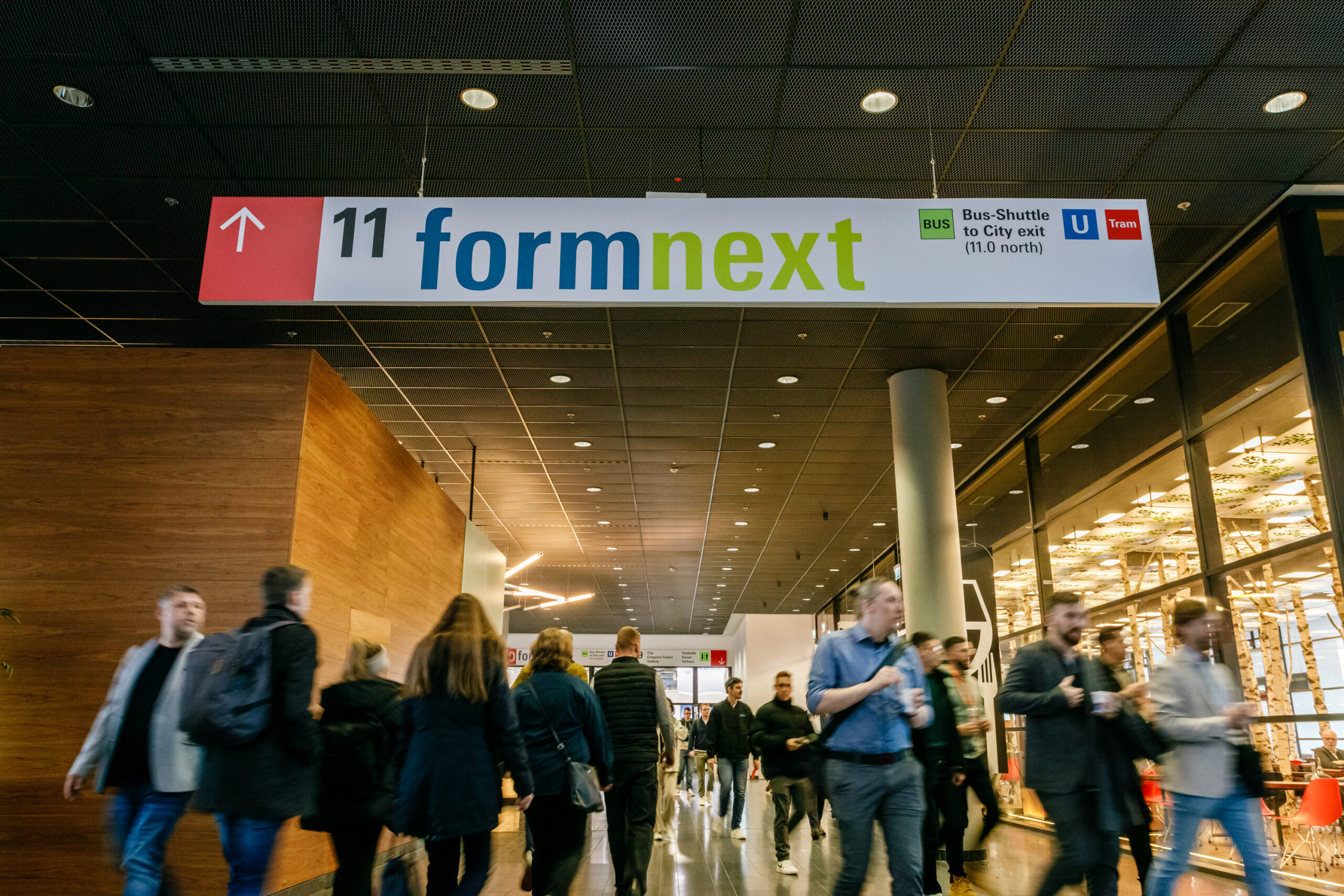
The United Kingdom has been announced as the official partner country for Formnext 2026, and if you work anywhere near industrial 3D printing, this is genuinely significant news.

Formnext 2026 will take place in Frankfurt from 17 to 20 November 2026, and the choice of the UK as partner country reflects just how far British Additive Manufacturing has come. From advanced materials and machine development to real-world industrial applications, the UK is now firmly embedded in the global AM ecosystem.

According to the organisers, Formnext is also entering the year with fresh momentum, placing a stronger focus on key user industries such as orthopaedics, aviation and automotive manufacturing. In short, this is not just a celebration of technology, but a clear signal that industrial 3D printing has moved well beyond the experimental phase.

Why the UK as Partner Country Matters

The UK has long punched above its weight in manufacturing technology, and Additive Manufacturing is no exception. Established names like Renishaw sit alongside fast-growing innovators such as Wayland Additive, supported by a steady pipeline of start-ups, research institutions and industrial users.

From aerospace and defence through to healthcare and energy, British companies are not just adopting AM technologies, they are helping to define how they are used at scale. That combination of research depth and practical application is exactly what Formnext is about.

The UK’s Additive Manufacturing sector is also being actively coordinated through Additive Manufacturing UK, which aims to bring industry, academia and government together to accelerate adoption and innovation. Being named partner country puts that collective effort firmly on the world stage.

A Stronger Focus on Real Industry Use

One of the most interesting aspects of the Formnext 2026 announcement is the increased focus on specific user industries. Rather than talking about AM in abstract terms, the organisers are deliberately highlighting where it is already delivering tangible benefits.

Orthopaedics, aviation and automotive manufacturing are all sectors where Additive Manufacturing is proving its worth, whether that is through lightweight components, patient-specific implants or rapid tooling and production aids.

To support this, Formnext will be running AM-focused events throughout 2026 at major industry exhibitions, including AERO Friedrichshafen, OT-World in Leipzig and Automechanika Frankfurt. The idea is simple and sensible: meet potential users where they already are and show them what industrial 3D printing can actually do.

Record Numbers and a New Hall Layout

Formnext 2025 marked the event’s tenth anniversary and welcomed a record 38,282 visitors, which is a strong indicator of where the industry is heading. For 2026, visitors can also expect a new and improved hall structure across three levels in Halls 11.0, 12.0 and 12.1.

The goal here is to improve visitor flow, reduce walking distances and create a more coherent experience overall. Anyone who has spent long days navigating large trade shows will appreciate why that matters.

Early Bird Booking Still Open

For exhibitors, there is also a practical incentive to act quickly. Early bird discounts are available until 2 March 2026, making this an ideal moment for UK companies in particular to secure their presence at what promises to be a landmark event.

With the UK in the spotlight, a renewed focus on real industrial applications and a clear upward trend in global interest, Formnext 2026 is shaping up to be one of the most important Additive Manufacturing events of the year.

You can find exhibitor information and registration details via the official Formnext website

Streamplayer: The Little Box That Brings Every Speaker Back to Life

There is something rather special about great audio gear. Whether it is a cherished pair of bookshelf speakers from the seventies or a hefty amplifier that once powered many late nights, older kit carries a charm that refuses to fade. The trouble is that modern streaming rarely considers this history. We juggle apps, fight with compatibility issues, and often end up restricted to one manufacturer’s ecosystem.

Streamplayer: The Little Box That Brings Every Speaker Back to Life

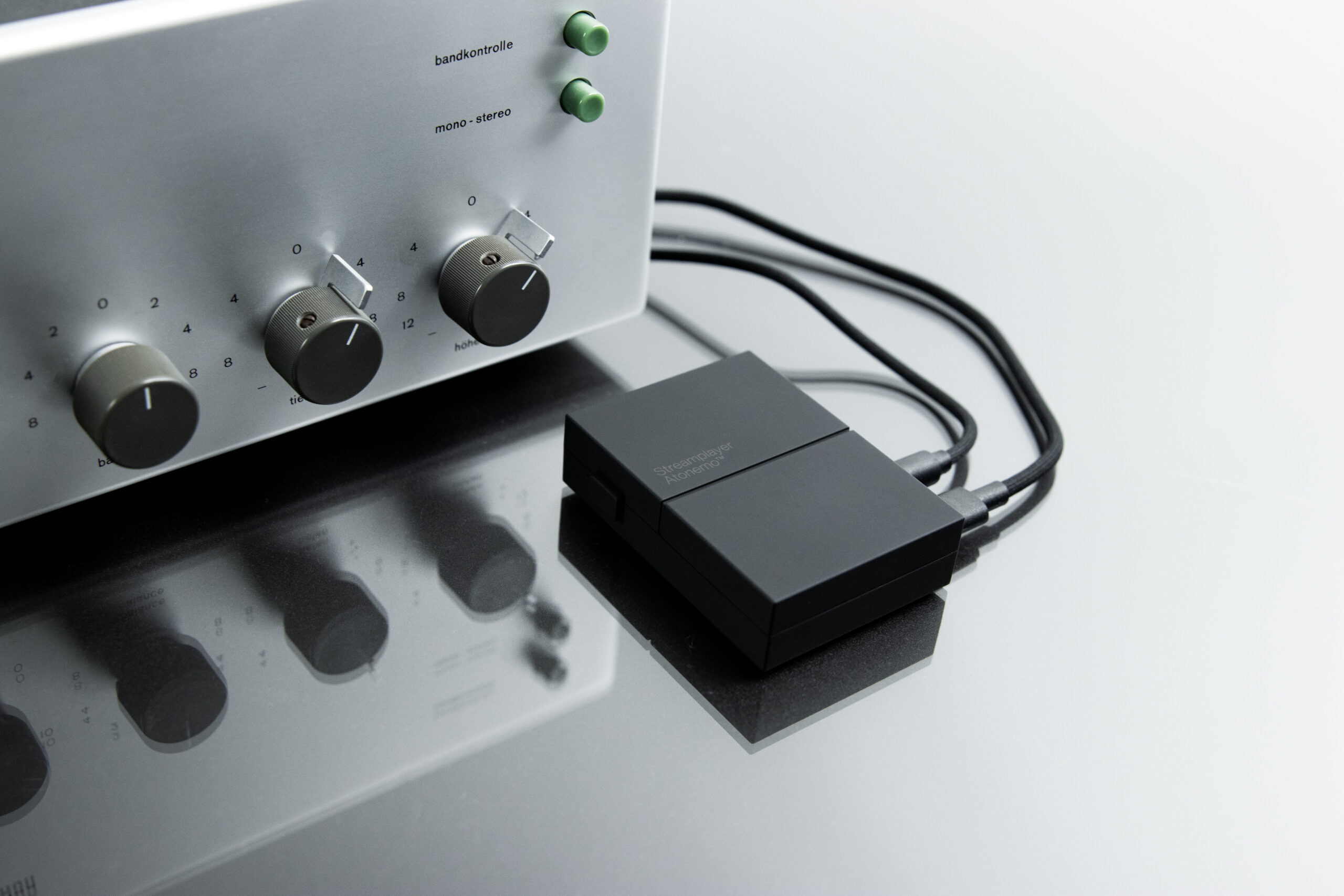
Atonemo, a young company based in Stockholm, has stepped in with a refreshingly simple answer. Their new device, the Streamplayer, aims to bring every speaker you own into the streaming age. It works with speakers of any brand, size, or era and gives older equipment a modern purpose again.

Streamplayer: The Little Box That Brings Every Speaker Back to Life

Listening to music used to be an uncomplicated affair. You pressed play, and the sound travelled through a cable without any fuss. Today, we navigate multiple services that do not always get along. Streamplayer strips away that complexity by giving you a single, universal way to stream music across your home.

Streamplayer: The Little Box That Brings Every Speaker Back to Life

The concept is brilliantly straightforward. Streamplayer is a compact wireless audio streamer that connects to any speaker or amplifier. Once it joins your Wi Fi network, you can play music through AirPlay 2, Google Cast, Spotify Connect, or Tidal Connect. Your vintage hi fi becomes wireless. Your modern speakers can work side by side with your older favourites. You can even synchronise completely different speakers into one unified system.

Streamplayer: The Little Box That Brings Every Speaker Back to Life

For fans of classic audio equipment, this is especially exciting. Many older speakers sound superb but lack the streaming features that modern life expects. Atonemo’s mission is to bring them back into everyday use, turning beautiful old gear into fully capable modern systems.

Atonemo’s Approach

The company was founded by two childhood friends, one a mathematician and the other a designer. Their shared passion for music and frustration with over engineered audio systems inspired them to create products that feel human, simple, and purposeful. Their philosophy focuses on clear communication and design that does exactly what it needs to do without clutter.

Key Features

Streamplayer is small, but the specification is impressive:

  • 24 bit 192 kHz audio
  • Gapless playback
  • AirPlay 2, Google Cast, Spotify Connect, Tidal Connect
  • Analogue line out and optical S PDIF out
  • Wi Fi 6 with WPA2 and WPA3 security
  • USB C power
  • Works with active speakers, amplifiers, hi fi systems, and vintage audio gear
Streamplayer: The Little Box That Brings Every Speaker Back to Life

Everything about it is built around compatibility and convenience. It arrives with a USB C power cable, an AUX cable, and a simple quick start guide, making setup as painless as possible.

A Simple Idea with Real Impact

The launch of Streamplayer feels like a moment for anyone who loves audio but dislikes unnecessary complication. It brings your favourite speakers back into daily use, unifies the systems you already have, and avoids locking you into any single brand.

For anyone with a cupboard full of forgotten gear or a cherished pair of speakers that deserve to be heard again, this little box might be one of the most appealing products of the season.

More information is available at atonemo.com.

Bambu Lab to Reveal the H2C at Formnext – and I’ll Be There to See It First-Hand

Bambu Lab have officially announced the launch of their new multi-material 3D printer, the Bambu Lab H2C, taking place on 18 November 2025 at 3:00 PM CET—and I’ll be there at Formnext in Frankfurt to witness the reveal in person.

This is shaping up to be one of the most significant announcements in desktop 3D printing for years.

For the past three years, Bambu Lab have been working on a cleaner, more efficient approach to multi-colour and multi-material printing. Their teaser hints at something genuinely ground-breaking: the end of purge waste.

Back in 2022, the X1 series opened the door to accessible multi-colour printing, but the trade-off was always the same—purging. Endless little strings of wasted filament, time lost, and the compromises that every multi-colour printer still struggles with today.

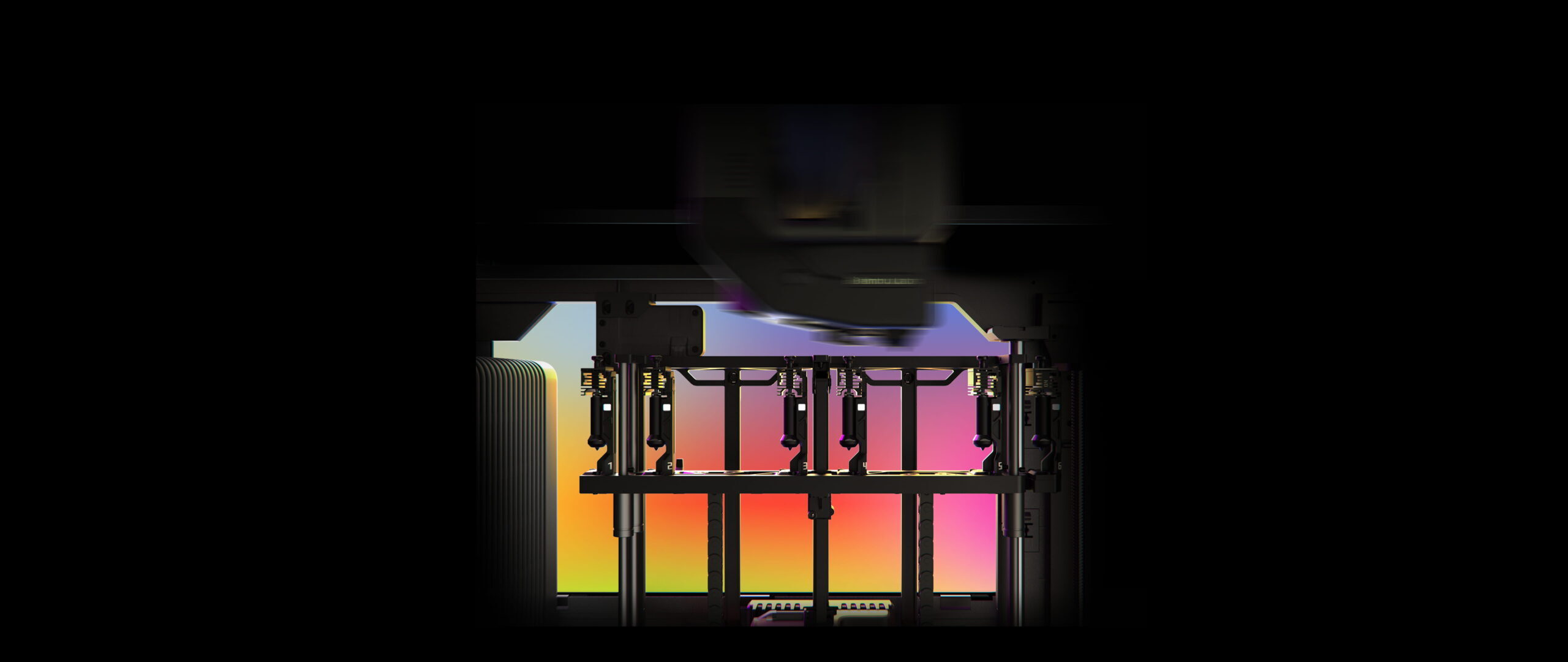
Bambu’s engineers zeroed in on the real culprit: contamination within the hotend. Their solution? Don’t purge—swap the hotend.

Image and Video Credit: Bambulab

Introducing the Vortec Hotend Change System

The H2C is expected to showcase a brand-new technology called Vortec, described as one of the first induction-heated, fully automated hotend-swap systems.

The innovations highlighted in the teaser include:

• Dedicated hotends instead of purging

Like using a fresh paintbrush for each colour. No cleaning required, no cross-contamination, and no filament waste.

• Induction heating in just 8 seconds

Rapid heating without the slowdown of bulky toolheads or complex gantries.

• Wireless data and power sync

Each hotend contains its own chip that communicates temperature, filament data and status to the printer—without cables or pogo pins to wear out.

• No sacrifice in speed, volume or reliability

Rather than adding multiple nozzles or loading a heavy toolhead, Bambu Lab have focused on keeping things fast, compact and robust.

According to Bambu Lab, Vortec represents “the epilogue to the imperfections of X1” and marks their first major step toward eliminating purge altogether.

I’ll Be Reporting Live from Formnext

As The Gadget Man, I’ll be on the ground at Formnext in Frankfurt when the H2C is unveiled. Expect hands-on impressions, photos, early thoughts and—as always—my honest take on whether this could be the next revolution in multi-material 3D printing.

Stay tuned. This could be the moment multi-colour printing finally becomes clean, fast and… uncompromising.

Formnext Turns 10! And It’s Bigger, Bolder, and Brilliantly Additive Than Ever

Frankfurt’s iconic tech mecca is lighting up the entire AM world with an expanded programme, more gadgets and gear than ever, and enough buzz to make even the most jaded engineer’s pulse quicken. Here’s everything you need to know if you’re heading to Formnext 2025 — or watching from afar.


Three Stages, One Purpose: Exploring AM’s Bright Future

Formnext 2025 isn’t just about rows of 3D printers humming away like digital sewing machines — though, let’s be honest, we do love that too. It’s about conversations that shape the future.

  • Application Stage (Hall 11.1): From rocket engines to robot arms and even orthopaedic orthoses (try saying that after a few Glühweins), this is where AM meets real-world problems. Focused firmly on cost-effective innovation, this stage is a must for SMEs looking to dip their toes into the world of 3D production.

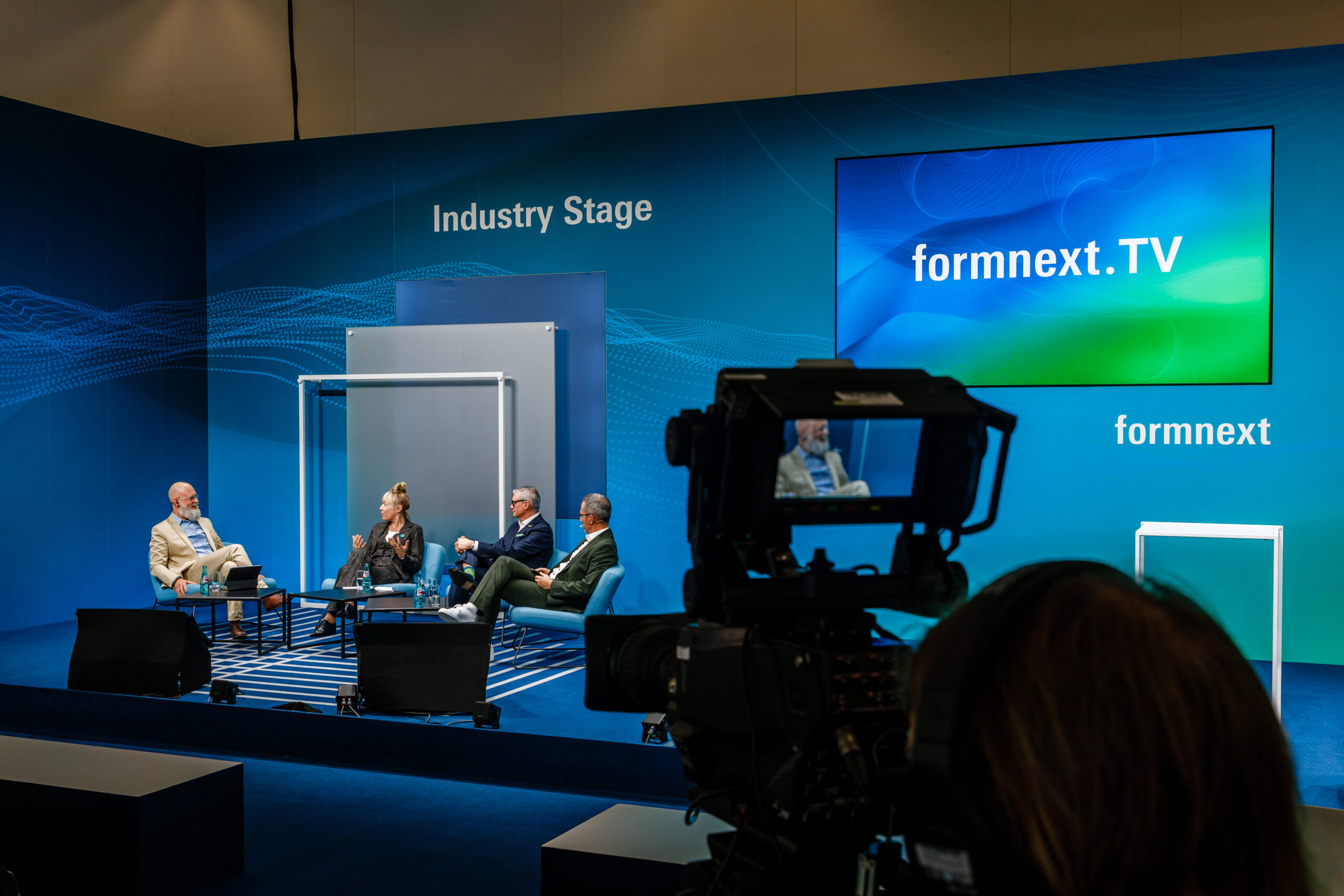
  • Industry Stage (Hall 11.0): Topics like sustainability, Design for AM, and even AI-designed consumer goods take centre stage here. Highlights include a keynote retrospective on the last decade of AM and forward-looking discussions on decentralised production – a very big deal as global supply chains continue to shift.

  • Technology Stage (Hall 12.1): This is where the nerds (my people!) gather to go deep. Think DED tech, large-format plastic printing, and data-driven design. Pack a notebook.


New This Year: Tours, Livestreams &… a Quiz Show?

Formnext 2025 is not content with “business as usual”. The organisers have added a host of interactive new formats that are both educational and entertaining.

  • Guided AM Tours: Focusing on post-processing (a criminally underappreciated stage in AM), these 90-minute guided walks will be led by experts. Wednesday tours are in German, Thursday in English. No sign-ups, just first-come, first-served — so set an alarm.

  • Show and Telling LIVE: YouTube’s own 3D Printing Nerd will be broadcasting live on Tuesday. If you’ve ever wanted to geek out in real time with a global AM celeb, now’s your chance.

  • Ultimate Additive Quiz Show: Because why not have a game show for engineers? Expect equal parts trivia, tension, and titanium.


From Mechanical Marvels to Mushroom Mycelium: The Special Showcases

Here’s where Formnext really flexes its muscles. The 2025 edition will showcase AM in every industry you can imagine:

  • Additive4Industry (Hall 12.0): Mechanical engineering applications, brought to you by the VDMA.

  • BE-AM Symposium: Construction gets the AM treatment — and yes, that means 3D printed buildings.

  • AM Art Space: SUTOSUTO are back to blur the line between technology and art.

  • AM Innovation & Standards Summit (17 Nov): Standards, compliance, and certification may not be sexy — but they’re essential.

And let’s not forget the Start-up Area and Young Innovators Booth, where tomorrow’s biggest ideas take their first steps. If you’re an investor or just love spotting the next big thing, bring business cards.


Democratising 3D Printing

A real theme running through this year’s show is accessibility. Whether it’s via desktop 3D printers popping up in more industrial contexts or the Discover3DPrinting seminars for curious newcomers, Formnext is making AM approachable for businesses of all sizes.

There’s even a Career Area with job walls, professional headshots, and career advice — because nothing says “ready for your next move” like a headshot next to a 3D printed turbine blade.


The Formnext Awards – AM’s Red Carpet Moment

Awards aren’t just for Hollywood. The Formnext Awards shine a spotlight on groundbreaking technologies, bold young companies, and sustainable solutions — across six hotly contested categories. The twist? You get to help choose the winners via online voting. Cue the drama.


Partner Country 2025: Spain Steps Into the Spotlight

This year’s partner country is Spain, and it’s not just bringing paella and passion. With around 30 companies showcasing breakthroughs in AM systems, materials, and R&D, Spain is strutting its stuff on the global AM stage — and rightly so.


When, Where, and Why You Should Be There

Frankfurt am Main
18–21 November 2025
www.formnext.com/visitors

Whether you’re a long-time Formnext fanatic or a first-time visitor still figuring out what “DED” stands for, this year promises to be unforgettable. Ten years in, and Formnext shows no sign of slowing down — in fact, it’s evolving just as quickly as the technology it celebrates.

So dust off your best trade fair shoes, charge your phone (you’ll need it), and get ready to celebrate a decade of additive excellence.


Have you been to Formnext before? What are you most looking forward to this year? Drop your thoughts

Anycubic Teases the Kobra S1 Max Combo – A New Chapter for Multi-Colour Printing (and I’ll Be Seeing More at Formnext!)

Well, this is exciting. The lovely folks at Anycubic have been in touch again, and this time they’ve got something rather special lined up for the 3D-printing world. If you’ve been following my recent adventures in the workshop — shelves of resin bottles, spools of filament, and printers humming away like a busy beehive — you’ll know I’ve been especially taken with Anycubic’s approach to innovation lately.

And now, they’ve gone and done it again.

Introducing the Kobra S1 Max Combo

A brand-new machine built to push desktop 3D-printing further — louder, brighter, more colourful, and more capable of serious engineering-grade work.

This is not just a quiet upgrade. This is one of those big leaps.

Kobra S1 Max Combo
Kobra S1 Max Combo
Kobra S1 Max
Kobra S1 Max

What Makes It Stand Out?

The expanded spec list from the official campaign page reveals some key details:

  • Up to 16-colour printing: Start with one ACE 2 Pro module for 4 colours; combine up to four for the full 16-colour capacity.

  • Huge build volume: 350 × 350 × 350 mm.

  • Enclosed, actively-heated chamber up to 65 °C. Hotbed up to 120 °C, hotend up to 350 °C.

  • Hardened-steel hotend (0.4 mm standard with extra 0.6 mm included), optional 0.25 mm brass / 0.8 mm hardened steel nozzles.

  • CoreXY motion system, active carbon-filter air purification, WiFi6/Ethernet support, 720p monitoring, spaghetti-recognition AI, U-disk/app control.

  • Materials covered: from PLA/PETG/TPU right up to engineering-grades like ABS, ASA, PC, PA, PA6-CF, PC-CF/GF, PET-CF.

  • Multi-language interface (English, Chinese, German, Russian, Spanish, French, Italian, Korean, Portuguese).

Put simply: whoever said “desktop printers are only for PLA” is going to have a rethink when this lands.


Early Bird Deal (This One’s Actually Worth It)

Anycubic are running a clever early-bird scheme:

  • Pay £50 now → receive £100 discount off the launch price (5th November to 24th November)

  • After that, the pricing rolls through phased levels — each with perks (as previously noted).

    • £749 (25 Nov-1 Dec) with £400 worth of perks

    • £799 (2 Dec-25 Dec) with £350 perks

    • £849 (26 Dec-31 Jan) with £300 perks

    • £949 (from 1 Feb) with £200 perks

So yes — if you’re thinking about it, the earlier the better.


And Here’s the Extra Bit I’m Excited About…

I’ll be in Frankfurt on the 18th November attending formnext — the global additive-manufacturing expo. It’s basically the Glastonbury of 3D printing: people everywhere talking filament, lasers, printheads, sintering furnaces — heavenly stuff.

I’m absolutely planning to track down Anycubic while I’m there and get a closer look at the Kobra S1 Max Combo in the flesh. Expect photos, impressions, maybe even first-hand print samples — all coming your way.

If you’ve got questions you’d like me to ask the Anycubic team directly, let me know in the comments.


Final Thoughts

This is shaping up to be a very compelling machine:

✔ Larger build volume
✔ Multi-colour support baked in
✔ Enclosed, CoreXY, heated chamber = better reliability
✔ Designed for real materials, not just for show

If it delivers what the specs promise, this could be one of the stand-out printers of 2025 — especially for makers and small business production.

I’ll bring back everything I learn at Formnext — stay tuned.

Matt Porter – The Gadget Man
Currently surrounded by printers. Not sorry.

From Pixels to Platinum: When AI Designed My New Hairstyle

From Pixels to Platinum: When AI Designed My New Hairstyle

There’s something oddly thrilling about letting technology take creative control. I’ve spent years testing gadgets, reviewing innovations, and exploring the limits of artificial intelligence — but this time, I let the tech get a little more personal.

A few weeks ago, I asked Midjourney — my go-to AI image generator — a simple question:
“What would The Gadget Man look like with a fresh new hairstyle?”

The result was, quite frankly, impressive. The AI produced a series of strikingly realistic portraits featuring a textured, platinum-blonde cut that looked part cyberpunk, part 21st-century rockstar. I loved it. The catch? It wasn’t real… yet.

The AI Concept

Armed with a few reference prompts and an experimental mindset, I spent an evening fine-tuning the digital version of myself. Midjourney, in its infinite wisdom, decided that bleached hair and choppy texture were the future of The Gadget Man brand.

At first, it was just a bit of fun. But the more I looked at the AI render, the more I realised — this was something I could actually pull off. So, I decided to make it happen.

Turning AI Into Reality

I booked an appointment with my stylist and brought along the AI images on my phone — full 360-degree green-screen shots of the “digital me.” It’s not every day you walk into a salon and say, “I’d like this look, please — it was designed by artificial intelligence.”

To their credit, they didn’t flinch. Instead, we broke it down into human-achievable steps:

  • The Cut: Short, faded sides with plenty of texture on top.
  • The Style: Tousled and natural, with enough lift to keep things casual.
  • The Colour: A cool, silver-white platinum tone — bold but clean.

The Result

Wait and see!!!

AI as a Creative Partner

This little experiment isn’t just about hair — it’s about what happens when AI moves from the screen into the real world. Whether it’s designing products, testing ideas, or in this case, reinventing a hairstyle, AI has become a kind of creative partner.

From Pixels to Platinum: When AI Designed My New Hairstyle


From Pixels to Platinum: When AI Designed My New Hairstyle

Coming soon: a behind-the-scenes video of the full transformation — from my original hairstyle to the final platinum reveal. Keep an eye on The Gadget Man socials for the big unveil.

#TheGadgetMan #AIstyle #MidjourneyToReality #TechMeetsHuman #FromPixelsToPlatinum

Formnext 2025: Tickets Now Open for the World’s Leading 3D Printing Expo

Frankfurt is getting ready to host the world’s largest 3D printing and Additive Manufacturing (AM) event once again. From 18–21 November 2025, Formnext will transform the Messe Frankfurt exhibition halls into a showcase of innovation, collaboration, and real-world applications across industries.

This year promises over 800 exhibitors, including some of the biggest names in the AM world alongside a healthy mix of start-ups and research groups. Expect plenty of world premieres, live demonstrations, and a packed programme across aviation, aerospace, engineering, jewellery, watches, and more.

Spain takes centre stage as the partner country for 2025, bringing around 30 companies to Frankfurt. The Spanish AM sector has been growing rapidly and plays an interesting role as a link between Europe and Latin America, particularly strong in systems, materials, and research.

The Gadget Man will be attending formnext

The supporting programme looks just as impressive as the show floor itself. Three stages will run throughout the event, each with a different focus: industry trends, real-world applications, and the latest technologies. Seminars, talks, and showcases will cover everything from large-format 3D printing to data-driven design and construction AM. Add to that the Formnext Awards, start-up pitches, career opportunities, and networking events, and it’s clear this isn’t just an exhibition – it’s the meeting point for the global AM community.

I’ll be there on Tuesday 18 November for the Press Breakfast and then I’m looking forward to catching up with many of the 800 companies, checking out the latest announcements and exploring the halls. It’s always fascinating to see how far the technology has come, and this year looks set to offer plenty of inspiration.

Tickets are available now from formnext.com/visitors, with an early-bird discount running until 21 October.

Artificial Intelligence, Technology, News and Gadget Reviews on air, online, in print and in person