Tag Archives: digital transformation

AI and the Future of Work: Are We Excited, Terrified, or Just Trying to Keep Up?

There are moments in technology when you can almost hear the gears of history turning.

I remember when having a computer in the office made you “the computer person”. I remember dial-up modems, fax machines, early websites, clunky email systems, and the strange magic of watching a machine do something that previously required a drawer full of paper, a telephone call, and usually someone called Janet who knew where everything was filed.

Artificial intelligence feels like one of those moments, except this time the machine is not just helping us type the letter. It is writing the letter, summarising the meeting, drawing the logo, coding the website, generating the video, and quietly eyeing up half the tasks we thought were safely ours.

AI and the Future of Work: Are We Excited, Terrified, or Just Trying to Keep Up?

A new report from The Policy Institute at King’s College London, AI and the Future of Work, gives a fascinating snapshot of how the British public, workers, students and employers are feeling about all this.

And the overall picture is not simple optimism. It is more like standing in front of a very clever robot vacuum cleaner that has suddenly learned accountancy.


We are wary, but we know it is coming

One of the most interesting findings is that the public are more negative than positive about AI, yet many people still expect to use it.

Almost half of the public say they would rather avoid AI-based technologies, 41% say they are afraid of AI, and only 24% think AI is positive for humanity. Yet 43% agree they will use AI in the future.

That feels very human to me.

It is the same feeling we had when smartphones began taking over our pockets. We complained about them, worried about them, said they were ruining attention spans, then used them to check the weather, order a takeaway, find a route, take photos of the dog and pay for parking.

AI may be following the same path, only with rather larger consequences.

Parents are looking at this very differently

The part of the report that really lands is the section about parents.

Half of parents with children under 30 say they are worried about how AI will affect their children’s career prospects. Yet only around three in ten parents of 11 to 29-year-olds have actually had a conversation with their child about how AI might affect their future career, and a similar number have encouraged them to learn how to use AI tools.

That gap matters.

Because whether we like AI or not, pretending it is not happening is not a strategy. The best advice we can give young people is probably not “avoid AI”, but “understand it, question it, and learn how to use it better than the next person”.

When I was younger, knowing your way around a computer gave you an edge. Then knowing the web gave you an edge. Then knowing social media, search engines, ecommerce, video, and automation gave you an edge.

Now the edge may come from knowing how to work alongside AI without becoming completely dependent on it.

The fear is not just science fiction

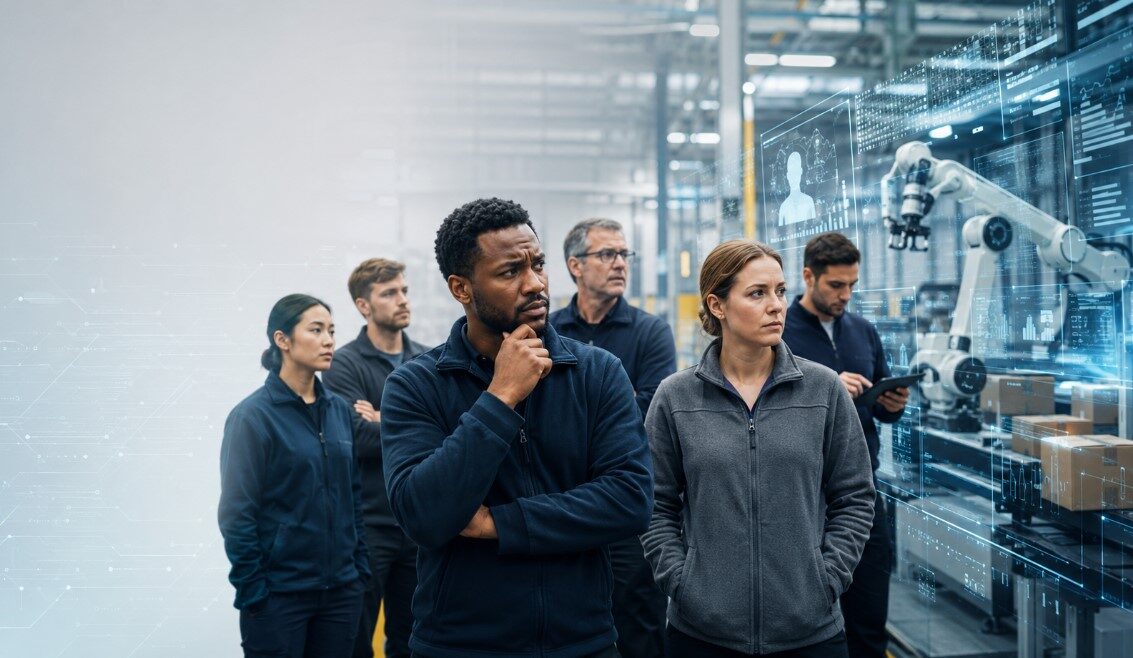
The report also shows that concern about jobs is widespread.

Seven in ten people are worried about the economic impact of job losses caused by AI, and majorities of the general public, young people, university students and workers believe AI will eliminate far more jobs than it creates.

That is not a small worry. That is not people muttering about robots in the pub. That is a mainstream concern.

There is also a particularly sharp anxiety around entry-level roles. The report notes that many people believe AI could eliminate half of all entry-level white-collar jobs within five years.

This is where I think the real danger lies. Not necessarily in AI replacing every professional overnight, but in it quietly removing the first rung of the ladder.

Most of us learned by doing the boring stuff first. We answered support calls, updated spreadsheets, wrote simple copy, fixed small bugs, processed orders, filed things, checked things, tested things, and gradually became useful.

If AI takes away the junior work, where exactly do the next generation learn?

You cannot become experienced without first being inexperienced.

Employers are more optimistic, but even they are worried

Employers are generally more positive about AI than the wider public, but they are not blindly cheerful.

According to the report, 63% of employers are worried about the economic impact of job losses caused by AI, even while many are excited about new jobs opening up.

That is the strange contradiction at the heart of this whole debate.

AI is both an opportunity and a threat. It can help small businesses move faster, reduce admin, improve customer service, generate ideas, speed up research and make previously expensive tasks accessible to people working from a spare room.

But it can also concentrate power.

One of the starkest findings is that 65% of the public think the economic benefits of AI will mainly go to wealthy investors and large companies, while just 7% think the benefits will be shared fairly across society.

That is probably the bit we should be talking about more.

The question is not simply “will AI be clever?” It clearly will be. The question is “who benefits?”

My view from the Gadget Man shed

I use AI. I find it fascinating, useful, occasionally infuriating, sometimes astonishing and often a little unsettling.

It can be like having an enthusiastic assistant who has read everything, forgotten where it read it, and sometimes confidently hands you a screwdriver when you asked for a banana.

But used properly, it is powerful.

For people like me who create websites, write content, tinker with servers, make videos, build odd little systems and generally chase ideas down rabbit holes, AI can be a genuine productivity boost.

It can help you get from “I wonder if this is possible?” to “here is a working prototype” much faster than before.

But I do not think we should confuse productivity with progress.

If AI helps a small business survive, brilliant. If it helps a student learn, excellent. If it helps someone with a disability communicate, create, work or live more independently, fantastic.

If it simply allows large companies to employ fewer people while making a handful of shareholders wealthier, then we have built something clever but not necessarily something good.

The future is not automatic

Technology does not arrive with a moral compass fitted as standard. We decide how it is used.

That means schools, parents, businesses and government all have some catching up to do.

Young people need to understand AI not as magic, but as a tool. Workers need training, not vague reassurance. Employers need to think about responsibility as well as efficiency. And the rest of us need to keep asking awkward questions.

AI is coming into the workplace whether we welcome it with open arms or hide behind the photocopier.

The important thing now is not to panic, but not to sleepwalk either.

We have been here before with big technological shifts, but this one feels faster, wider and stranger.

The machine is no longer just on the desk.

It is in the conversation.


Source: King’s College London, The Policy Institute, “AI and the Future of Work”, May 2026.

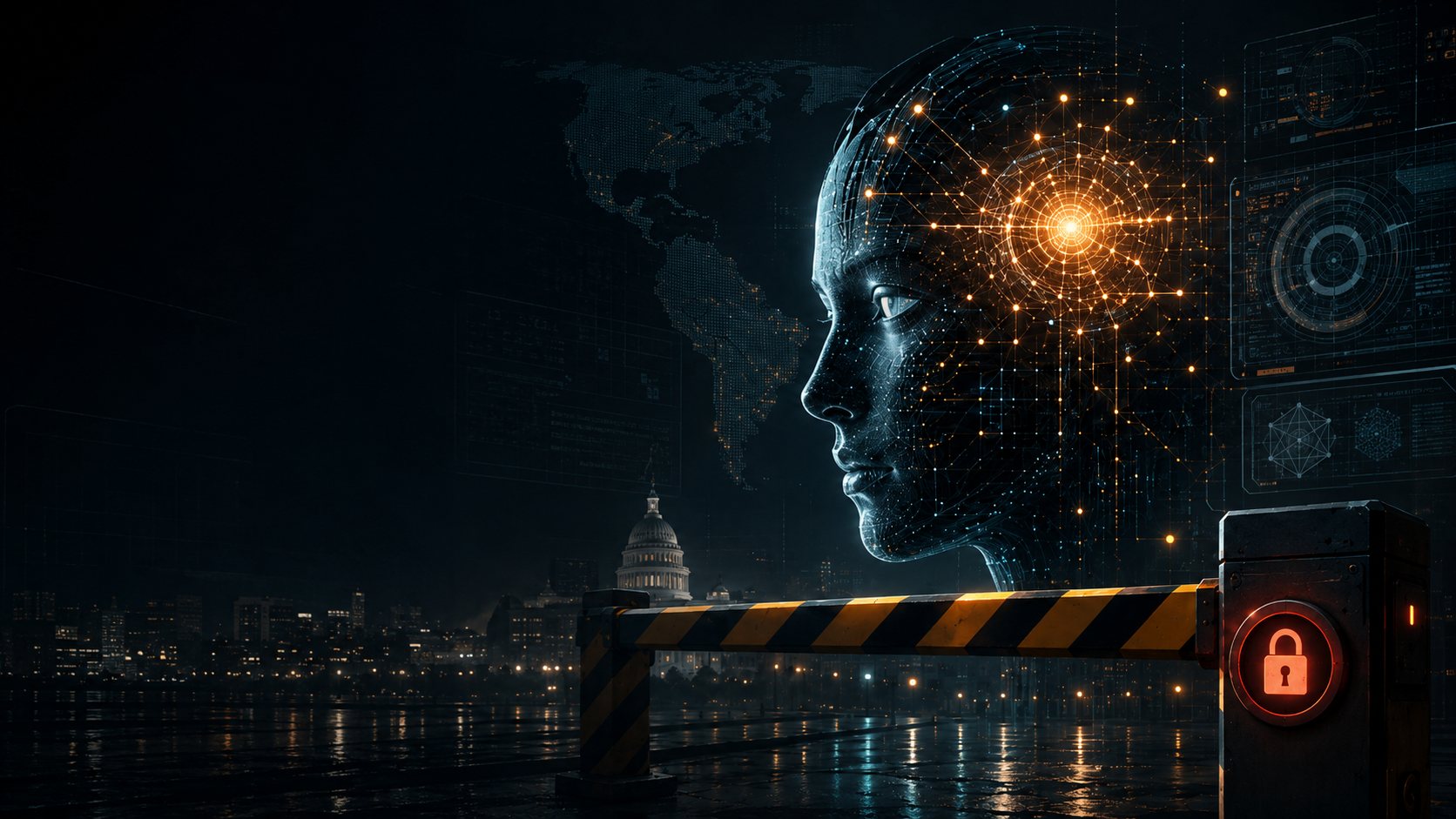
Anthropic’s Project Glasswing Could Change Cybersecurity Forever

There are moments in tech when you read an announcement and immediately realise that something important has shifted.

That was very much my reaction when I came across Project Glasswing, a newly announced initiative from Anthropic that is aimed squarely at one of the biggest looming problems in modern computing: what happens when AI becomes exceptionally good at finding software vulnerabilities. Source

According to Anthropic, Project Glasswing brings together a heavyweight list of partners including Amazon Web Services, Apple, Broadcom, Cisco, CrowdStrike, Google, JPMorganChase, the Linux Foundation, Microsoft, NVIDIA and Palo Alto Networks, all with the goal of securing critical software for what Anthropic calls the AI era. It is also extending access to more than 40 additional organisations that build or maintain important software infrastructure. Source

Now, that alone would be interesting enough, but the real headline here is the model sitting behind it all.

Anthropic says its unreleased model, Claude Mythos Preview, has already demonstrated the ability to find and exploit software vulnerabilities at a level beyond all but the most skilled human experts. That is a huge claim, and if it holds up in practice, it means we may have crossed into a very different phase of cybersecurity. Source

In plain English, this is not just about a chatbot helping someone write a bit of code more quickly. This is about AI being able to inspect complex software, spot weaknesses that humans and automated tools have missed for years, and in some cases work out how those weaknesses could be exploited. Anthropic says the model has already found thousands of high-severity vulnerabilities, including flaws affecting major operating systems and web browsers. Source

Some of the examples are rather startling. Anthropic says Mythos Preview uncovered a 27-year-old vulnerability in OpenBSD, a 16-year-old flaw in FFmpeg, and even chained together several Linux kernel vulnerabilities in a way that could escalate ordinary user access into full control of a machine. The company says those issues have now been responsibly disclosed and patched. Source

That, to me, is the bit that really lands.

Because for years we have tended to think of cybersecurity in terms of patching known issues, following best practice, keeping software up to date and hoping the really serious flaws are found by the good people before the bad people. But if AI systems are now reaching the point where they can autonomously discover dangerous bugs in code that has survived decades of scrutiny, then the pace of both defence and attack could increase dramatically. Source

Anthropic is clearly trying to frame Glasswing as a defensive first move. The company says it is committing up to $100 million in usage credits for Mythos Preview and $4 million in direct donations to open-source security organisations. The idea seems to be to put these capabilities into the hands of defenders, infrastructure operators and maintainers before similar systems become more widely available. Source

And that is probably the most sensible angle here.

Because whether we like it or not, the genie is not going back in the bottle. If one frontier AI lab can build a model that is frighteningly good at vulnerability discovery, others will too. Eventually, those capabilities will spread further. The question is not really whether AI will reshape cybersecurity. It is whether defenders can get enough of a head start to stop things getting seriously messy. That is an inference from Anthropic’s announcement and the examples it gives, rather than a direct claim from the company, but it feels like the unavoidable conclusion. Source

For those of us who run websites, servers, ecommerce platforms, mail systems or anything else connected to the wider internet, this should be a bit of a wake-up call. The old approach of leaving systems half-maintained, delaying updates, or assuming that obscure software will somehow stay below the radar looks even more risky in a world where AI can inspect code at speed and scale.

Project Glasswing may turn out to be remembered as one of those early milestone moments, the point where the cybersecurity industry publicly acknowledged that AI is no longer just a helpful assistant for defenders. It is becoming a serious force multiplier, and one that could work for either side.

That makes this announcement both exciting and slightly chilling.

And, in true Gadget Man fashion, it is exactly the kind of development that reminds us technology is never just about shiny new tools. It is also about consequences, responsibility and how quickly the world has to adapt when the rules suddenly change.

Source

Anthropic, Project Glasswing: Securing critical software for the AI era