Productivity is a skill that not everybody in this world has. It is something that everybody can learn and get into the habit of, however. It’s not something you are born with; it’s something that you choose based on how you currently think. Crucially, it’s not something that requires major lifestyle changes or dramatic overhauls in order to achieve. The truth is that small improvements can compound into great results over time. In the digital world, distractions are constant, and demands shift quickly, which means even minor adjustments can make a noticeable difference to your productivity. When it comes to marginal gains, it’s about improving many small things by a small percentage in order to make a big overall impact. Rather than looking to chase big transformations, people have to focus on consistency and refinement in order to see actual long-term outcomes. Even the subtle changes will make a person work faster and think more clearly throughout the day. Here are three small tweaks that will dramatically boost your productivity:
The Power Of Marginal Gains: 3 Small Tweaks That Dramatically Boost Productivity
Reducing Small Frustrations In Daily Work
One of the best ways to improve productivity throughout your day is to remove points of friction in your daily routine. Even the smallest things can slow you down without you even realising. This might mean organising your digital workspace or reducing unnecessary steps when dealing with daily tasks. When these small issues are removed, all kinds of work can feel smoother and more natural. You can flow a lot more smoothly throughout the day and stay focused on what you have to do. Over time, these improvements will add up in your favour. They might seem like minor adjustments at the start, but you will experience noticeable gains in overall efficiency.
Upgrading Tools That Quietly Slow You Down
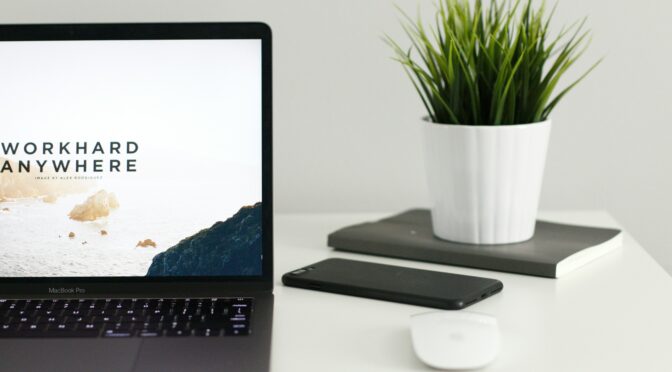
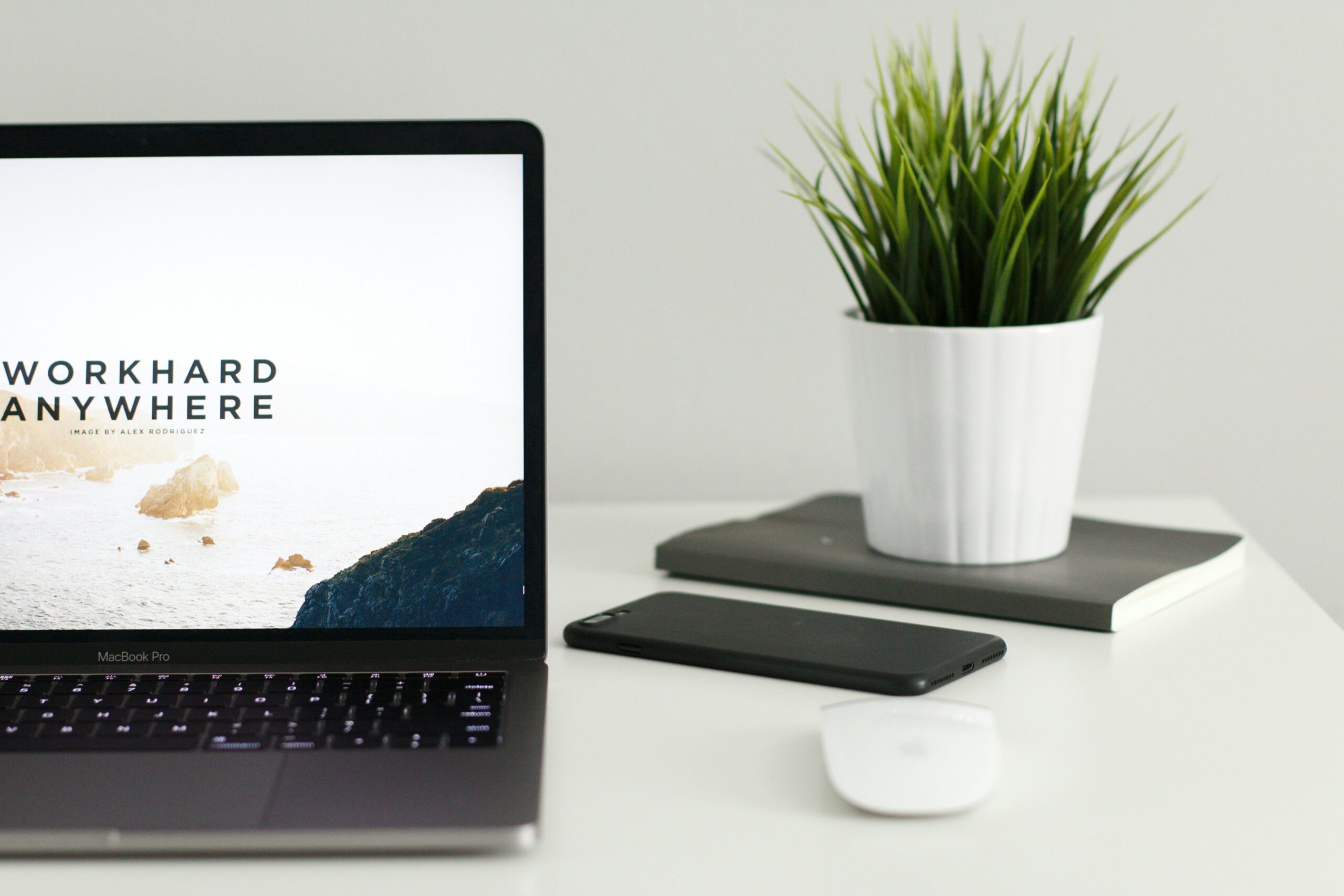
The tools you use each day will either make or break your productivity levels. Even the smallest limitations in performance can lead to frustrating delays that add up. Using an older setup might slow down tasks that need speed and responsiveness for things to be done properly. By upgrading to something more capable, like a Refurbished M5 MacBook Pro, you will reduce the lag and create a much smoother working experience. This sort of upgrade is useful as it does not mean you need a complete overhaul. You don’t need to constantly upgrade these tools; it’s mainly about identifying when your tools are holding you back.
Restructuring Focus To Stop Mental Overload
We mainly associate productivity with speed, but it’s also about managing your attention properly. Without the right kind of structure, you will feel overwhelmed and experience mental overload that reduces your ability to concentrate. Breaking work into small chunks can help reduce cognitive strain. This kind of basic practice can make it easier to prioritise tasks and maintain focus. Doing so consistently will improve your decision-making and clarity. Training yourself to work in these controlled blocks will allow you to create a more stable environment for productivity and high-quality work.
There are moments in technology when you can almost hear the gears of history turning.
I remember when having a computer in the office made you “the computer person”. I remember dial-up modems, fax machines, early websites, clunky email systems, and the strange magic of watching a machine do something that previously required a drawer full of paper, a telephone call, and usually someone called Janet who knew where everything was filed.
Artificial intelligence feels like one of those moments, except this time the machine is not just helping us type the letter. It is writing the letter, summarising the meeting, drawing the logo, coding the website, generating the video, and quietly eyeing up half the tasks we thought were safely ours.
AI and the Future of Work: Are We Excited, Terrified, or Just Trying to Keep Up?
A new report from The Policy Institute at King’s College London, AI and the Future of Work, gives a fascinating snapshot of how the British public, workers, students and employers are feeling about all this.
And the overall picture is not simple optimism. It is more like standing in front of a very clever robot vacuum cleaner that has suddenly learned accountancy.
We are wary, but we know it is coming
One of the most interesting findings is that the public are more negative than positive about AI, yet many people still expect to use it.
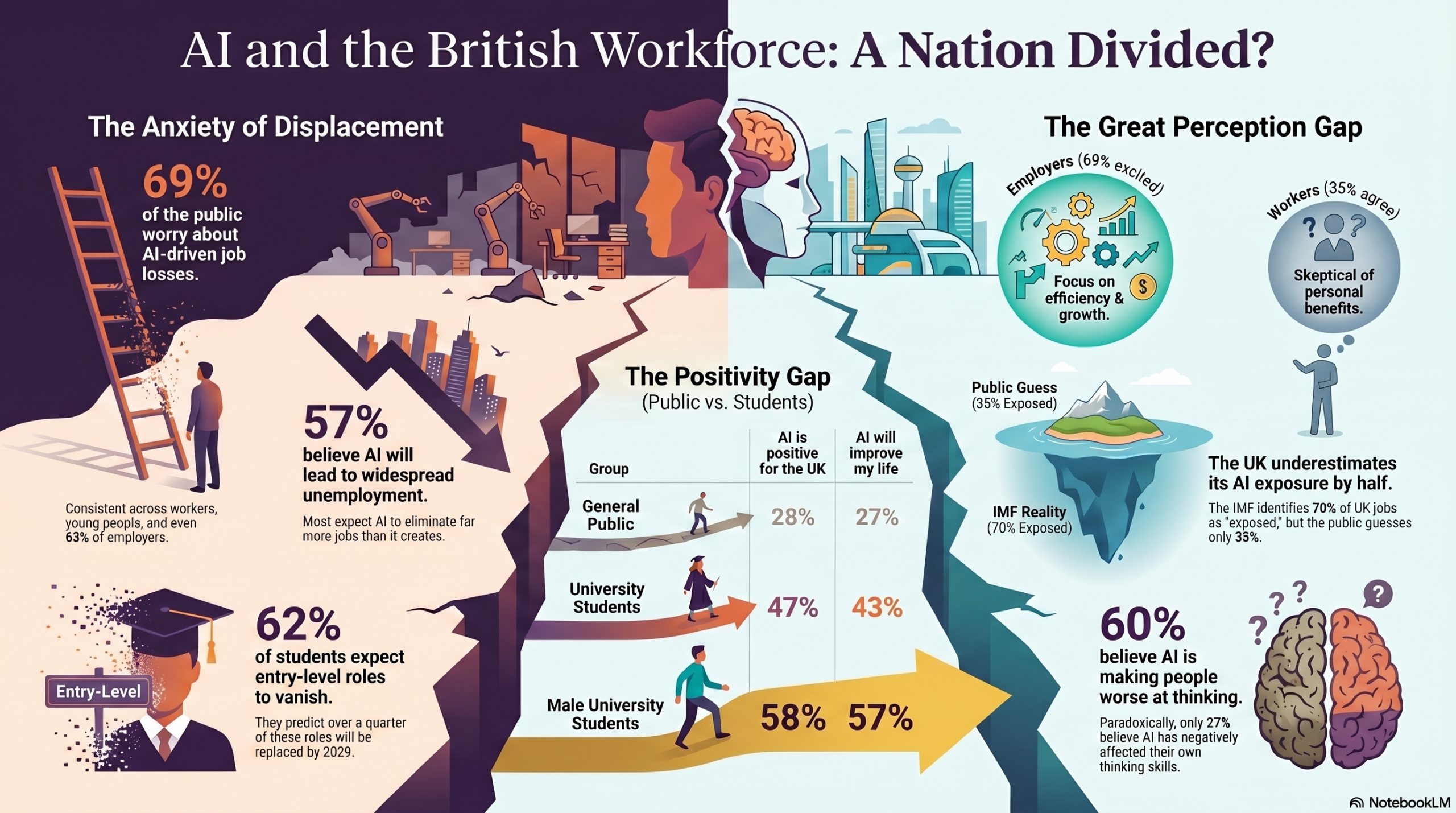
Almost half of the public say they would rather avoid AI-based technologies, 41% say they are afraid of AI, and only 24% think AI is positive for humanity. Yet 43% agree they will use AI in the future.
That feels very human to me.
It is the same feeling we had when smartphones began taking over our pockets. We complained about them, worried about them, said they were ruining attention spans, then used them to check the weather, order a takeaway, find a route, take photos of the dog and pay for parking.
AI may be following the same path, only with rather larger consequences.
Parents are looking at this very differently
The part of the report that really lands is the section about parents.
Half of parents with children under 30 say they are worried about how AI will affect their children’s career prospects. Yet only around three in ten parents of 11 to 29-year-olds have actually had a conversation with their child about how AI might affect their future career, and a similar number have encouraged them to learn how to use AI tools.
That gap matters.
Because whether we like AI or not, pretending it is not happening is not a strategy. The best advice we can give young people is probably not “avoid AI”, but “understand it, question it, and learn how to use it better than the next person”.
When I was younger, knowing your way around a computer gave you an edge. Then knowing the web gave you an edge. Then knowing social media, search engines, ecommerce, video, and automation gave you an edge.
Now the edge may come from knowing how to work alongside AI without becoming completely dependent on it.
The fear is not just science fiction
The report also shows that concern about jobs is widespread.
Seven in ten people are worried about the economic impact of job losses caused by AI, and majorities of the general public, young people, university students and workers believe AI will eliminate far more jobs than it creates.
That is not a small worry. That is not people muttering about robots in the pub. That is a mainstream concern.
There is also a particularly sharp anxiety around entry-level roles. The report notes that many people believe AI could eliminate half of all entry-level white-collar jobs within five years.
This is where I think the real danger lies. Not necessarily in AI replacing every professional overnight, but in it quietly removing the first rung of the ladder.
Most of us learned by doing the boring stuff first. We answered support calls, updated spreadsheets, wrote simple copy, fixed small bugs, processed orders, filed things, checked things, tested things, and gradually became useful.
If AI takes away the junior work, where exactly do the next generation learn?
You cannot become experienced without first being inexperienced.
Employers are more optimistic, but even they are worried
Employers are generally more positive about AI than the wider public, but they are not blindly cheerful.
According to the report, 63% of employers are worried about the economic impact of job losses caused by AI, even while many are excited about new jobs opening up.
That is the strange contradiction at the heart of this whole debate.
AI is both an opportunity and a threat. It can help small businesses move faster, reduce admin, improve customer service, generate ideas, speed up research and make previously expensive tasks accessible to people working from a spare room.
But it can also concentrate power.
One of the starkest findings is that 65% of the public think the economic benefits of AI will mainly go to wealthy investors and large companies, while just 7% think the benefits will be shared fairly across society.
That is probably the bit we should be talking about more.
The question is not simply “will AI be clever?” It clearly will be. The question is “who benefits?”
My view from the Gadget Man shed
I use AI. I find it fascinating, useful, occasionally infuriating, sometimes astonishing and often a little unsettling.
It can be like having an enthusiastic assistant who has read everything, forgotten where it read it, and sometimes confidently hands you a screwdriver when you asked for a banana.
But used properly, it is powerful.
For people like me who create websites, write content, tinker with servers, make videos, build odd little systems and generally chase ideas down rabbit holes, AI can be a genuine productivity boost.
It can help you get from “I wonder if this is possible?” to “here is a working prototype” much faster than before.
But I do not think we should confuse productivity with progress.
If AI helps a small business survive, brilliant. If it helps a student learn, excellent. If it helps someone with a disability communicate, create, work or live more independently, fantastic.
If it simply allows large companies to employ fewer people while making a handful of shareholders wealthier, then we have built something clever but not necessarily something good.
The future is not automatic
Technology does not arrive with a moral compass fitted as standard. We decide how it is used.
That means schools, parents, businesses and government all have some catching up to do.
Young people need to understand AI not as magic, but as a tool. Workers need training, not vague reassurance. Employers need to think about responsibility as well as efficiency. And the rest of us need to keep asking awkward questions.
AI is coming into the workplace whether we welcome it with open arms or hide behind the photocopier.
The important thing now is not to panic, but not to sleepwalk either.
We have been here before with big technological shifts, but this one feels faster, wider and stranger.
If you run a business, you know how hard it can be to get a new colleague up to speed on how your organisation works. There’s a lot of administration and effort involved, and you sometimes wonder whether it’s even worthwhile.
Many companies do a poor job with onboarding. Low-quality firms often leave it mainly to the person who has just joined, expecting them to figure out how things work and what they should do next. That approach is a great way to increase churn. People don’t like staying at companies that don’t appreciate them or show them the ropes.
So, what are some ways you can improve your onboarding and make it easier?
Use pre-onboarding skeleton
Large companies that bring on dozens of new staff every month often have a pre-onboarding skeleton. The goal is to build systems that make onboarding easier.
For example, you could add a lightweight welcome portal to your IT system so that when new staff get their login credentials, they can start work almost immediately and feel productive right away. You can also use administrative de-risking, such as pre-filling forms for banking deposits or benefits enrollment. That can speed up the process and let you get more done faster. If you have blank profiles ready to go, all you need to do is type in the new colleague’s name.
Find a reliable partner
The next step is to find a reliable partner for your onboarding. You need the best ID card printer you can find to ensure you always have the components required to integrate the new staff member.
Don’t choose the cheapest option, like a lot of brands do. That usually doesn’t lead to the best outcome, and you may end up regretting the day you decided to go with the person offering the lowest price.
Instead, check the quality and make sure you understand your partner thoroughly before bringing them on board. Make sure they can deliver new ID cards and credentials quickly, so you’re not left waiting.
Respect the new colleague’s nervous system
Seamless colleague onboarding means respecting the new team member’s nervous system. Do not dump them into four hours of compliance training right away. They will not be able to absorb that information, along with everything else they need to do that day.
Instead, optimise the day so they feel like they belong. Get them set up on Slack if needed, and assign a welcome ambassador someone they can go to with basic questions, even something as simple as the location of the bathroom.
If you can implement a buddy system, that helps too. When colleagues have a peer mentor who is not their manager, they are better able to get a handle on how the company operates and what they should be doing.
Provide tooling and integration
After the first couple of days, the final task is to provide the new colleague with the tools and integrations they need. This helps build their operational muscle. For example, you could offer short training on your tech stack or provide more clarity on their specific role over the next 90 days.
If you’ve been waiting for the perfect moment to upgrade your laptop, Acer UK has just dropped some seriously tempting offers as part of Amazon’s Prime Big Deal Days this October — and they’re live right now.
We’re talking up to 40% off some of Acer’s most popular models — from AI-powered Swift notebooks to Predator gaming beasts and Chromebooks for work or study. Whether you’re a creator, student, or gamer, this lineup covers all bases.
For a limited time only, you can bag cutting-edge tech featuring Intel Core Ultra processors, Snapdragon X Plus power, OLED displays, and AI-ready performance — all with solid discounts.
Here’s a quick look at the standout deals worth clicking “Add to Basket” for:
💻 Top 9 Acer Prime Big Deal Day Offers
Acer Predator Helios Neo 14 PHN14-51 – £899.99 (was £1,499.99) Compact yet powerful 14.5″ gaming laptop boasting NVIDIA RTX 4060 graphics, a 120Hz WQXGA display, and Intel Core Ultra 5 performance — perfect for gaming on the go. 🔗 View on Amazon
Acer Swift Go AI SFG14-01 – £649.99 (was £999.99) Super-slim, AI-powered laptop running the Snapdragon X Plus processor, 16GB RAM and 1TB SSD. Built for all-day productivity and portability. 🔗 View on Amazon
Acer Swift 14 AI SF14-51 (Intel Core Ultra 5) – £749.99 (was £1,099.99) A stunning 2.8K OLED display meets Intel’s new AI computing capabilities in this sleek, next-gen notebook. 🔗 View on Amazon
Acer Swift 14 AI SF14-51 (Intel Core Ultra 7) – £849.99 (was £1,199.99) Premium build, gorgeous OLED visuals, and faster performance thanks to the Intel Ultra 7 processor. 🔗 View on Amazon
Acer Swift Go 16 SFG16-72 – £849.99 (was £1,199.99) A creator’s dream: 16″ 3.2K OLED 120Hz display, Intel Core Ultra 7, and a sleek aluminium chassis. 🔗 View on Amazon
Acer Aspire 3 A315-59 (Intel Core i7) – £399.99 (was £649.99) Dependable, no-nonsense 15.6″ full-HD laptop with Intel Core i7 power and SSD speed — ideal for everyday work and study. 🔗 View on Amazon
Acer Swift Go 14 SFG14-63 (AMD Ryzen 7) – £749.99 (was £999.99) Lightweight and powerful, pairing Ryzen 7 performance with a 2.8K OLED display for a stylish balance of form and function. 🔗 View on Amazon
Acer Aspire Go 14 AG14-21P (AMD Ryzen 3) – £269.99 (was £429.99) Great-value portable machine for home or student life — slim, capable and ideal for day-to-day use. 🔗 View on Amazon
Acer Chromebook Plus 514 CB514-3H (AMD Ryzen 5) – £279.99 (was £449.99) A Chromebook Plus model with upgraded Ryzen 5 power, premium design and all the simplicity and security of ChromeOS. 🔗 View on Amazon
🗣️ Acer on Making Tech More Accessible
“We’re proud to make powerful, reliable and sustainable technology more accessible during Prime Big Deal Days,” said Jamie Purser, National Account Manager at Acer UK. “Whether you’re a student, creator or gamer, there’s an Acer device to elevate your experience at a great price.”
🧠 The Gadget Man’s Take
I love seeing big-brand tech getting proper discounts that actually mean something — and this is one of those rare occasions. Acer’s latest AI-ready laptops bring future-proof performance within reach, and the Predator Helios Neo looks like a steal at under £900.
If you’ve been holding off for a new laptop, this could be the ideal moment to make the leap — especially with those OLED screens and next-gen chips on offer.
💡 All prices were correct at time of writing and available exclusively through Amazon.co.uk as part of the October Prime Big Deal Days event. Visit Acer’s Amazon Storefront to browse the full range.
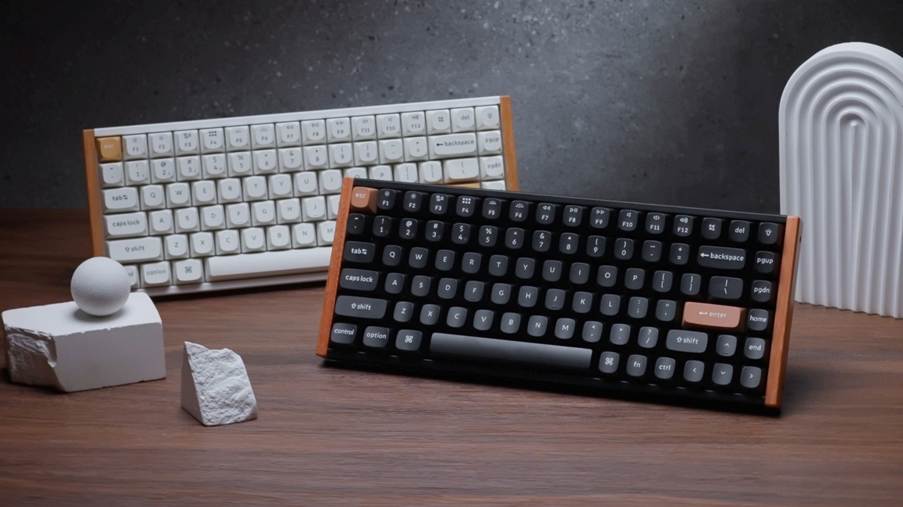
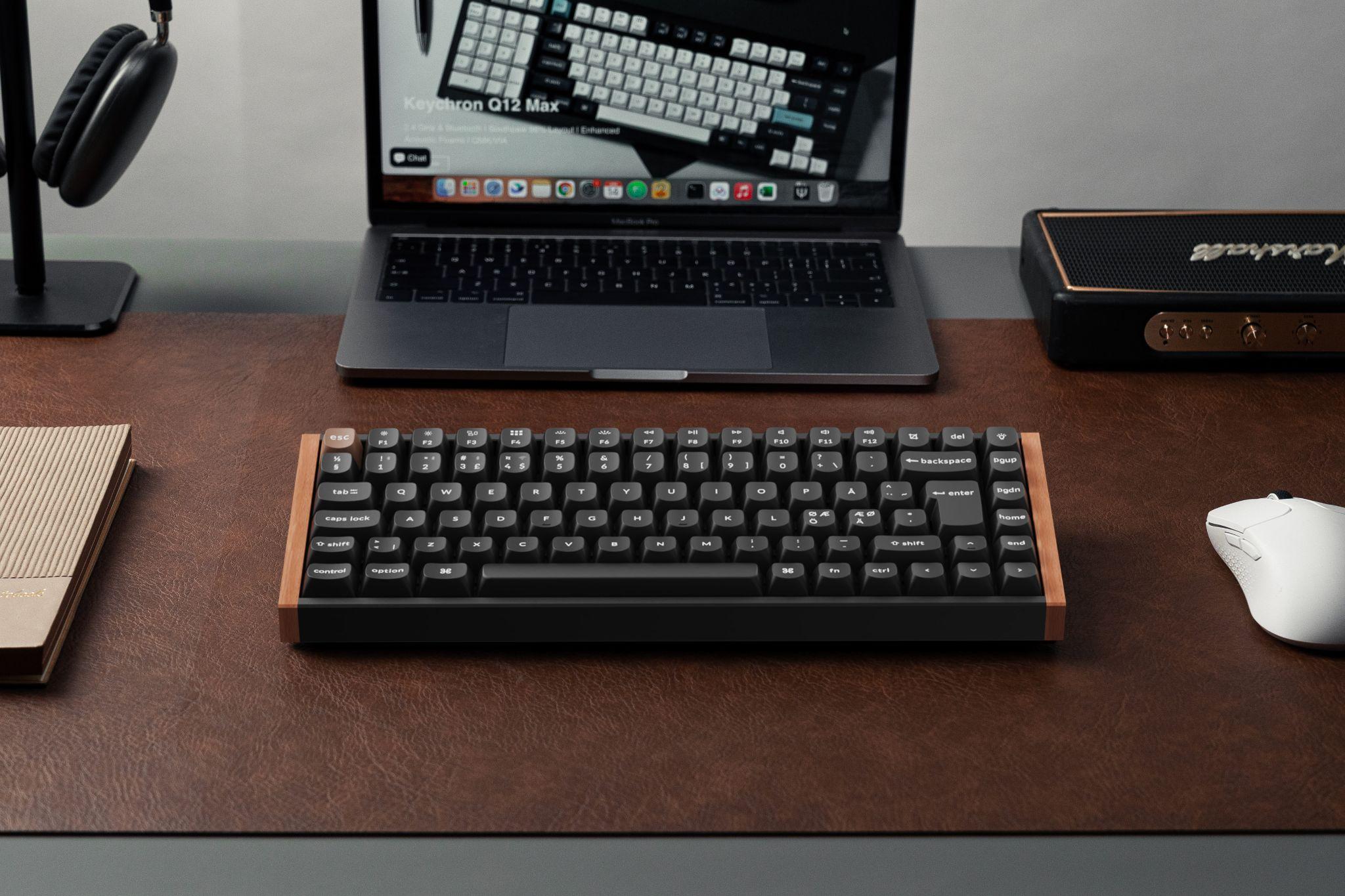
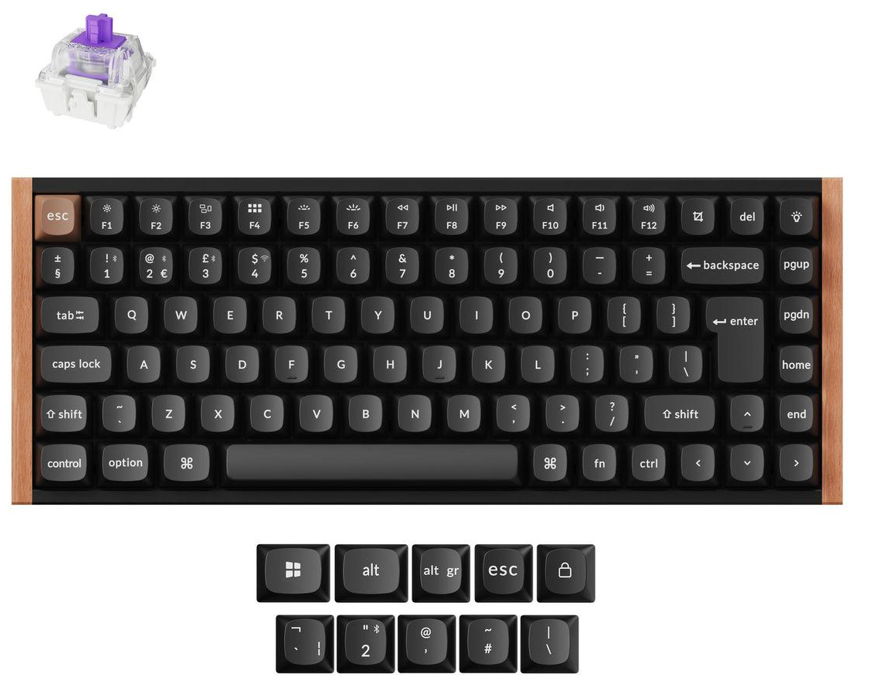
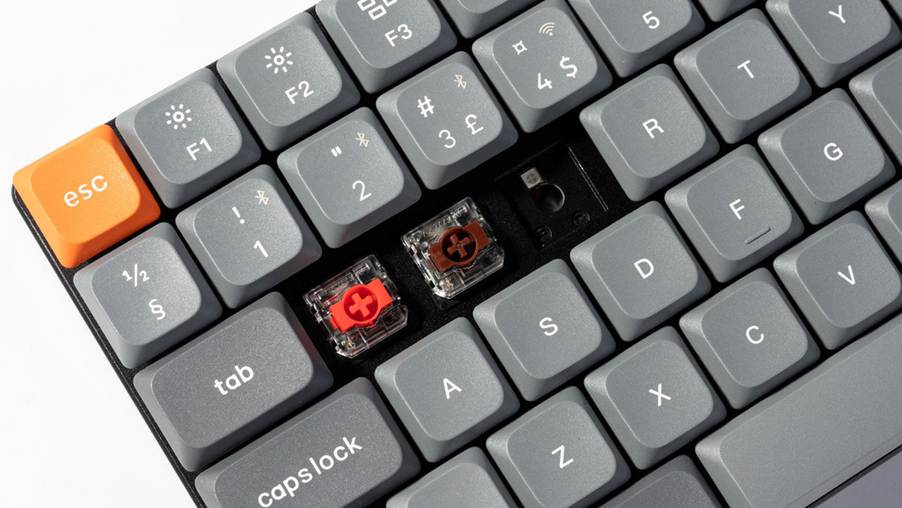
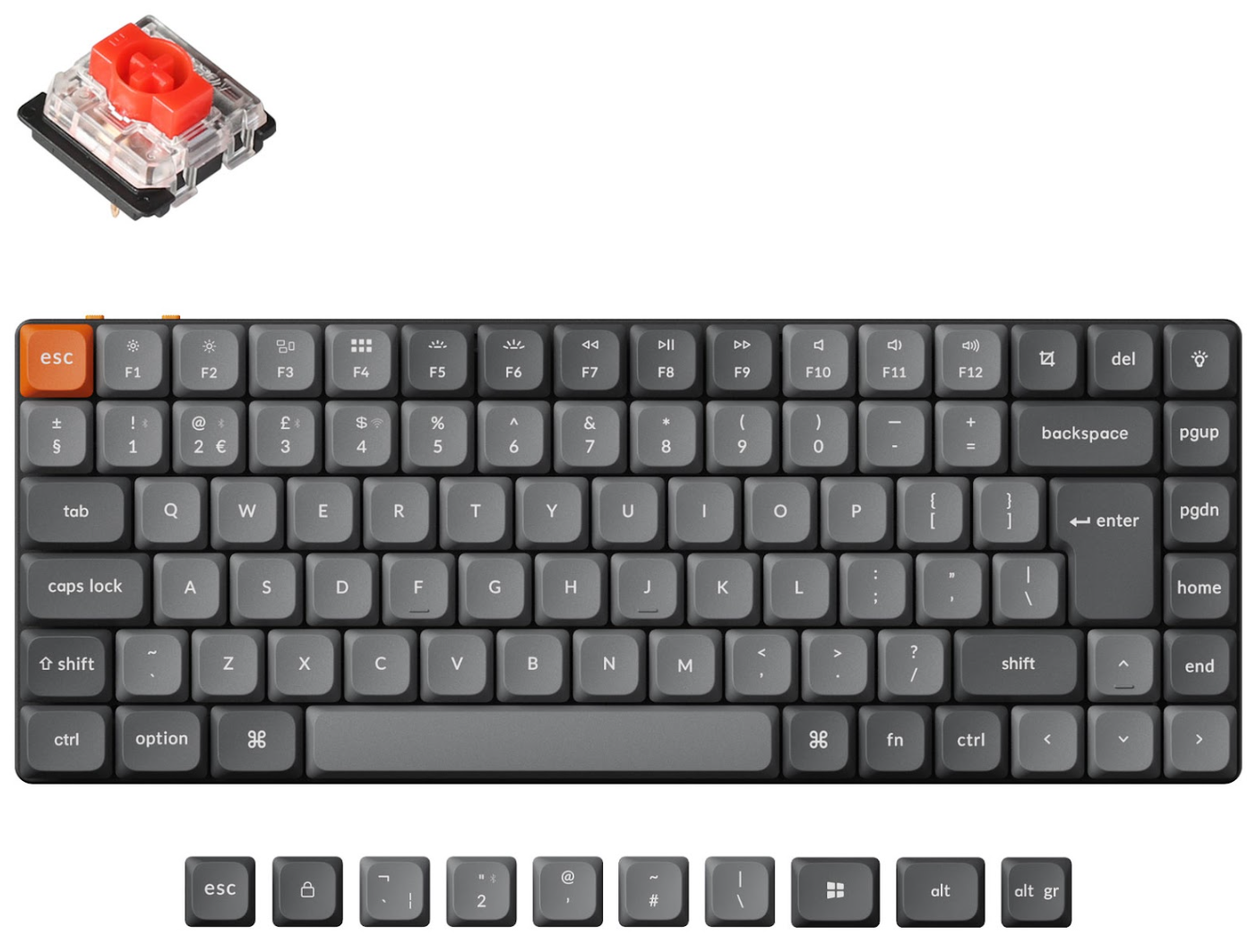
I hope your week’s been a good one! There’s exciting news in the world of mechanical keyboards – and it’s especially good news for us here in the UK. Our friends at Keychron have just released UK-ISO layout versions of two of their most exciting and feature-rich models: the Keychron K2 HE Wireless Magnetic Switch Custom Keyboard and the ultra-sleek Keychron K3 Max QMK/VIA Wireless Custom Mechanical Keyboard.
If you’re into keyboards – whether you’re a coder, gamer, writer, or just someone who appreciates a satisfying click – you’ll want to sit down for this.
🔧 Keychron K2 HE – Magnetic Switches, Adjustable Actuation & Custom Comfort
The K2 HE isn’t just another mechanical keyboard. It’s something genuinely special. Designed with Gateron’s double-rail magnetic switches, this 75% layout keyboard gives you precision control, allowing you to tweak the actuation point of each key and enabling something called Dynamic Rapid Trigger – think faster response and more fluid key actions. It’s the kind of tech that’s great for gamers but just as welcome for day-to-day work.
Keychron Unleashes Two New UK-ISO Layout Mechanical Marvels – The K2 HE and K3 Max Hit the UK
Built around a solid aluminium frame and finished with lovely rosewood accents (light wood for the white edition and dark for the black), it’s not just clever – it’s beautiful too. Each version comes with OSA-profile double-shot PBT keycaps, giving you that ever-desirable combo of durability and aesthetic class.
Keychron Unleashes Two New UK-ISO Layout Mechanical Marvels – The K2 HE and K3 Max Hit the UK
You’ve got triple connectivity options – 2.4GHz wireless, Bluetooth 5.1, and good old-fashioned USB-C. Plus, it works across macOS, Windows, and Linux, which is always a bonus in a multi-device household like mine.
You can grab the K2 HE now from Keychron UK starting at £137, and if you’re a fan of tweaking RGB, sensitivity and multi-action key commands, the Keychron Launcher web configurator is included to let you go full custom mode.
Keychron Unleashes Two New UK-ISO Layout Mechanical Marvels – The K2 HE and K3 Max Hit the UK
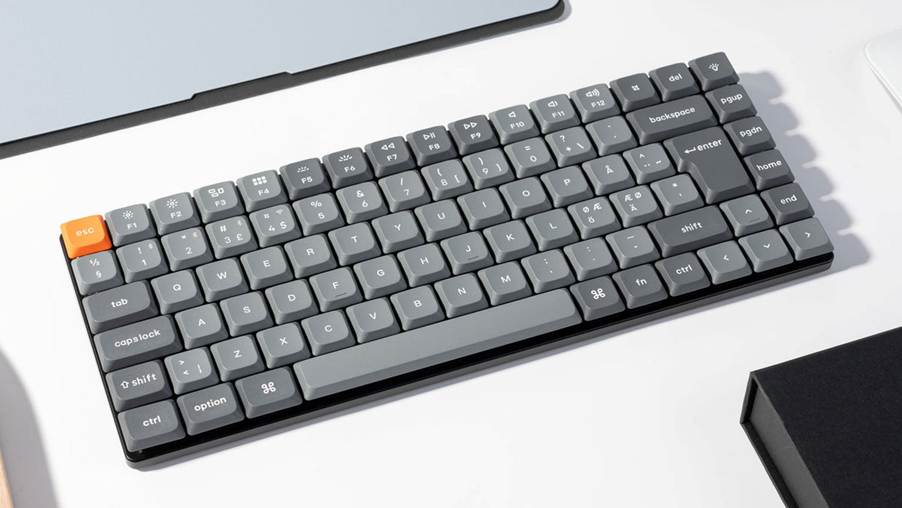
💻 Keychron K3 Max – Ultra-Slim, Hot-Swappable, and Fully Programmable
If low-profile is more your thing (or you like your gear slim and stylish), the K3 Max might be your next desk upgrade.
Keychron Unleashes Two New UK-ISO Layout Mechanical Marvels – The K2 HE and K3 Max Hit the UK
This one’s all about portability meets power. It’s just 31% thinner than traditional mechanical boards thanks to Gateron low-profile MX 2.0 switches, yet it still packs in full QMK/VIA customisability. That means full key remapping, macros, and layers – ideal for developers, gamers, or productivity nerds (guilty as charged!).
Keychron Unleashes Two New UK-ISO Layout Mechanical Marvels – The K2 HE and K3 Max Hit the UK
Like the K2 HE, it also supports 2.4GHz wireless, Bluetooth 5.1, and wired modes, and is built for all the major platforms. You’ll find IXPE acoustic foam and latex support under the hood to dampen key noise and improve comfort – a thoughtful touch for late-night typing sessions.
Inside, it’s driven by a beastly ARM Cortex-M4 MCU with 256KB flash and supports a 1000Hz polling rate, even in wireless mode. All that in a super-slim chassis? Count me in.
Even better – it’s currently on offer at £92.70 (down from £103) on the Keychron UK site. Bargain.
🎉 Final Thoughts
Keychron is one of those rare brands that manages to straddle the line between techie excellence and everyday usability. Both the K2 HE and K3 Max represent the pinnacle of what’s possible in the keyboard space today – elegant, powerful, and now with UK-ISO layouts, so we’re not left out in the cold!
Whether you’re building the ultimate battlestation or just want a keyboard that makes typing that bit more enjoyable, these are both serious contenders.
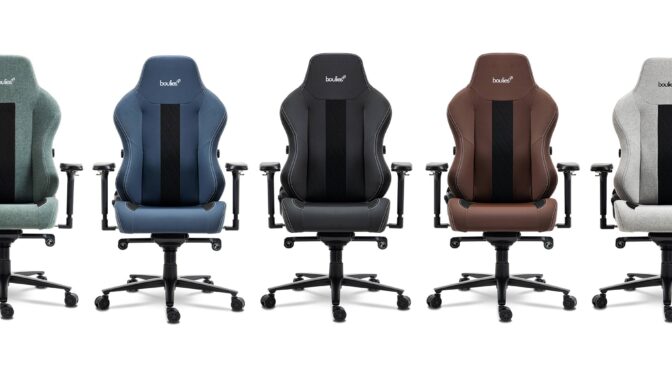
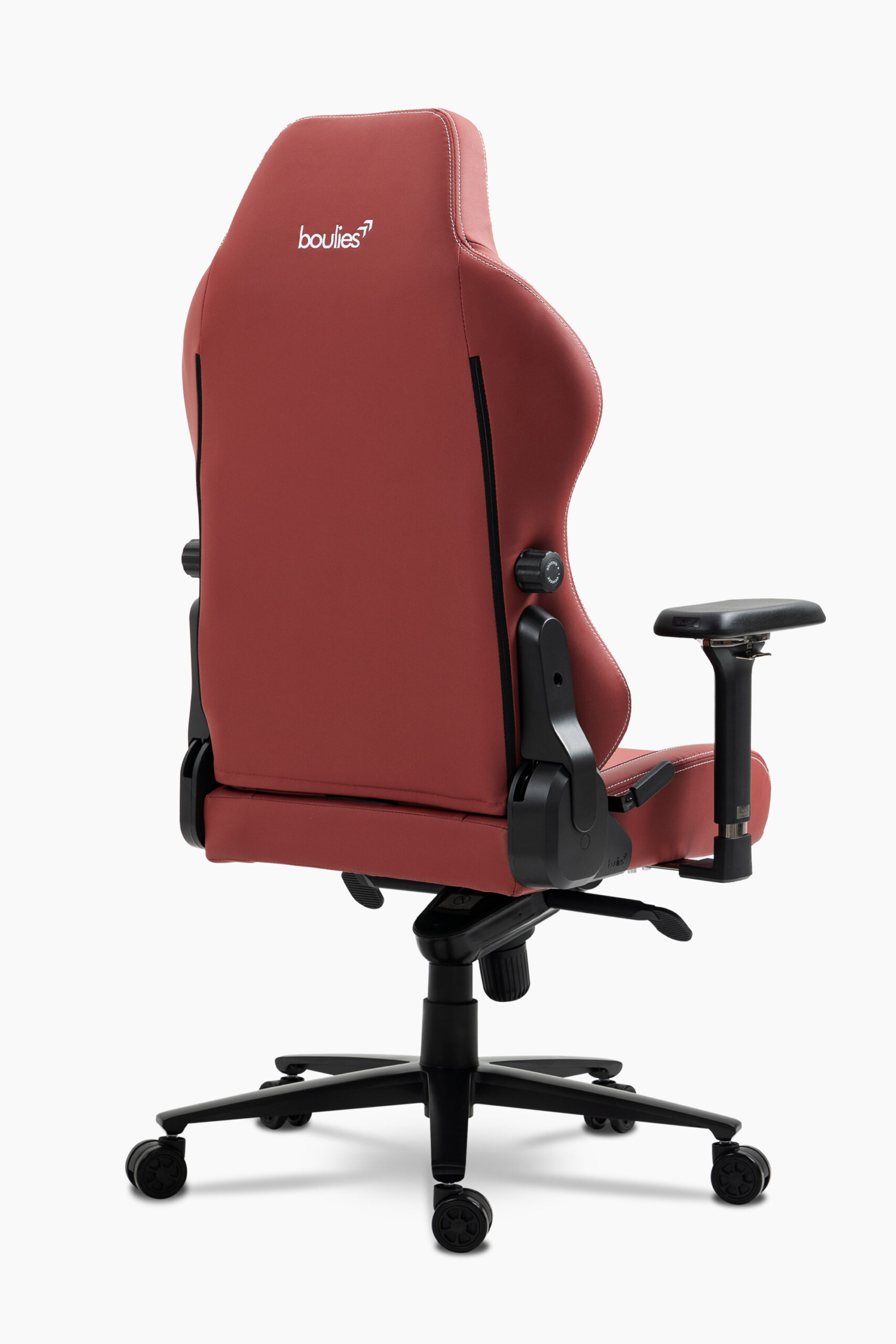
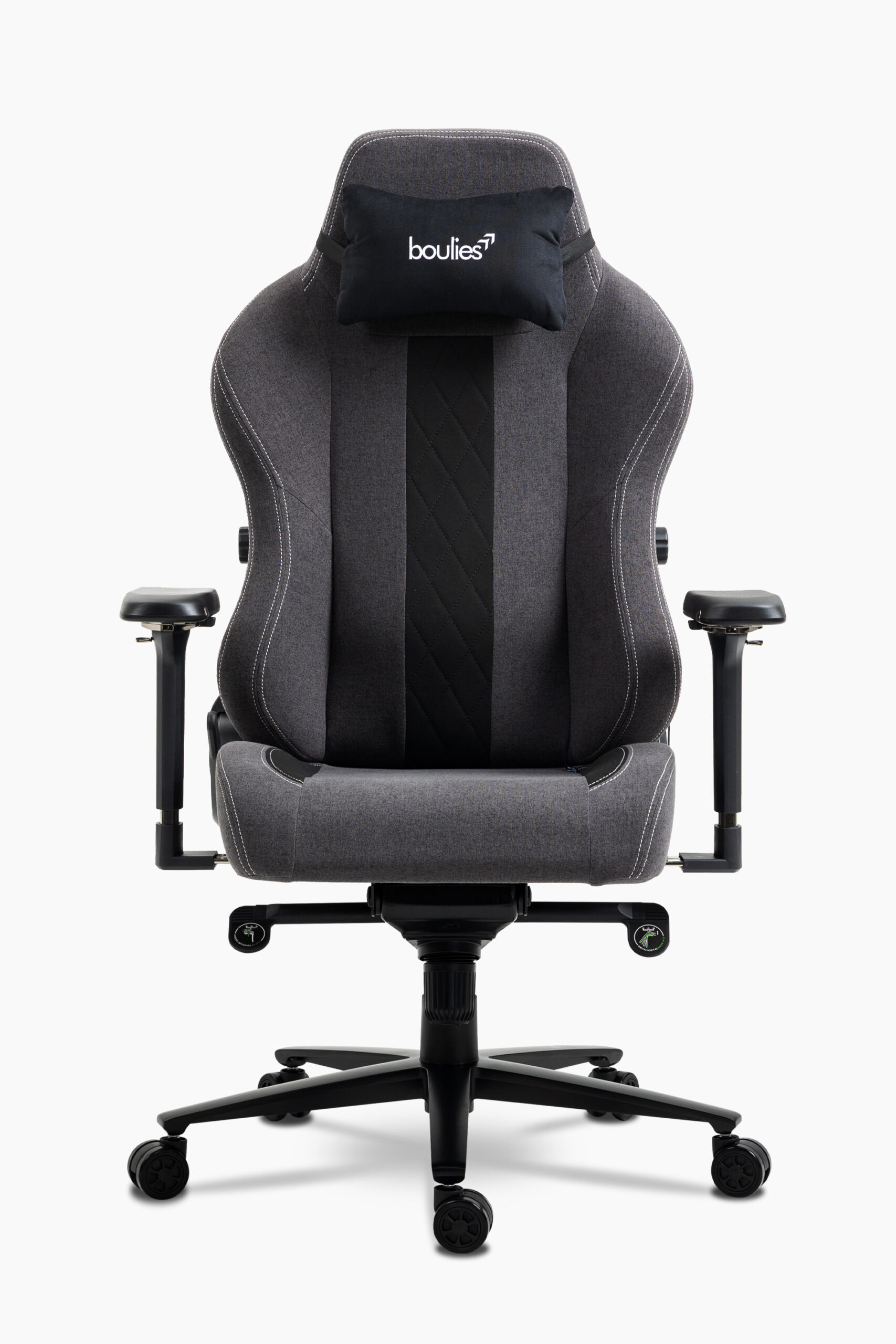
If you’re someone who spends long hours at your desk, whether for work, gaming, or just binge-watching your favourite shows, you already know how crucial a good chair can be. Enter the Boulies Master Rex—an ergonomic chair designed to combine premium comfort with functionality. It’s essentially the Goldilocks of chairs: not too firm, not too soft—just right.
A Sequel That’s Better in Every Way
The Master Rex builds on Boulies’ already popular Master Chair, with a fresh set of upgrades that will leave your old chair looking like it belongs in a museum. Among the highlights is a built-in leg rest, perfect for those moments when you just want to kick back. The Enhanced Stable Tilt Mechanism ensures that whether you’re reclining to unwind or rocking back and forth while brainstorming ideas, you’ll stay stable and comfortable.
And let’s talk flexibility. With a backrest that adjusts between 95° and 165° and a rocking range of 15°, finding your sweet spot—whether it’s for focused work or a well-earned break—couldn’t be easier. The built-in lumbar support is fully adjustable, helping you maintain good posture without even realising it. My spine felt like it had found its new best friend.
Sitting Comfort Like You’ve Never Experienced
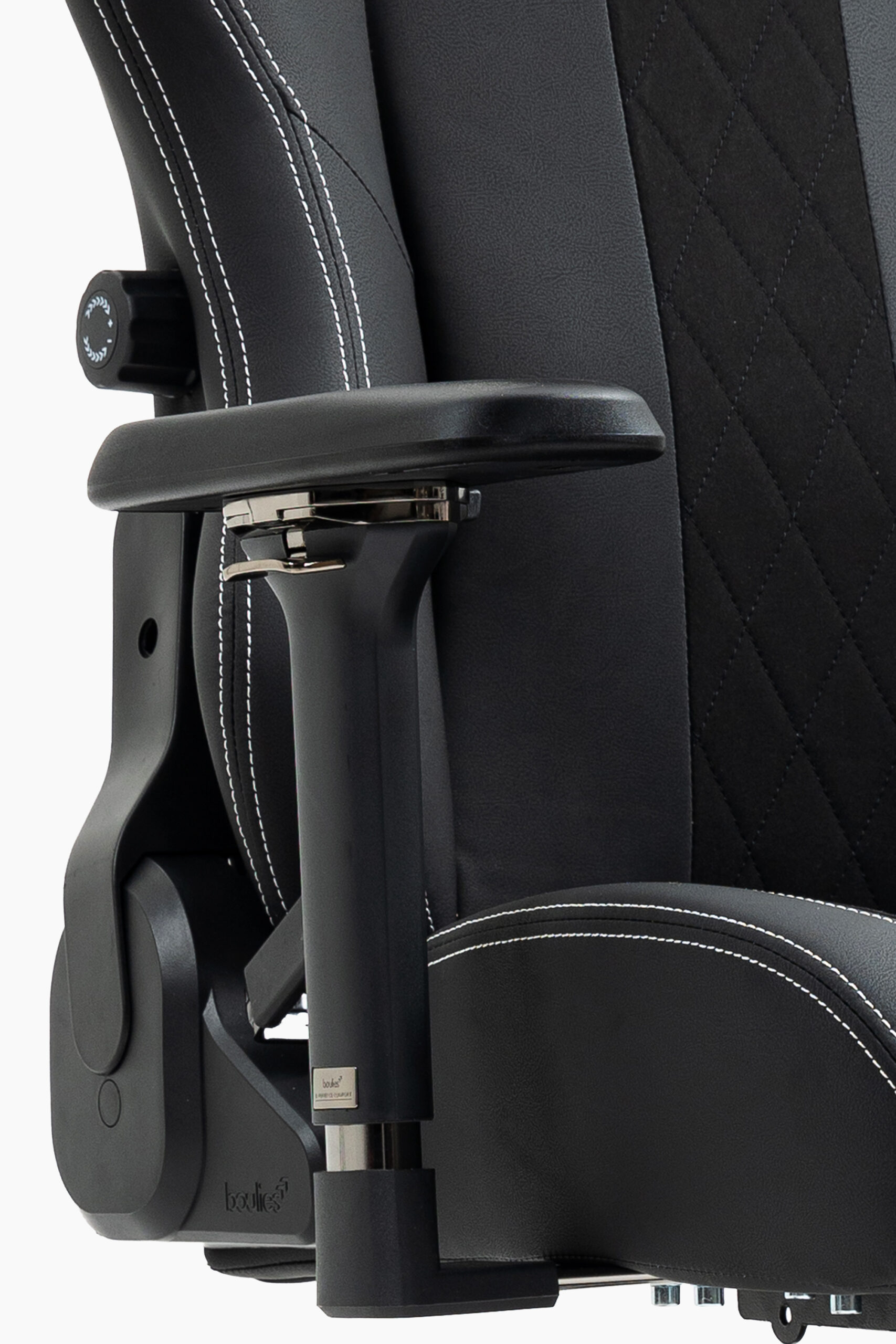
One of my favourite features has to be the tailored round-edge cushion design, which moulds to the contours of your body, reducing pressure on your thighs and hips. The wider seating area means you won’t feel cramped, and the plush, cold-cure foam ensures long-lasting support. Even the 4D armrests are fully adjustable, letting you customise height, depth, and angles to perfectly cradle your elbows.
The materials are no afterthought either. You’ve got a choice between two premium finishes:
Ultraflex PU Leather: Inspired by sports car interiors, it’s soft, durable, and feels luxurious to the touch.
W/R Fabric: If you prefer something softer and more breathable, this upgraded fabric blends endurance with plush comfort.
Either way, both options are resistant to spills—ideal for those of us prone to knocking over our morning coffees.
Design and Durability in One Package
The Master Rex is built to last, with an extra-strong steel frame and an aluminium base that feels sturdy enough to survive just about anything. The 6cm PU casters glide smoothly across floors without leaving scratches, so you won’t have to worry about wrecking your wooden flooring. And with a Class 4 gas lift (top-class hydraulics), you’ll enjoy stable height adjustments without the usual creaks and groans of lower-quality chairs.
Boulies Master Rex: The Chair That Redefines Comfort for Work, Gaming, and Relaxation
Is It Worth the Price Tag?
With an RRP of £409.99 (currently available with an £80 discount), the Master Rex delivers premium features without the usual luxury price markup. It’s a chair that combines top-tier materials, modern aesthetics, and ergonomics to create a seating experience that’s hard to beat.
If you’re looking for a chair that blends seamlessly into your home office while offering the comfort of a recliner, this could be the upgrade you’ve been waiting for.
Boulies Master Rex: The Chair That Redefines Comfort for Work, Gaming, and Relaxation
Final Thoughts
The Boulies Master Rex isn’t just another fancy chair—it’s an investment in comfort, productivity, and relaxation. Whether you’re working on a big project, gaming for hours, or just chilling with Netflix, this chair supports you every step of the way.
Head over to Boulies UK to learn more or take advantage of the current discount. Believe me, your back (and your productivity) will thank you.
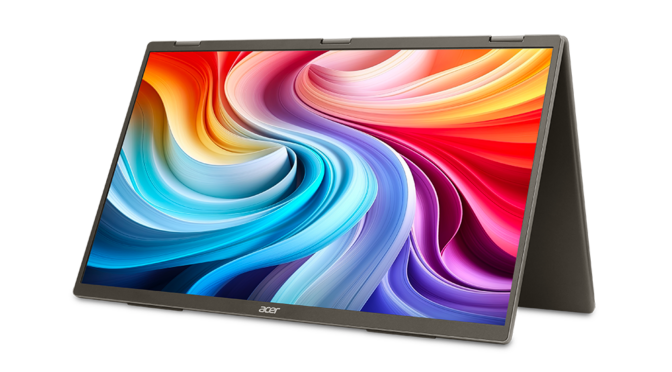
Acer has once again redefined the boundaries of productivity and entertainment with its newly launched PD3 Series, featuring dual-screen foldable portable monitors. Designed to enhance multitasking efficiency and immersive viewing experiences, the series offers a sleek, lightweight design and cutting-edge functionality, making it a perfect companion for professionals and tech enthusiasts alike.
Compact, Lightweight, and Versatile
Weighing only 1.55 kg and measuring a mere 2.4 cm thin (PD163Q model), the Acer PD3 Series is a marvel of portable design. With a 16-inch display, it easily fits into any bag, allowing users to set up a dual-screen experience anywhere—whether at home, in the office, or on the go. Equipped with HDMI and USB-C ports, the monitors are compatible with a wide range of devices, including laptops, tablets, smartphones, and PCs, ensuring seamless integration with your existing tech ecosystem.
Why Two Screens Are Better Than One
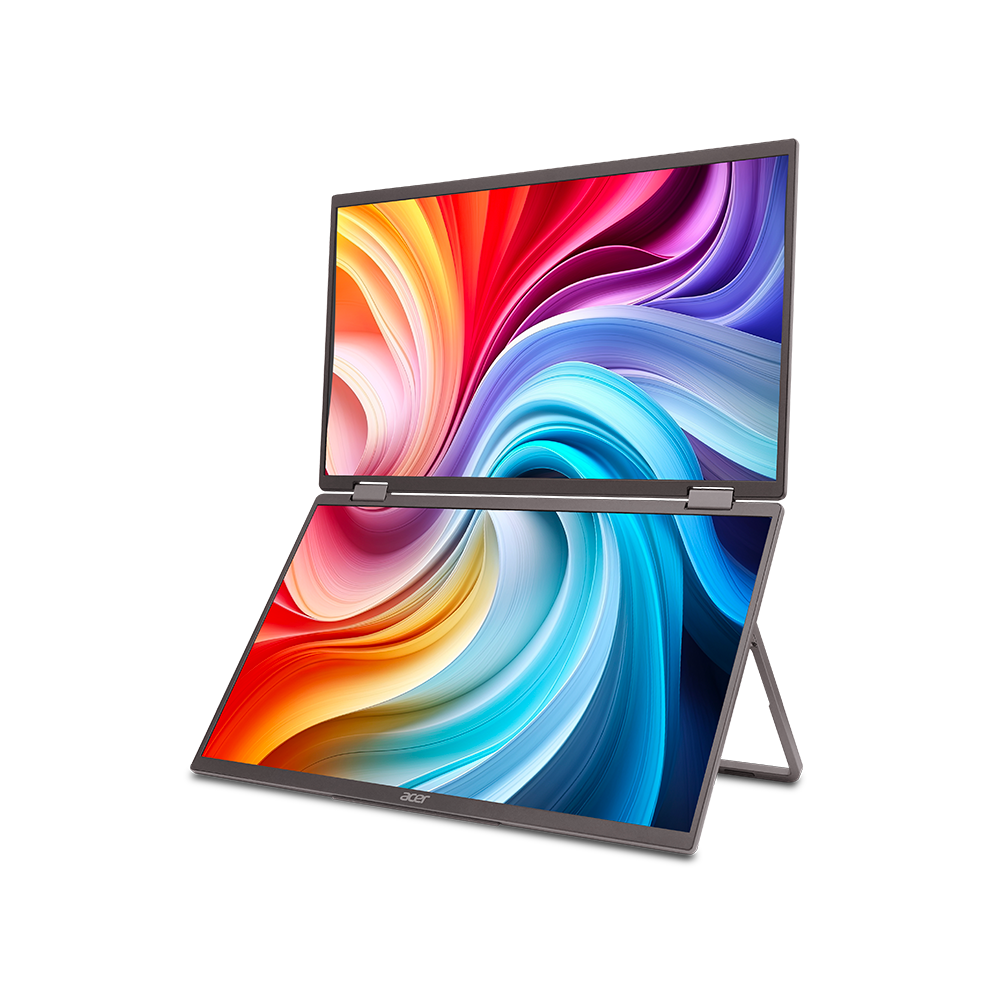
The dual-screen setup of the PD3 Series elevates multitasking to a new level. The monitors enable:
Efficient Workflows: Display a presentation on one screen while referencing data on the other.
Enhanced Gaming: Play games on one screen while consulting guides on the second.
Custom Viewing: Adjust the integrated stand for a 315° ergonomic design, allowing users to stack screens vertically or horizontally to suit their needs.
Vertical stacking reduces excessive scrolling, minimizing strain on the eyes and neck—perfect for extended working hours.
Enhanced Visuals and Immersive Quality
With a 1080p resolution per screen, the PD3 Series combines for a stunning 2160 x 1080 Dual FHD resolution when used together. The IPS panels ensure vivid colors, a wide 178° viewing angle, and consistent image quality. An automatic pivot feature enables effortless switching between landscape and portrait modes, further enhancing flexibility for professionals like graphic designers, programmers, and writers.
To support prolonged use, the monitors are equipped with Acer VisionCare™ technology, a suite of features designed to reduce eye strain during extended sessions.
Acer Unveils Groundbreaking PD3 Series Dual-Screen Foldable Monitors
A Triple-Screen Powerhouse for Multitasking
The PD3 Series can transform any workspace into a productivity hub by acting as a second and third screen. Whether you’re managing real-time engagements or analyzing complex data, these monitors provide a comprehensive view without disrupting your workflow. Their VESA mount compatibility ensures a clutter-free desk space, allowing for stylish and functional setups.
Models and Availability
The Acer PD3 Series comes in two sizes:
15.6-inch PD163Q
18.5-inch PD193Q E
Both models are now available and promise to cater to a variety of business and entertainment needs.
Acer Unveils Groundbreaking PD3 Series Dual-Screen Foldable Monitors
Key Features of the Acer PD3 Series
Dual-Screen Foldable Design: Increases multitasking efficiency and supports a range of viewing angles.
High-Quality Displays: IPS panels with Acer VisionCare™ for vibrant visuals and reduced eye strain.
Portable and Lightweight: Perfect for on-the-go professionals.
Broad Compatibility: HDMI and USB-C ports for seamless device connectivity.
Space-Saving Solutions: VESA mountable for an organised, clutter-free setup.
Acer continues to innovate, blending sleek design with unparalleled functionality in the PD3 Series. Whether you’re a professional needing an efficient workspace or an enthusiast seeking immersive entertainment, these dual-screen foldable monitors deliver an experience like no other.
To explore more about the Acer PD3 Series, visit Acer’s website.
Stay tuned for more innovative tech reviews and updates from The Gadget Man!
What are your thoughts on Acer’s new PD3 Series? Let me know in the comments below, or join the conversation on my social media channels!
In the ever-evolving world of creative production, staying ahead means adopting cutting-edge solutions to enhance productivity and flexibility. Republic Creative Studios, a Dallas-based collective specialising in production, editorial, and design, has partnered with CineSys and Leostream to enable seamless hybrid workflows for their team of editors, designers, and artists.
With a fully integrated tech infrastructure powered by Leostream’s Remote Desktop Access Platform, Republic is bridging the gap between on-premise and remote work, ensuring their teams have access to high-performance tools wherever they are.
Who is Republic?
Republic Creative Studios is a hub of innovation, housing three distinct creative units:
Republic Productions
Republic Editorial
Republic Design
Together, they deliver cutting-edge short-form advertising across TV, social platforms, and even physical spaces. Their notable clients include McDonald’s, Dr. Pepper, Converse, and Lenovo, with projects spanning photorealistic 3D designs, hand-drawn 2D animation, and full-scale VFX integration.
Republic’s projects often require intensive workloads like color grading, sound design, and finishing, making access to robust, high-performance computing resources essential.
CineSys and Leostream: The Perfect Match for Hybrid Work
To meet Republic’s demanding needs, CineSys—a leader in broadcast and media systems integration—designed a bespoke system powered by Leostream’s Remote Desktop Access Platform. This solution allows Republic’s team to:
Effortlessly switch between on-site and remote work.
Access both on-premise and cloud-based workstations securely.
Leostream’s platform integrates seamlessly with high-performance display protocols like Mechdyne TGX and PCoIP, ensuring low-latency, high-resolution access to even the most demanding production environments, including 4K video editing and complex VFX tasks.
Key Benefits for Republic
Seamless Hybrid Workflows
Leostream’s platform enables editors and designers to start projects in the office and continue remotely without interruptions, fostering greater flexibility and creativity.
Enhanced Productivity
The system’s persistent connections and intuitive design eliminate the need for clunky VPNs, letting Republic’s team focus on creating, not troubleshooting.
Quick Implementation
With the technical expertise of CineSys, the system was implemented rapidly, avoiding downtime and ensuring a smooth transition to the hybrid model.
Secure Remote Access
Built on zero-trust principles, the Leostream platform ensures strict authentication and secure resource allocation, safeguarding Republic’s sensitive projects.
Republic’s Verdict
According to Jason Vigue, Senior Motion Graphics/VFX Artist at Republic:
“Leostream offers an ideal enterprise-class system tailored to our hybrid work environment. It centralises our resources to give us secure remote access to creative tools, so our editors and designers are more productive.”
Why This Matters
In today’s fast-paced creative industries, blending art and technology is essential. With Leostream and CineSys, Republic has embraced a hybrid model that combines cutting-edge technology with flexibility, setting a new standard for production studios worldwide.
As Karen Gondoly, CEO of Leostream, highlights:
“Modern content pairs art and technology in new and effective ways, and we’re proud to support studios like Republic in their creative journeys.”
About the Partners
Leostream: A global leader in remote desktop solutions, Leostream has over 20 years of expertise in enabling secure, high-performance remote work environments.
CineSys: A North American broadcast and media systems integrator specialising in accelerating workflows and strengthening infrastructures for industries ranging from media to government.
Republic’s story is a testament to how the right technology can empower creative teams to push boundaries while staying connected, no matter where they work.
What are your thoughts on this hybrid approach? Share your comments below!