Tag Archives: Radio Suffolk

Gadget Man – Episode 142 – Retro Gadget Part 8 – Nokia 3310 Mobile Phone

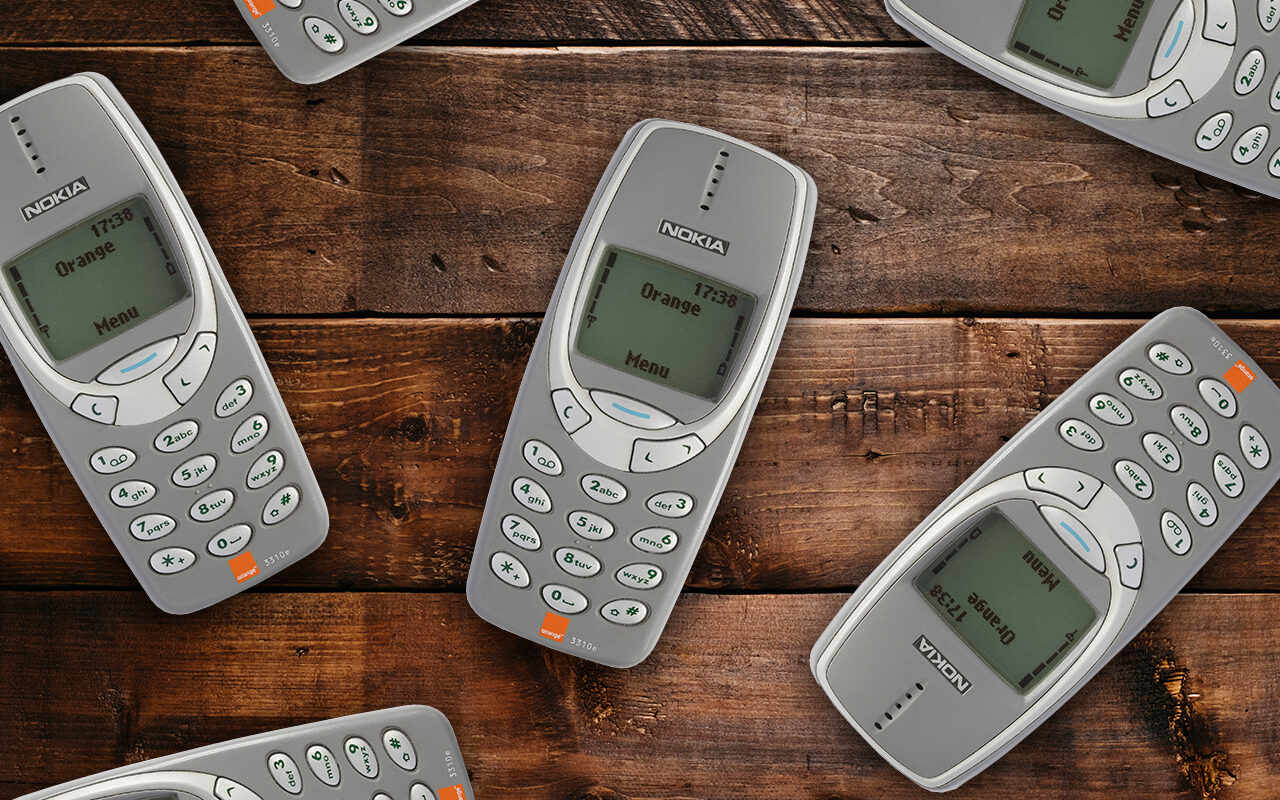
We’re now on the home straight with the Retro Gadgets Series and what better classic gadget to feature but the legendary Nokia 3310 mobile phone.

This is certainly a gadget that needs very little introduction, after being introduced in 2000, the handset went on to sell more than 126,000,000 units. What’s more, the handset continues to be used in many households today.  I previously discussed the handset in Episode 98 with James Hazell.

Nokia’s new owners HMD relaunched the device in 2017 with a homage to the original device, attempting to capture a new market of low-cost mobile phones. This too was covered in Episode 102 with Mark Murphy.

The Nokia 3310 launches in the UK
The Original Nokia 3310 and the the 2017 HMD Nokia 3310 reboot

Today, however, it was the turn of Matt Marvell to listen to my lament about this classic piece of technology history.

You can listen in to the recording by clicking at the top of the post. Don’t forget to LIKE, SUBSCRIBE, SHARE and most importantly COMMENT. I’ll catch up with you next time

Matt Porter
The Gadget Man

Gadget Man – Episode 132 – Retro Gadgets – Part Two – Sony Walkman

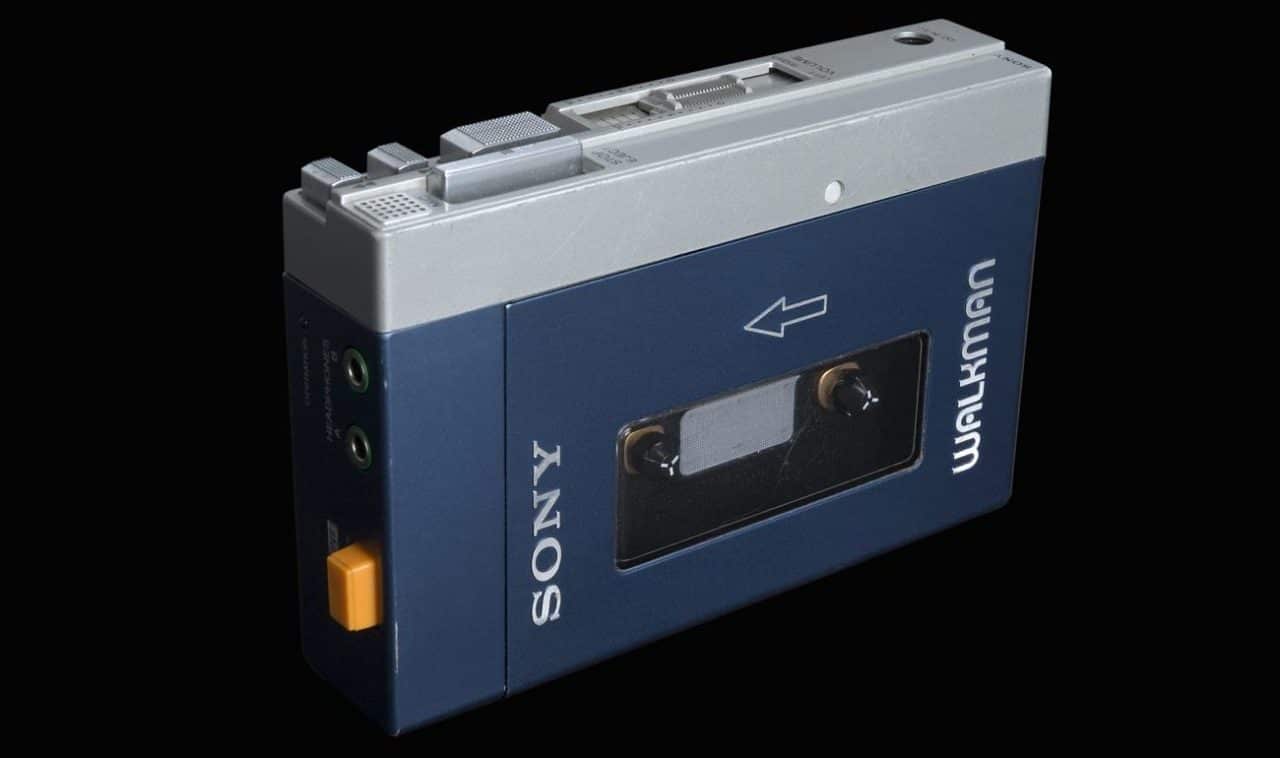
In the second of my 10 Retro Gadgets of the Week, I talk about arguably one of the most important inventions of the 20th century!

Don’t forget to listen in to the podcast link above where I talk about the gadget and its functions.

Sony Walkman

The Sony Walkman was a portable cassette player launched in 1979, it started a revolution in personal audio cassette players and altered the listening habits of people and brought music to the masses wherever they might be.

https://www.youtube.com/watch?v=YH2T94XWqck


Soundabout, Freestyle and Stowaway

Originally invented as the Sony Pressman to allow journalists to record interviews using a compact device, it became a personal entertainment device shortly after, settling on the name Walkman after being names the Soundabout, Freestyle and Stowaway. It very quickly became very popular and Sony began marketing it under a single brand-name, the Sony Walkman was born.

Originally the Walkman came with two headphone sockets with individual volume controls and a Hotline button which lowered the volume levels and opened the microphone to allow for station announcements to be heard or the user to have conversations with other people.

Sony Walkman Hotline
Sony Walkman Hotline and twin Headphone sockets

Other manufacturers such as Aiwa, Toshiba and Panasonic soon followed suit launched competing products, but the devices all became known as a “Walkman” as the brand-name crossed over into popular culture and entered the Oxford English Dictionary in 1986.

Walkman Effect

The Walkman was used when walking, exercising and running. Sony launched the ‘Sports Walkman’ which offered a degree of waterproofing and allegedly drove the fitness craze of the late ’80s. It was during this time that cassettes began outselling vinyl as millions of people chose the Walkman for their entertainment.

As music delivery advanced forwards, Sony was quick to adapt the brand to suit new formats, thus they launched the Sony Discman for the CD marketplace, the Sony DAT Walkman, MiniDisc Walkman and Sony Watchman TV.

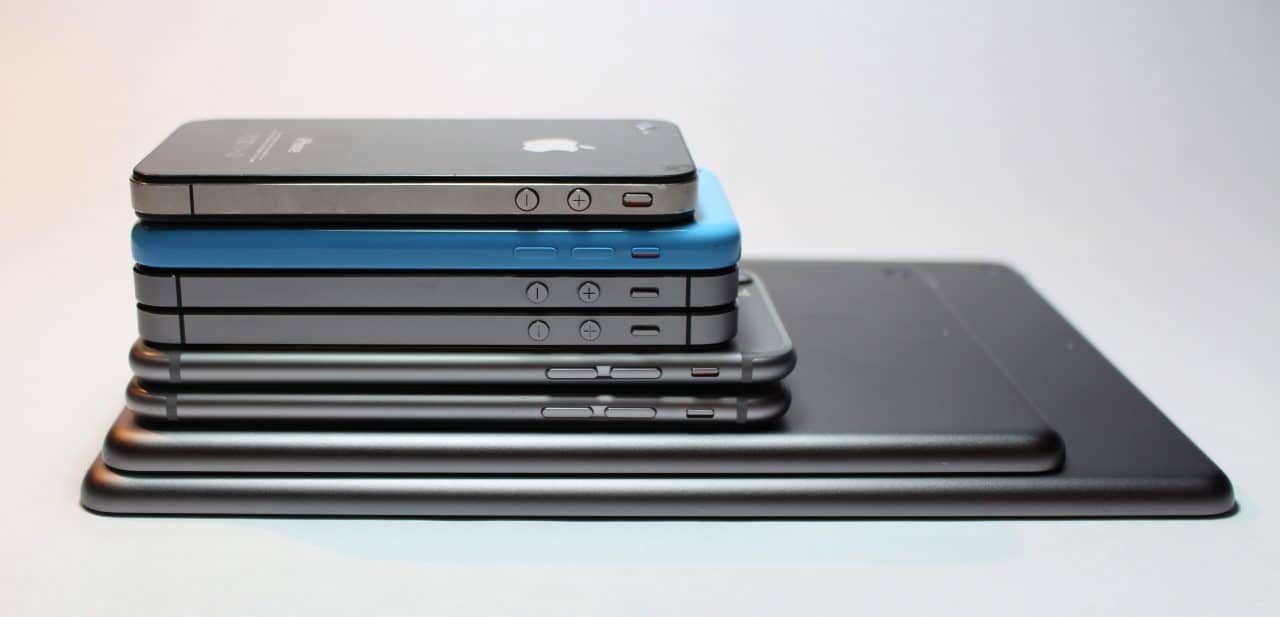
Without the Sony Walkman, we wouldn’t have modern personal music players and most certainly would never have seen the Apple iPod. Sony continued the brand of Walkman into the modern smartphone marketplace.

Don’t forget to listen to the podcast above! Like, Share and Subscribe and I will see you next week for the Retro Gadget No.3

Thanks to Matt Marvell at BBC Radio Suffolk for having me on his show as a guest again this week.

Matt Porter
The Gadget Man

Gadget Man – Episode 130 – Why are people not upgrading their phones as often?

Many of us will remember the halcyon days when upgrading our mobile phone handsets was a six-month event.

No so now it would seem, instead, we are waiting much longer and are clearly looking for greater incentives to part with our beloved devices and even more importantly, our money.

You can listen into my interview with James Hazell on BBC Radio Suffolk where I talk about why the smartphone market is slowing down. Click on the link above to hear what I had to say. 

A Short(ish) History

My first mobile phone was bought in 1993 (some 26 years ago) from Dixons in Derby. It was an NEC P100 and I think it cost me £50 and then £7.50 per month for the contract with Vodafone, no calls were included, so I paid 50p per minute if I did need to call anyone.

The phone itself ran on the old 1G analogue network at 900MHz which was very quickly superceded by the digital 2G networks split between 900MHz for Vodafone and Cellnet and the alternative 1800Mhz for Orange and Mercury One2One.

Note: if you don’t recognise many of these names, it’s because due to buyouts, rebrands and mergers, Vodafone remained, Orange became EE, Cellnet became BT Cellnet, then O2. Mercury One2One became just One2One and then changed to T-Mobile which in turn is merged with Orange to become EE. Then of course 3 launched a 3g service later on and of course, two dozen or so ‘piggy-back’ operators such as Giffgaff, Sky Mobile, Virgin etc, who don’t, in fact, run their own networks but instead using the Big Four’s network. 

So my first phone was relatively cheap in today’s terms and in fact in ‘yesterdays’ terms too. the NEC P100 was meant to be a durable portable phone which it was and I kept it for some years until the analogue network was phased out and I had to get a more modern phone. The 2G network roll-out in the UK caused a market explosion and along with it came the Nokia 5110 and then 3310 phones which completely dominated the marketplace.

This explosion in popularity came with reasonably cheap phones with cheap and short contracts, this meant that phones could be renewed quite regularly and soon cupboards would start filling up with unwanted and out of date devices, fuelling development and in reality, a war between manufacturers and networks to provide more and more functionality. Heading this surge was Orange and O2 who had struck up a deal with little known manufacturer HTC to produce the very first Microsoft Windows CE based ‘Smartphones’, long before the birth of the iPhone.

HTC was at the time manufacturing the Compaq and HP iPaq Pocket PC and by adding cellular functionality, the Orange SPV (Sounds, Pictures and Video) and O2 XDA (extended PDA) began to be sold and the Smartphone was born.

Suddenly our dumb phones became ‘Smartphones’ and with it rapidly increasing prices. These costs had to be passed onto consumers via increased contracts with longer minimum terms (mainly to allow for the handset and network infrastructure costs to be absorbed ). Minimum six-month contracts became twelve, then eighteen, then twenty-four months. All of this was necessary to pay for the device and network overheads!

The phone networks began bundling minutes (and later, data), in part to placate phone users who were starting to become caught up in the ever increasing contract times.  Subsequently, devices became more expensive, resulting in more expensive contracts.

With the launch of Apple’s iPhone, O2 and T-Mobile began offering ‘all you can eat’ data plans in order for these data-hungry devices to take advantage of the vast amount of content appearing. Once the iPhone 3G was launched, with its ability to consume vast amounts of bandwidth and data, the all-you-can-eat model was scrapped or altered with ‘acceptable usage’ policies to limit data consumption, unless you were prepared to pay more.

Now that the smartphone had become established as a Super-Gadget, the manufacturers began an ‘Arms-Race’ to establish themselves as the Go-To brand in the multi-billion dollar marketplace, the likes of Apple, Samsung, Nokia, Motorola, LG, Sony and HTC began pumping billions into product development, patent registrations, cross-licensing and all-out war!

In turn, the Smartphone industry has driven bigger, better, faster and more costly devices into the consumers’ hands! Meanwhile, in China, Xiaomi, Huawei and Honor are producing comparable and in some cases, better products, the market is now awash with products that were once competing with each other but are now blurring their differences making it difficult to see the differences

Summing Up

We now have a smart-device marketplace with astoundingly high-quality handsets costing £1000 plus! How can we justify paying over £100 a month for a mobile phone contract, when we are struggling to differentiate between ‘last-years’ model?

What is needed now is for the manufacturers to take a breath! They need to find out what their customers really want. Maybe we are becoming tired and bewildered of being told what functions we need by these companies and it’s time for them to start listening to their consumers.

Matt Porter
The Gadget Man


Gadget Man – Episode 126 – Facebook, Instagram and WhatsApp were DOWN!!!

For the last 24 hours, there has been collective panic across the digital world! Was this panic caused by the continued disaster that is the Brexit negotiations and repeated House of Commons votes?

No, it was because the worlds largest Social Networks were failing all around us. Literally MILLIONS of Facebook, Instagram and WhatsApp users were panicking at the loss or at least interruption of their services.

There are many reasons for these failures, Facebook has denied DDoS attacks, but there is a myriad of other reasons, software corruption, network failure or hardware issues. There has even been the discussion of AI being involved in the problems!

** UPDATE – 14/03/19 21:59 ***

Facebook has now officially explained the reasons for the issues suffered over the past 24 hours as follows:-

Facebook Datacenter - Image Credit: Facebook Inc.
Facebook Datacenter – Image Credit: Facebook Inc.

Currently, we haven’t had an explanation and as soon as we do (see above), I will post it on this blog, until then, you can listen in to me talking to James Hazell at BBC Radio Suffolk about the problem.

Before I go, make sure you watch The Truman Show, in particular watch the very end, as the show draws to an end, everyone goes back to their normal lives. Maybe, we should too.

Don’t forget to Like, Subscribe and Share using the appropriate buttons.

Gadget Man – Episode 122 – Are We Influenced By Movies And Media?

Last week, I spoke with James Hazell on BBC Radio Suffolk about the new film classifications and how they can be applied to online video streaming sites.

I also discussed YouTube’s ban on videos that contain or encourage dangerous pranks that endanger people or could cause harm to people copying them.

BBFC Ratings
BBFC has revised it’s classifications

Following a public consultancy of more than 10,000 people, the BBFC (British Board of Film Classification) has now revised its classifications to make it more consistent across platforms, including online services.

David Austin, Chief Executive Officer at the BBFC, said: “Over the last five years the way we consume film and video has changed beyond all recognition. That’s why it’s so important that there is consistency between what people watch on and offline.  The research shows that parents and teenagers want us to give them the information and guidance that they need to view what’s right for them.

We’re here to listen to what people want, which is why they trust our age ratings.  So it’s encouraging to know that we’ve been classifying content in line with what people want and expect when it comes to difficult themes around credible real life scenarios. We also know that people are more comfortable with issues such as action violence, if it’s in a way that they are expecting – such as a Bond or Bourne film. We are updating our standards around depictions of sexual violence and very strong sex references to reflect changes in public attitudes.”

Image Credit: Netflix
A scene from Bird Box – Image Credit: Netflix

In discussing YouTube enforcing rules banning videos which either put people in danger or promoted acts which might lead people copying those acts to either suffer harm or place others in danger, we discussed recent movies such as the Netflix production; Birdbox which led some people to challenge others to go about day-to-day activities whilst blindfolded and may have led a driver in the US to become involved in a motor vehicle accident.

Trinity and Neo from The Matrix
Trinity and Neo from The Matrix – Image Credit: The Wachowskis / Silver Pictures / Warner Bros

On a lighter note, I owned up to buying a pair of ‘Neo from the Matrix’ inspired sunglasses and my continuing search for ‘The Dude’s Cardigan’ from The Big Lebowski.

The Big Lebowski
The Big Lebowski – Image Credit: The Coen Brothers / Working Title Films

You can listen in to the stream, by clicking on the play button above, or you can subscribe to The Gadget Man podcast using the links above listen in via iTunes, Tune-in, Google Podcasts and more! Don’t forget to show your support by ‘liking’, ‘sharing’ and ‘subscribing’.

Matt
The Gadget Man
[amazon_link asins=’B0089X2GLQ,B00FI3OOF6,0007529902,B001CEE1YE’ template=’ProductCarousel’ store=’thgama03-21′ marketplace=’UK’ link_id=’367400d7-3b16-48c4-83c3-b9ef7549c045′]

The Gadget Man – Episode 119 – Technology to look out for in 2019

Another year passes and as we move into 2019 we can look forward to another year of unstoppable advances in technology.

If I was able to predict upcoming tech, I’m happy to suggest that my number one for 2019 will be the folding mobile phone with potential devices from LG and Samsung already breaking cover in various forms.

[videopress WcnyB1iG hd=”true” autoplay=”true”]

Both companies have already demonstrated their flexible display technologies and with the Mobile World Congress in February coming up soon, we should expect demonstrations of foldable, rollable or bendable screen tech from these companies.

Artificial intelligence is sure to continue its unstoppable march towards self-awareness (I jest!!), but all the same, we should be seeing multi AI ‘bots’ training directly with each other very soon! Who could forget the Facebook AI bots which invented their own communication language shortly after being switched on! More of this in inevitable, hopefully with the necessary safeguards in place.

The big 3 tech companies continue to advance home-based smart technology with integration into every part of our lives, add to this more AI and who knows what we should expect from the likes of Amazon, Google and Apple.

Holograms are a little way off, but augmented reality is making leaps and bounds with more advanced filters on spectacles providing with illusionary-holographic images a reality soon.

Phone batteries continue to provide us with more and more screen time and further advances in battery and charge technology will give us even more excuse to distract ourselves on a daily basis.

[videopress eFz5BDAp]

This year we look forward to the beginnings of the 5G roll-outs, giving us impossibly fast download speeds, but also extending decent internet speeds to rural areas of the UK.

Ultimately, we are not about to be overrun by killer robots and 2019 will be bringing some pretty astounding new technology, strap yourselves in and enjoy the ride.

I talked on air with James Hazell from BBC Radio Suffolk about my predictions for the coming year. Have a listen and don’t forget to  Like, Subscribe, Share and Comment and I will see you very soon.

Matt


Gadget Man – Episode 114 – Too Much Smartphone Part II

You might remember a few weeks back, I talked about how smartphones have now officially taken over our lives, squeezing into every social, domestic and work situation.

Today, I spoke to James Hazell on BBC Radio Suffolk about how our very Government is considering investigating how to make the use of a smartphone safer for us all.

China continues to innovate in this area by providing ‘mobile friendly’ footpaths for phone users to protect them from walking into each other or falling into fountains!

A designated 'Cellphone Sidewalk' in Chongqing, China. Photo credit: China Daily/Reuters
A designated ‘Cellphone Sidewalk’ in Chongqing, China.
Photo credit: China Daily/Reuters

While you sit and ponder how we as an advanced civilisation found ourselves in this position? Why not listen into my interview with James.

If you like what you read or listen to, why not ‘Like’ and ‘Share’ this story.

Gadget Man – Episode 113 – What is Keyless Car Crime?

Following reports of an increase in car-related crime, I spoke to Mark Murphy on BBC Radio Suffolk about what can be done to reduce the chances of falling foul to Keyless Car Crime.

Keyless Keyfobs are devices that have come to replace the ‘traditional’ car entry methods which required us to actively press a lock/unlock button on our fobs. Instead the car constantly ‘polls’ the keyfob and when you within a short distance of the vehicle, automatically opens its to allow for entry. It also enables the driver to start and stop the car using on dash buttons.

As is usual, technology strives to make our lives easier, but also it seems gives criminals new opportunities to steal our vehicles. Readily available gadgets can be purchases specifically to scan for these ‘handshake’ signals between car and fob and upon interception, thieves can drive the cars with an instantly cloned device.

It is important to note that many cars will allow the car to be driven even if the key is no longer present. Check with your manufacturer if this is the case with your vehicle.

Rather than concentrate on the specific technology to achieving this wireless theft, drivers should concentrate in the short term on how they can ensure their cars are secure.

Leading car security organisation, Thatcham Research have published a list of steps we as drivers should follow to ensure this security. This very list has been adopted by Police forces across the UK.

  1. Contact your dealer and talk about the digital features in your car. Have there been any software updates you can take advantage of?
  2. Check if your keyless entry fob can be turned off. If it can, and your dealer can also confirm this, then do so overnight.
  3. Store your keys away from household entry points. Keeping your keyless entry fob out of sight is not enough – thieves only need to gain proximity to the key before amplifying the signal.
  4. Be vigilant. Keep an eye out for suspicious activity in your neighbourhood – and report anything unusual to the Police.
  5. Review your car security. Check for aftermarket security devices such as Thatcham-approved mechanical locks and trackers, which are proven to deter thieves. A list can be found on the Thatcham Research website, here.

You can also download the Suffolk Constabulary ‘Tips for Drivers’ factsheet below. I have also included links to key pouches that block scanners. These can be purchased from Amazon using the links below.

Don’t forget to ‘Like’, ‘Subscribe’ and of course ‘Comment’ and stay tuned for our reviews and comment.

Security Tips for Drivers with Keyless Entry Vehicles - Suffolk Police
Security Tips for Drivers with Keyless Entry Vehicles – Suffolk Police

[amazon_link asins=’B078ZJH32B’ template=’ProductCarousel’ store=’thgama03-21′ marketplace=’UK’ link_id=’cb0ef7a8-a44e-11e8-8bb6-2f9d0e0bd72f’]