Tag Archives: Matt Porter

Becoming a Highwayman: How I Put Myself Inside an Inkantation Graphic Novel

One of the most enjoyable things about developing new technology is reaching the point where you can stop asking, “Will this work?” and begin asking, “What else could we do with it?”

My latest experiment with Inkantation, the graphic novel creation system I have been developing, involved adapting the classic tale A Pirate of the Land: One Crowded Hour. However, this time I decided to take the experiment a little further.

I put myself into the story.

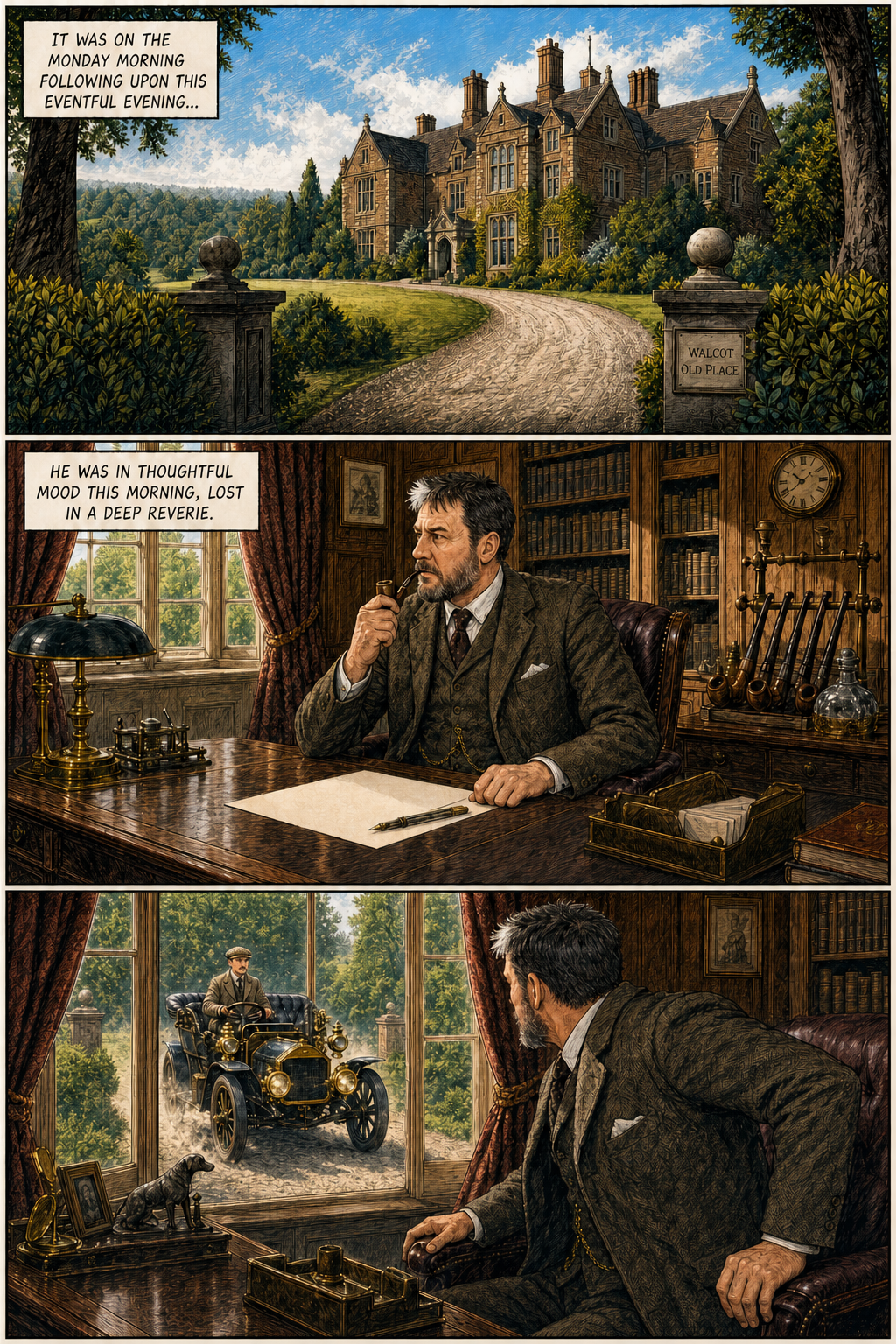
Not merely as a background character, an anonymous face in a crowd or an unfortunate passer-by. I cast myself as Sir Henry Hailworthy, the wealthy Edwardian gentleman at the centre of the tale, who also happens to have a rather dramatic secret life as a modern-day highwayman.
Becoming a Highwayman: How I Put Myself Inside an Inkantation Graphic Novel

A Pirate on the Roads of Edwardian England

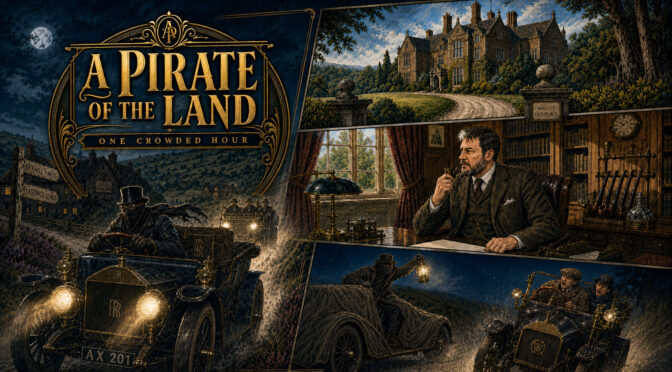
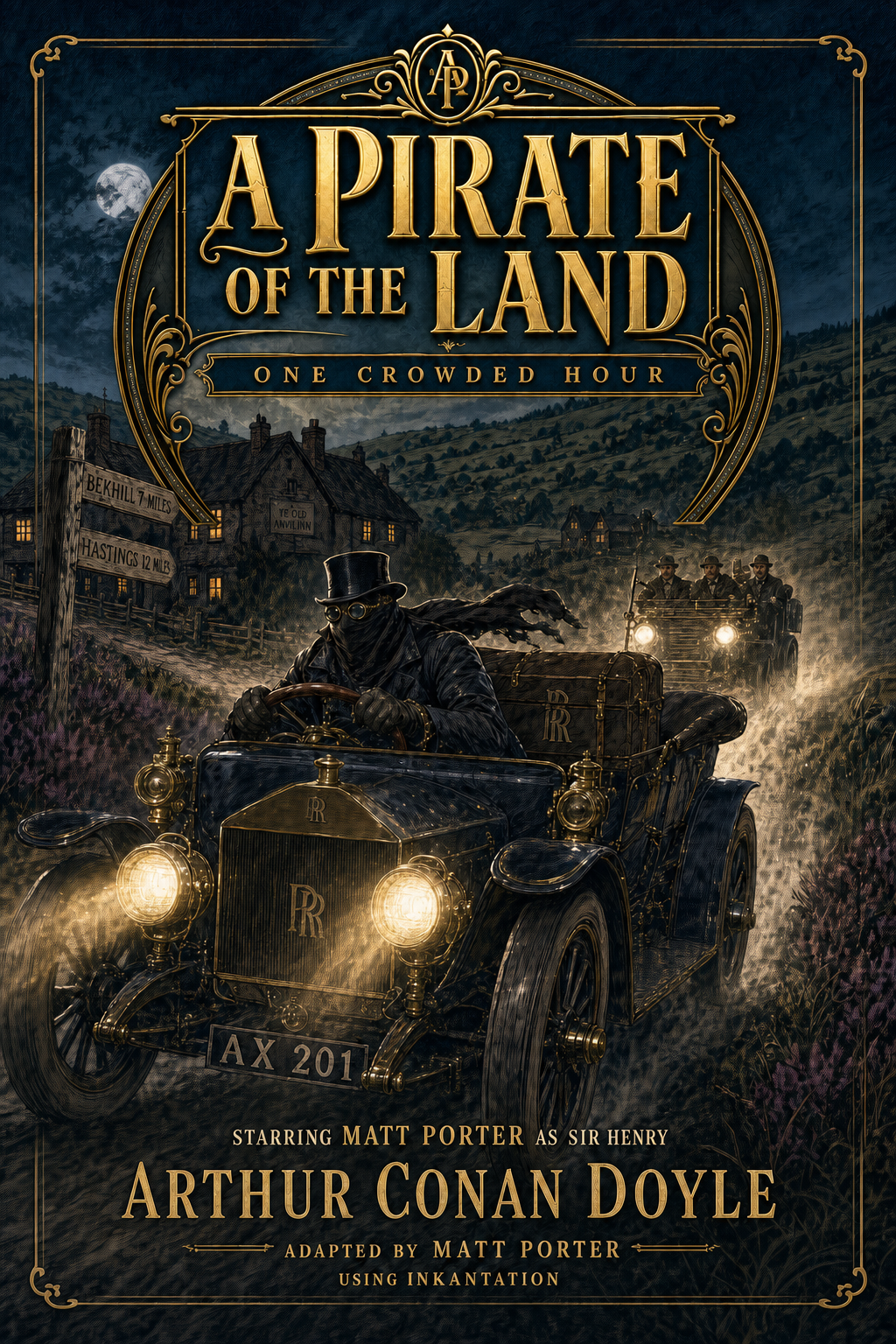
A Pirate of the Land: One Crowded Hour is set during the early days of motoring, when motor cars were still magnificent, temperamental machines and the sight of one roaring along a lonely country road could be an event in itself.

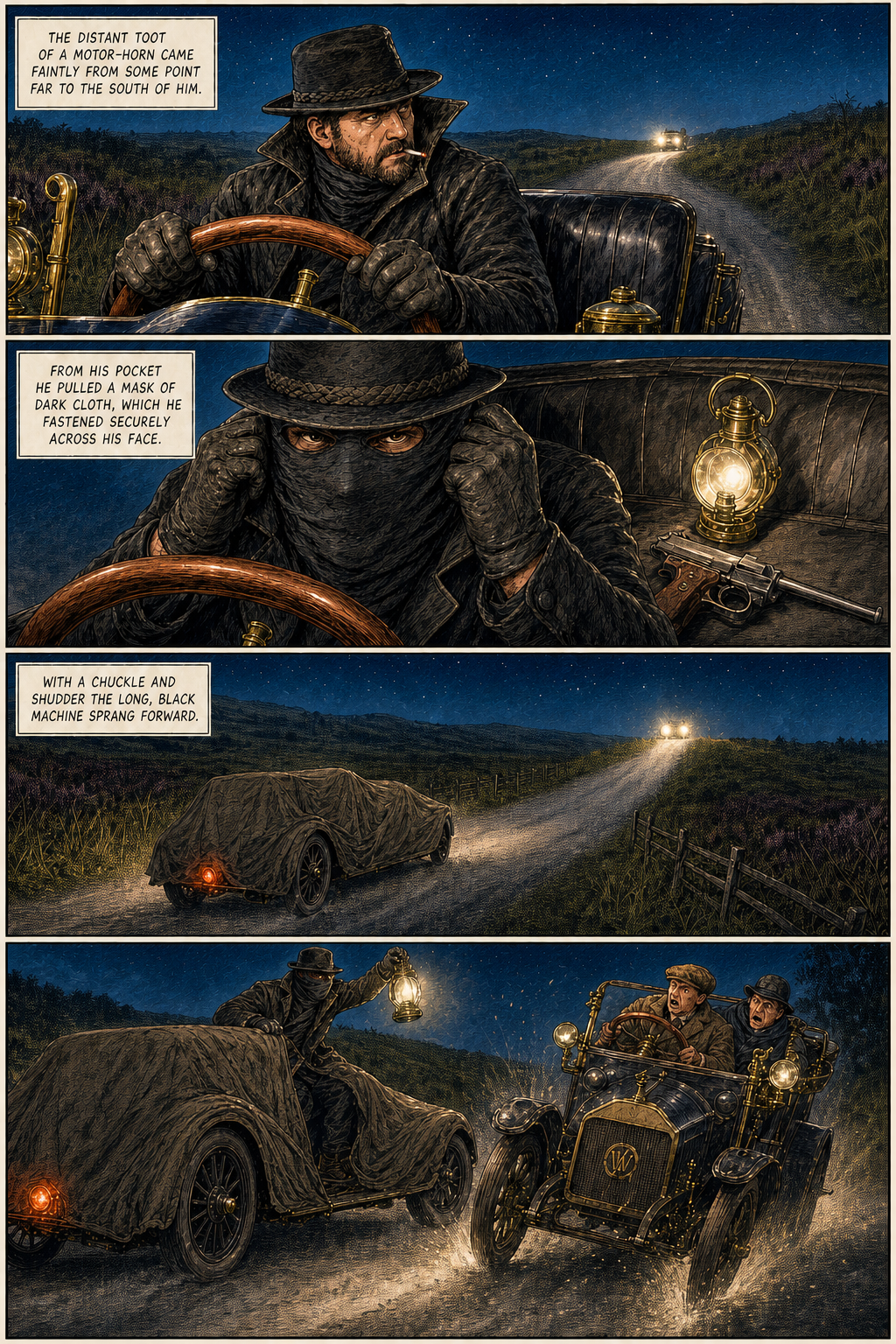
The story opens on the Eastbourne to Tunbridge road late on a Sunday night. A mysterious Rolls-Royce, partly concealed beneath brown fabric, prowls through the darkness. Its broad, burly driver wears a Tyrolean hat, a heavy coat and, when another motorist approaches, a dark cloth mask.

Armed with a long-barrelled Mauser pistol, he becomes a highwayman for the motor age.

He stops an elderly Wolseley, confronts a young motorist named Ronald Barker, encounters two actresses travelling in a Humber and finally targets the man he has really come to find, a wealthy financier whose actions have ruined the lives of others.

The finished Inkantation script runs to 21 graphic novel pages and uses 22 individually planned assets, including characters, vehicles, props and locations. These range from the masked highwayman and his concealed Rolls-Royce to Edwardian studies, country roads, jewellery, packages, pistols and the wonderfully imposing sixty-horsepower Daimler limousine.

Turning the Story into a Graphic Novel

Inkantation does not simply take a piece of prose and create a random collection of illustrated pages.

The first stage is adaptation.

The original story is analysed and reorganised into a structured graphic novel script. Each page is divided into panels, with descriptions covering the viewpoint, composition, lighting, expressions, action, captions and dialogue.

For example, the opening page contains three panels. The first establishes the lonely road and the approaching Rolls-Royce. The second moves closer to reveal the strange fabric concealing the vehicle. The third introduces the driver, hunched over the wheel with the glowing ember of a cigarette beneath the brim of his hat.

This creates a cinematic progression from landscape, to vehicle, to character.

Before the finished panels can be produced, Inkantation creates an asset catalogue. Every important character, location, vehicle and object receives its own detailed reference description. This is vital because a graphic novel depends upon visual continuity.

Ronald Barker must look like Ronald Barker every time he appears. The Rolls-Royce must remain recognisable from panel to panel. Sir Henry’s study needs to feel like the same room, whether it is shown in a wide establishing shot or as the background to an intense conversation.

Without that preparation, characters can subtly change faces, costumes, ages and proportions from one page to the next.
Becoming a Highwayman: How I Put Myself Inside an Inkantation Graphic Novel

Casting Myself as Sir Henry Hailworthy

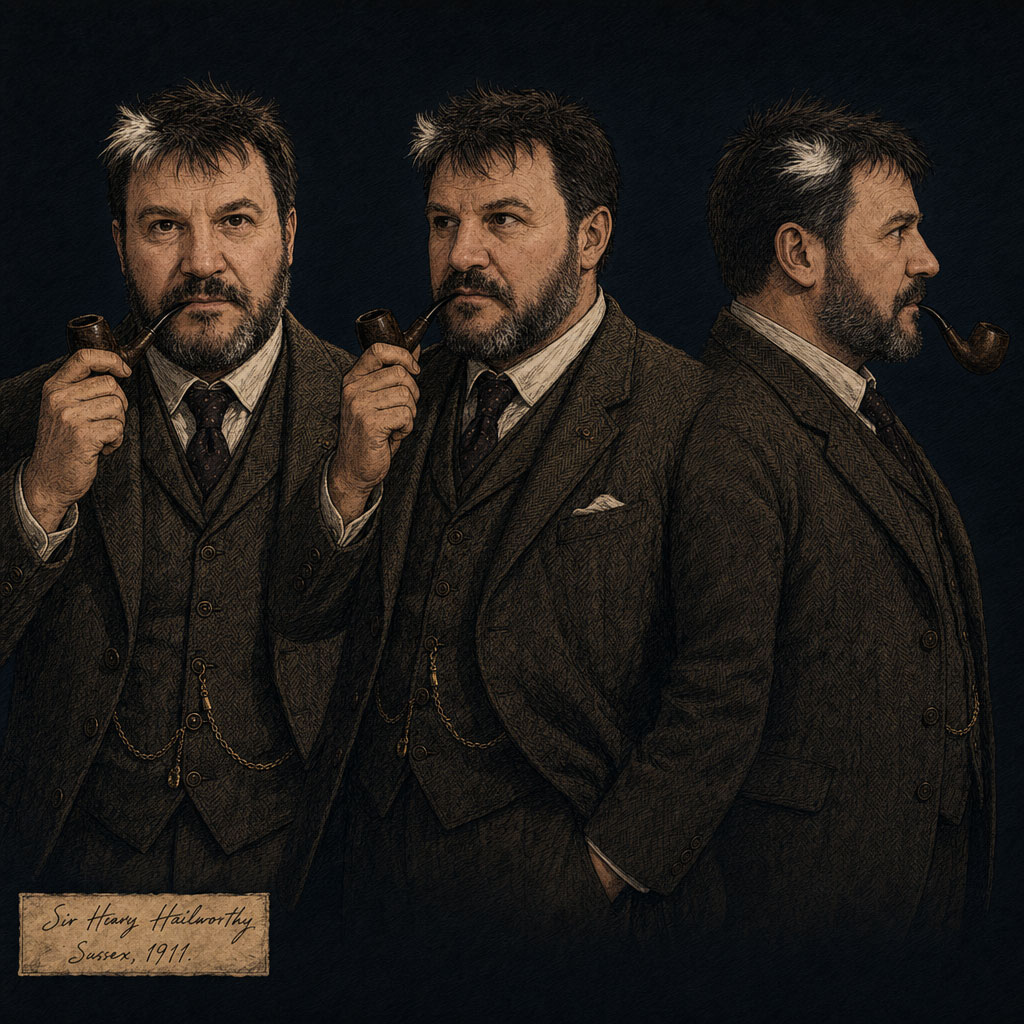
For this particular book, I manually added myself to the production process and used my own appearance as the basis for Sir Henry Hailworthy.

Sir Henry is described in the Inkantation asset catalogue as a stocky, bearded Edwardian gentleman in a well-cut tweed country suit, usually seen with a pipe in his study. Most importantly, his build must also be consistent with the mysterious highwayman encountered earlier in the story.

This meant I was effectively being cast in two connected roles: the respectable country gentleman and the masked figure stalking the roads at night.

There was something wonderfully entertaining about seeing a version of myself transported into Edwardian England, sitting behind a mahogany desk, confronting an angry visitor and attempting to explain why I had spent the previous evening robbing motorists at gunpoint.

It also presented an interesting technical challenge.

It is relatively straightforward to create a single stylised portrait of a person. It is much harder to preserve that identity through multiple panels, facial expressions, viewpoints, costumes and lighting conditions.

A character may be seen seated at a desk in one panel, turning towards a window in another and confronting someone across a room in the next. In the highwayman sequences, the same character is partly hidden beneath a hat, heavy coat and mask.

The visual system still needs to give the reader enough clues to believe that these are the same person.
Becoming a Highwayman: How I Put Myself Inside an Inkantation Graphic Novel

More Than a Personal Cameo

Adding myself to the book was partly for fun, but it was also a genuine product experiment.

Would readers pay to appear in a graphic novel?

Personalisation already exists in children’s books, where a child’s name may be inserted into a story. Inkantation potentially takes that idea much further. Rather than simply changing a name, a customer could be visually cast as a character throughout an illustrated narrative.

Someone could become a detective in a Victorian mystery, the captain of a pirate ship, an explorer on another planet or, as in my case, an Edwardian gentleman with a concealed life of motorised crime.

It could also work as a highly unusual gift.

Imagine presenting someone with a professionally printed graphic novel in which they are the hero, villain or eccentric supporting character. Couples could appear together in a romantic adventure. A family could be placed inside a fantasy story. A business could even commission a graphic novel featuring members of its own team for training, promotion or an anniversary celebration.

Naturally, there are questions still to explore.

How much personalisation would someone want? Would they prefer to play the hero, or would being the villain be more entertaining? Should the story be selected from an existing catalogue, or written especially for them? How closely should the artwork resemble the real person, and how much should it embrace the graphic novel style?

These are exactly the kinds of questions that experiments are designed to answer.

Combining Art, Storytelling and Technology

Inkantation brings together several areas that have interested me throughout my life.

I have been drawing and creating characters for around 50 years. I have also spent more than 20 years running a web design and technology business. Graphic novels allow those two worlds to meet.

The system handles the complex production work, including script preparation, asset management, visual consistency, panel generation, dialogue placement and page assembly. However, the creative decisions still matter.

Which moment deserves a full-width panel? When should the reader see a close-up? How much of the original narration should remain? What expression should a character have? Where should a page end to encourage the reader to turn over?

Technology can help produce the images, but storytelling remains at the heart of the process.
One Crowded Hour

The title comes from Sir Henry’s own excitement when the adventure is over. Despite promising never to repeat it, he admits that his brief career as a highwayman was exhilarating.

He describes it as one crowded hour of glorious life.

That line also feels appropriate for my experience of making the book. For a brief period, I was no longer sitting at my computer working on a graphic novel system.

I was Sir Henry Hailworthy.

I had a Rolls-Royce hidden beneath brown fabric, a Mauser pistol in my hand and unfinished business waiting on a lonely road.

Whether people will pay for the opportunity to star in their own graphic novel remains to be seen, but as an experiment it has opened another fascinating possibility for Inkantation.

And I must admit, seeing yourself revealed as the mysterious highwayman is considerably more exciting than appearing in the background of a holiday photograph.

You can purchase A Pirate of the Land : One Crowded Hour is available to download in Kindle format
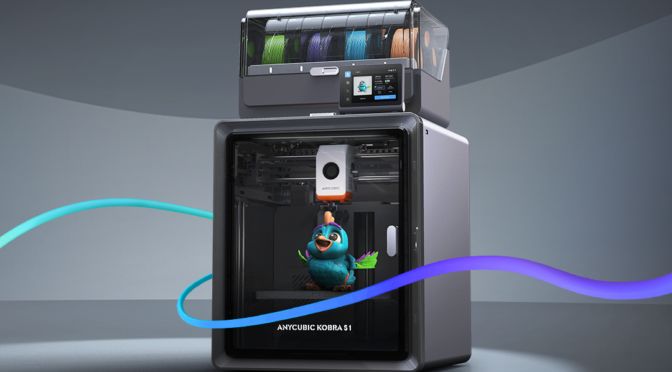
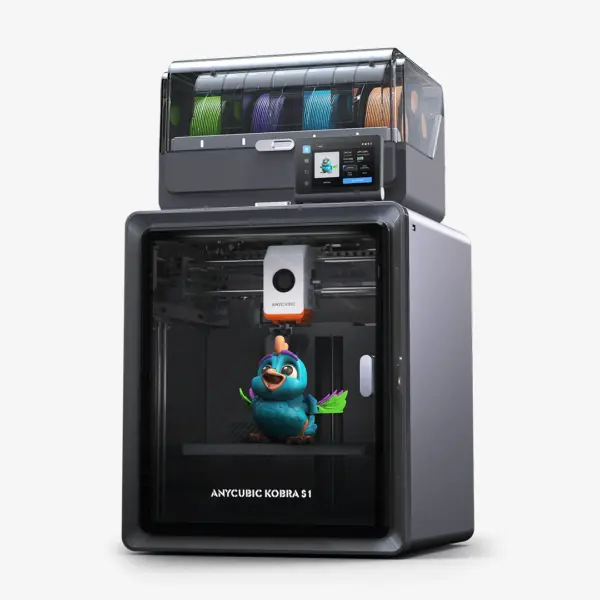
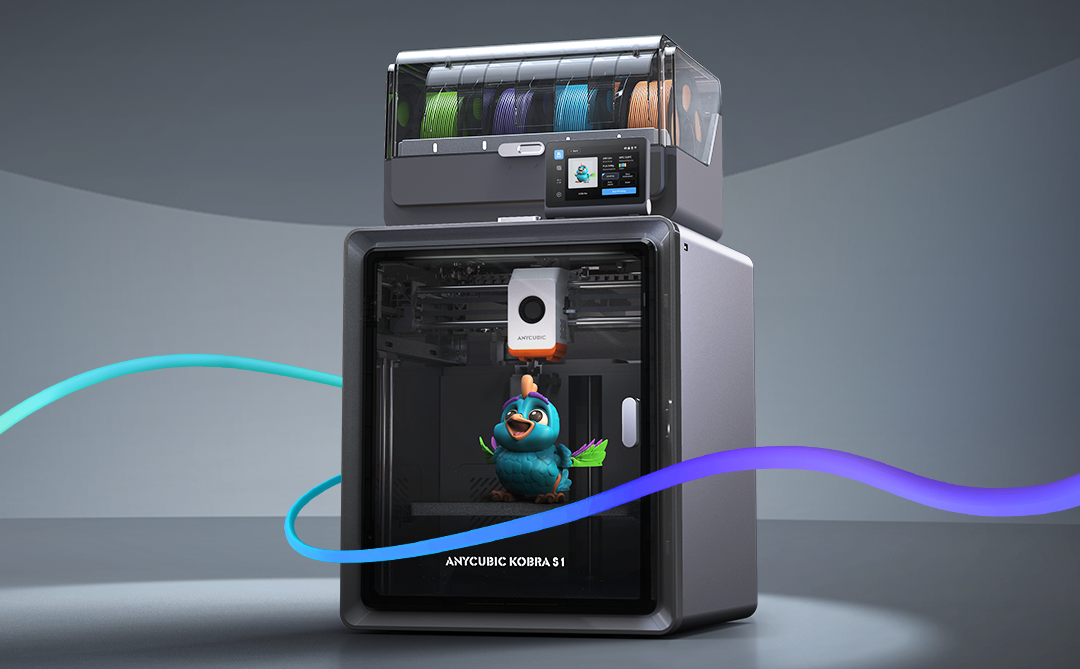
Anycubic Kobra S1 Combo – CoreXY 3D Printer – An indispensable tool for professionals and hobbiests

If you’ve been following my reviews on The Gadget Man, you’ll know I have a deep appreciation for innovation and practicality, particularly when it comes to tech that enables creativity. Enter the Anycubic Kobra S1 – a device that has transformed my 3D printing experience and firmly established itself as an indispensable tool in my workshop. After clocking over 100 hours of printing with this machine, I can confidently say it’s a game-changer in the world of consumer-grade 3D printers.

Anycubic Kobra S1 Combo

Dimensions and Specifications

The Anycubic Kobra S1 Combo boasts a compact yet highly functional design. It operates at 46dB in standard mode and an impressively quiet 44dB in quiet mode, making it suitable for home and office environments. The maximum nozzle temperature of this printer reaches an impressive 320°C, allowing for compatibility with a variety of filament types. Additionally, the print head features a quick-release mechanism, simplifying maintenance and filament swaps. With a build volume of 250 x 250 x 250 mm, it offers ample space for a wide variety of projects while maintaining a manageable footprint. The printer’s enclosed design ensures consistent environmental conditions, and the carbon filter reduces fumes, particularly useful when printing with materials like ABS. The sturdy frame and high-quality components reflect Anycubic’s commitment to durability and reliability. The machine’s heated bed, capable of reaching temperatures up to 120°C quickly, is paired with a magnetic PEI print bed, ensuring excellent adhesion during printing and easy removal of finished models. and its precision extruder provide a professional-grade 3D printing experience.

Anycubic S1 Combo - CoreXY 3D Printer - An indispensable tool for professionals and hobbiests
Anycubic S1 Combo – CoreXY 3D Printer – An indispensable tool for professionals and hobbiests

Unboxing and Package Contents

The Anycubic Kobra S1 arrives neatly packaged with everything you need to get started. The box includes the main printer components, a toolkit, a sample filament, the 4-reel multi-colour ACE unit, and a detailed user manual. The inclusion of these extras reflects Anycubic’s commitment to delivering value and convenience to users. The unboxing experience is satisfying, and the care in packaging ensures everything arrives in pristine condition.

Assembly and Initial Setup

Straight out of the box, the setup process is impressively straightforward. The clear and concise user manual walks you through installing the print head, screen, and filament holder. Even for those new to 3D printing, the step-by-step instructions make assembly approachable and stress-free. Connecting the multi-colour ACE unit is a simple task, and the machine is designed for intuitive use. Within an hour, I had the printer fully assembled and ready to begin its first calibration.

One standout aspect of the setup process is the printer’s resonance compensation system. During initial configuration, the Kobra S1 moves the print head rapidly in a controlled pattern to measure vibrations. This data allows the printer to adjust and compensate for resonance during printing, resulting in smoother, more accurate outputs. This feature is particularly impressive as it demonstrates Anycubic’s dedication to precision and innovation.

Anycubic S1 Combo - CoreXY 3D Printer - An indispensable tool for professionals and hobbiests
Anycubic S1 Combo – CoreXY 3D Printer – An indispensable tool for professionals and hobbiests

Software and User Interface

The Anycubic Kobra S1 supports widely-used slicing software like Cura and Anycubic’s own Photon Workshop. It is compatible with a range of nozzle diameters, including the standard 0.4mm as well as 0.2mm, 0.6mm, and 0.8mm options for expanded versatility in project designs. These platforms offer intuitive interfaces and extensive options for fine-tuning your prints. Once the software is installed, connecting the printer is a breeze, and the user-friendly touchscreen interface on the printer itself makes controlling print jobs straightforward. It’s a well-thought-out ecosystem that bridges functionality and ease of use.

Performance and Material Versatility

In terms of performance, the Kobra S1 punches well above its weight. I began with PLA and PLA+, and the results were remarkable. Prints exhibited exceptional precision, fine details, and consistent layer adhesion. The enclosed design minimizes environmental factors, ensuring stable and reliable results.

Venturing into ABS printing was where the Kobra S1 truly shined. The enclosed chamber with a carbon filter ensured stable temperatures, reducing warping and odours. The heated bed and high-performance extruder proved their worth, handling ABS effortlessly and delivering smooth, robust prints. The addition of the multi-colour ACE unit enabled stunning multi-material prints, allowing for creative designs that were previously out of reach with single-extruder systems.

Before using the Kobra S1, I was limited to manual filament changes when attempting multi-colour prints. The Kobra S1’s full support for multi-colour printing has been a revelation, saving time and reducing errors. However, it’s worth noting that the use of prime towers for filament flushing can lead to some filament waste, a consideration for those conscious of material efficiency.

Standout Features

The heating 4-reel multi-colour ACE unit is undoubtedly the crown jewel of the Kobra S1. This innovative unit is also heated, allowing for in-print filament pre-heating, which ensures consistent material flow and print quality. The quick-release print head further enhances convenience, making it easy to swap or maintain the unit. The Kobra S1 also supports advanced features like Pressure Advance and Flow Calibration, ensuring optimal performance and precision across a range of printing scenarios. This innovative unit is also heated, allowing for in-print filament pre-heating, which ensures consistent material flow and print quality. This advanced feature facilitates seamless multi-material and multi-colour printing, unlocking unparalleled creative potential. Whether it’s intricate models, functional prototypes, or artistic creations, the ACE unit’s reliability and precision make it a joy to use.

Another highlight is the auto-levelling system. This feature eliminates one of the most common frustrations in 3D printing—manual bed levelling. With the Kobra S1, you can count on a perfectly levelled print bed every time, ensuring optimal print quality from the very first layer.

Safety and Maintenance

Anycubic has also prioritised user safety and maintenance ease. The enclosed design minimizes exposure to fumes, especially when working with ABS. Routine maintenance is simplified with easy access to key components and a helpful guide in the user manual. The sturdy build ensures durability, making this printer a long-term investment.

Value for Money

The Anycubic Kobra S1 stands out as an affordable yet feature-rich 3D printer. Priced competitively, it delivers professional-grade results that rival much more expensive models. With its ability to handle a wide range of materials, including PLA, PLA+, and ABS, and its advanced multi-material capabilities, the Kobra S1 offers exceptional value for hobbyists, tinkerers, and small businesses alike.

Conclusion

In conclusion, the Anycubic Kobra S1 sets a new standard for consumer-grade 3D printers. Its versatility, reliability, and professional-grade performance make it a standout choice for both beginners and experienced makers. From the heating 4-reel multi-colour ACE unit to its intuitive design, exceptional print quality, and advanced resonance compensation system, this printer offers an unparalleled user experience. If you’re in the market for a feature-packed 3D printer that doesn’t break the bank, the Anycubic Kobra S1 is a top contender. Highly recommended!

Don’t forget to enter the special offer code GADGETMAN to get a further £20 discount on your order!


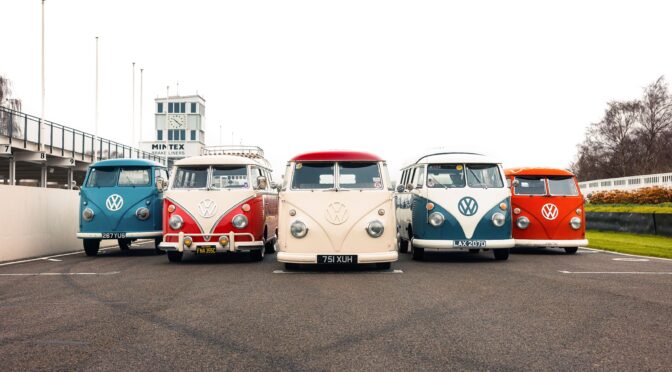
Road Tripping Down Memory Lane: Goodwood Revival Celebrates 75 Years of the Iconic VW Split Screen Campervan

As a gadget enthusiast and a lover of anything on wheels, I can hardly contain my excitement for this year’s Goodwood Revival, happening from Friday, 12th September to Sunday, 14th September 2025. Whether you’re a petrolhead, a vintage aficionado, or simply someone who appreciates a bit of history, this event is not to be missed. And this year’s opening parade promises to be one for the books—a celebration of 75 years of the legendary Volkswagen Type 2 Split Screen!

Road Tripping Down Memory Lane: Goodwood Revival Celebrates 75 Years of the Iconic VW Split Screen Campervan

Why the Type 2 Split Screen Is a Cultural Icon

Launched in 1950 by Volkswagen, the Type 2 Split Screen—fondly known as the ‘Splittie’—was much more than a commercial van. It quickly became a symbol of freedom, adventure, and the open road. From hippie caravans to family holidaymakers, ice cream vans to ambulances, the Split Screen has done it all. Its quirky charm and versatility made it an icon that resonates with car enthusiasts, nostalgics, and road trip junkies alike.

To mark its 75th anniversary, Goodwood Revival is bringing together what is set to be the most diverse collection of Type 2 Split Screens ever assembled. Picture a parade of brightly coloured vans—from Kombis to Campers—gracing the historic Goodwood track every morning of the event. It’s a festival of wheels, memories, and plenty of Instagram-worthy moments.

The Goodwood Revival Magic

Goodwood Revival isn’t just a motor race—it’s a journey back in time. Every detail, from the period attire to the vintage craftsmanship, transports you to a bygone era. This year, alongside the VW Split Screen parade, visitors can look forward to thirteen thrilling races, all run exclusively on sustainable fuels—a nod to Goodwood’s commitment to the future, without forgetting its past.

But it doesn’t stop at racing. Type 2 enthusiasts can also park their beloved vans in the Tax Exempt Classic Car Parking, turning the rows into an unmissable showcase of classic camper beauty. If you’re a Split Screen owner itching to join the parade, applications are still open—details below.

Early Bird Gets the Ticket!

Tickets for Goodwood Revival are already on sale. As someone who’s experienced the magic of Goodwood in person, trust me when I say: book early. From general admission to VIP hospitality, there’s something for every budget and every level of fandom.

So, whether you’re taking your Kombi for a spin, reminiscing over the retro design of a Samba, or simply soaking in the vintage vibes, Goodwood Revival 2025 is the place to be.


How to Get Involved

Keep your eyes peeled for more updates and coverage. I’ll certainly be there, capturing the sights, sounds, and stories of this incredible event.


About The Gadget Man:
Matt Porter—tech enthusiast, car lover, and the ultimate road trip guy. From gadgets to Goodwood, I bring you the latest in tech and lifestyle adventures. Follow along for more tales of innovation, nostalgia, and everything in between.

The Gadget Man General Election Special Part Two – We Love Hitchin Interviews – Bim Afolami Conservate Party Candidate for Hitchin Constituency

The We Love Hitchin Interviews 2024 were conducted by Gadget Man, Matt Porter, the founder of We Love Hitchin.

Matt took the initiative to interview each candidate running for the Hitchin Constituency in the General Election, providing an in-depth look at their visions and plans for the community.

You can view the interview below or listen to the podcast episode by clicking the play-head above.


Welcome to the We Love Hitchin Interviews 2024! As part of our series, we are sitting down with each candidate running for the Hitchin Constituency in the upcoming General Election on the 4th of July 2024. In this interview, we have the pleasure of speaking with Bim Afolami, the Conservative Party candidate.

Join us as we delve into Bim Afolami’s vision for Hitchin, exploring his plans for economic stability, public safety, and community development. Discover his stance on key issues such as infrastructure, business support, and education. Bim shares his dedication to fostering a prosperous and secure future for Hitchin and its residents.

Interview Breakdown

00:00 Opening Titles 00:09 Welcome from Matt Porter, Founder of We Love Hitchin Facebook Group 01:09 Welcome to Bim Afolami

  • 01:16 Background and Motivation: Bim shares his background and explains his motivation for running in the new Hitchin Constituency.

02:06 Q1: Cost of Living Crisis

  • 02:33 A1: Bim discusses measures to alleviate financial pressures caused by the rising cost of living.

08:05 Q2: NHS and Healthcare

  • 08:37 A2: Bim outlines his plans to improve healthcare services, reduce waiting times, and address staffing shortages in the NHS.

12:40 Q3: Economy

  • 13:14 A3: Bim’s strategies for addressing inflation, unemployment, and ensuring economic stability.

17:44 Q5: Crime

  • 17:58 A5: Bim’s plans to enhance personal safety and improve the effectiveness of law enforcement in the community.

20:41 Q6: Housing

  • 20:57 A6: Measures to address the housing crisis, particularly focusing on affordability and availability for younger people and those on lower incomes.

Community Questions

23:32 Andrea’s Question on Water Companies

  • 24:45 Bim’s Response: Bim answers Andrea’s question about voting on a motion to bring water companies back into the public sector.

27:45 Nyland and Lauren’s Question on Gaza War and Palestine Recognition

  • 28:06 Bim’s Response: Bim discusses the provision of arms or assistance in the Gaza conflict and the recognition of Palestine as an independent state.

30:58 Vanessa and Nicola’s Question on Special Needs Education and Care

  • 31:49 Bim’s Response: Bim addresses the concerns of SEN families, pledging improved support and resources.

36:01 Bim’s Closing Appeal

  • 36:17 Bim asks for your vote: Bim Afolami explains why he should be chosen as the representative for Hitchin on the 4th of July.

39:11 Matt Porter’s Thanks and Closing Remarks 40:19 Closing Titles


Election Results for Hitchin Constituency 2024

The General Election results for the Hitchin Constituency have been announced. Here are the final tallies:

  • Bim Afolami (The Conservative Party Candidate): 14,958 votes
  • Charles Bunker (Reform UK): 6,760 votes
  • Sid Cordle (Christian Peoples Alliance): 181 votes
  • Will Lavin (Green Party): 2,631 votes
  • Chris Lucas (Liberal Democrats): 4,913 votes
  • Alistair Strathern (Labour Party): 23,067 votes – Elected

Congratulations to Alistair Strathern, the newly elected Member of Parliament for Hitchin! His victory marks a significant shift in the constituency, and we look forward to seeing his plans for Hitchin come to fruition.

The Gadget Man General Election Special Part One – We Love Hitchin Interviews – Alistair Strathern Labour Party Candidate for Hitchin Constituency

The We Love Hitchin Interviews 2024 were conducted by Gadget Man, Matt Porter, who is also the founder of We Love Hitchin.

Matt took the initiative to interview each candidate running for the Hitchin Constituency in the General Election, providing an in-depth look at their visions and plans for the community.

You can view the interview below or listen to the podcast episode by clicking the play-head above.

Introduction and Background

The interview kicked off with Matt Porter, the Founder of We Love Hitchin, welcoming Alistair Strathern. Alistair shared insights into his background and explained why he decided to run for this seat. His motivations are rooted in a deep commitment to the community and a desire to bring meaningful change to Hitchin.

Key Issues Discussed

Cost of Living Crisis Alistair addressed the pressing issue of the cost of living crisis, outlining his plans to alleviate economic pressures on Hitchin residents. He emphasized the importance of creating a sustainable economic environment that supports all citizens.

NHS and Healthcare Healthcare was another major topic. Alistair spoke passionately about his vision for improving NHS services, ensuring that healthcare is accessible and efficient for everyone in the constituency.

Economy Discussing the economy, Alistair highlighted strategies for economic growth and stability. His plans focus on supporting local businesses and creating job opportunities to boost the local economy.

Climate Change and Environment On environmental issues, Alistair shared his approach to tackling climate change and promoting sustainability. His vision includes implementing green initiatives and supporting eco-friendly policies.

Crime Alistair also talked about measures to enhance safety and reduce crime in Hitchin. He stressed the need for a robust policing strategy and community engagement to create a safer environment.

Housing Addressing housing issues, Alistair discussed his plans to increase affordable housing and improve living conditions for all residents. He highlighted the importance of providing quality housing to support a thriving community.

Roads Infrastructure and road maintenance were also on the agenda. Alistair outlined his proposals for improving the condition of roads and ensuring better connectivity within Hitchin.

Community Questions

Public Ownership of Water Companies Andrea, a community member, asked about Alistair’s stance on bringing water companies back into public ownership. Alistair expressed his support for this move, emphasizing the importance of keeping essential resources under public control.

AI Safety Martin raised concerns about artificial intelligence and its safe use. Alistair acknowledged the potential risks of AI and advocated for stringent regulations to ensure it is used responsibly.

Gaza War and Palestine Recognition Nyland and Lauren asked about providing assistance in the Gaza conflict and recognizing Palestine as an independent state. Alistair shared his views on international policy and humanitarian aid, emphasizing the need for a balanced and compassionate approach.

Support for Special Needs Children Vanessa and Nicola, who have special needs children, asked about support for SEN families. Alistair pledged to improve resources and funding for special needs education and social care, aiming to provide better support for these vulnerable families.

Closing Remarks

In his closing remarks, Alistair Strathern appealed to the voters, highlighting his dedication to representing Hitchin and addressing its key issues. He urged the community to vote for him on the 4th of July, promising to work tirelessly for a fairer and more inclusive future.


Election Results for Hitchin Constituency 2024

The General Election results for the Hitchin Constituency have been announced. Here are the final tallies:

  • Bim Afolami (The Conservative Party Candidate): 14,958 votes
  • Charles Bunker (Reform UK): 6,760 votes
  • Sid Cordle (Christian Peoples Alliance): 181 votes
  • Will Lavin (Green Party): 2,631 votes
  • Chris Lucas (Liberal Democrats): 4,913 votes
  • Alistair Strathern (Labour Party): 23,067 votes – Elected

Congratulations to Alistair Strathern MP, the newly elected Member of Parliament for Hitchin! His victory marks a significant shift in the constituency, and we look forward to seeing his plans for Hitchin come to fruition.

Watch and Listen

Don’t miss the full interview with Alistair Strathern! Watch it on our YouTube channel and listen to the podcast episode available on all major platforms. Your support and engagement help us bring more insightful content and coverage of important local issues.

Stay tuned for more updates and interviews on The Gadget Man and don’t forget to like, comment, and subscribe.

AI Transforms Blogging Efficiency (November 2023)

Using AI to Write Blog Posts

In the rapidly evolving digital landscape, artificial intelligence (AI) is no longer just a buzzword but a practical tool revolutionizing various industries, including content creation. Blogging, an integral part of digital marketing and personal expression, is one area where AI’s impact is notably significant. This post delves into how AI is transforming the way we write blog posts, its advantages, potential challenges, and tips for effectively using AI in blogging.

The Emergence of AI in Blogging

AI in blogging isn’t just about automated content generation; it’s about enhancing the writing process. Tools like OpenAI’s GPT-4 offer advanced language models that can draft text, suggest ideas, and even refine content tone. The integration of AI in blogging platforms simplifies tasks such as keyword optimization, grammar checks, and style improvements.

Key Benefits of Using AI for Blogging

  1. Efficiency and Speed: AI can generate drafts quickly, helping bloggers produce content more frequently.
  2. SEO Enhancement: AI tools can optimize content for search engines, improving blog visibility and reach.
  3. Consistency in Quality: AI maintains a consistent quality and tone, crucial for brand messaging.
  4. Idea Generation: It can suggest topics based on trends and user interests, keeping the content relevant and engaging.
  5. Personalization: AI can tailor content to different audience segments, enhancing reader engagement.

Challenges and Considerations

While AI brings numerous benefits, it also poses challenges:

  • Originality: There’s a risk of producing generic content. Balancing AI assistance with personal insight is key.
  • Over-reliance: Sole reliance on AI can diminish a writer’s skill and creativity.
  • Ethical Concerns: Issues like content authenticity and plagiarism need careful consideration.
AI Transforms Blogging Efficiency (November 2023)

Tips for Using AI in Blog Writing

  1. Start with a Clear Goal: Define what you want from the AI tool – be it generating ideas, creating drafts, or editing.
  2. Blend AI with Personal Touch: Use AI for the heavy lifting, but add your insights and experiences to make the content unique.
  3. Regularly Update AI Parameters: Keep the AI tool aligned with your evolving content strategy and audience preferences.
  4. Monitor Performance: Use analytics to understand how AI-generated content performs and refine your approach accordingly.
  5. Stay Informed: Keep up-to-date with AI advancements to leverage new features and capabilities.

Conclusion

AI in blogging is a powerful tool when used wisely. It can enhance the quality and efficiency of content creation while providing valuable insights into audience preferences. However, the heart of a great blog post still lies in the human touch – the experiences, insights, and personal stories that AI cannot replicate. Balancing AI capabilities with human creativity is the key to successful blogging in the AI era.

In embracing AI, bloggers are not replaced but empowered, equipped with tools to create more impactful, relevant, and engaging content. The future of blogging with AI looks promising, offering endless possibilities for content creators worldwide.

This is an update of the original blog post Using AI to Write Blog Posts and using newer versions of ChatGPT (version 4)  and Midjourney (version 5.2)

This post was written by ChatGPT 4 (AI)
Tags produced by a plugin written by ChatGPT4 which utilises the GPT3.5 Turbo API
Images created using Midjourney (AI)
All cut and pasted by Matt Porter The Gadget Man (Human)

Gadget Man – Episode 175 – The Copper Switch Off: A Necessary Evil or a Step too Far?

This morning, I had an enlightening discussion with Tammy Gooding on BBC Radio Hereford and Worcester regarding the ongoing broadband infrastructure enhancements, particularly in light of the Copper Switch-off as announced by Openreach. This move is all about transitioning from the traditional copper wire systems to a more robust and faster digital infrastructure, aiming to future-proof our towns and villages.

However, not everyone seems to be on board with this tech transition, as exemplified by the recent uproar in the picturesque Worcestershire village of Broadway. The crux of the matter unfurled as broadband poles started sprouting up, much to the dismay of the local populace. It seems Full Fibre, the provider spearheading this initiative, hit a nerve when their wooden poles, standing tall at up to 11 meters, started altering the village skyline.

The discontent among the residents morphed into a full-blown protest, with nearly 80 individuals rallying to halt the erection of these broadband poles in Avrill Close. The agitation escalated when a 75-year-old villager, David Owen, took a stance quite literally by spending more than four hours in one of the lorries brought in by the contractors.

This brings us to the question – is the infrastructural overhaul a necessary leap towards a digital future or an imposition disregarding the public sentiment? I tend to lean towards the necessity of upgrading our digital infrastructure, especially when the world is rapidly shifting towards a more connected existence. The Copper Switch off, as discussed on Openreach’s blog post, is a significant stride towards ensuring that the UK’s telecommunications infrastructure is not left in the digital dust.

The saga in Broadway sheds light on the teething issues that such infrastructural transitions entail. On one side, we have Full Fibre asserting their commitment to addressing concerns and emphasizing the critical nature of their work in upgrading the UK’s digital skeleton. On the flip side, the residents feel slighted, their concerns seemingly brushed under the rug, as they see these poles as nothing more than “ugly eyesores” marring their beautiful village.

Lisa Kelly, a villager, encapsulated the general sentiment by stating that they already have satisfactory broadband speeds and do not see the need for these poles. The word “disenfranchised” was used, painting a picture of a community feeling left out of a decision that directly impacts them.

The episode also invited the presence of West Mercia Police officers to ensure the situation remained under control, illustrating the extent of discord between the advancement of digital infrastructure and public approval.

These infrastructural enhancements are a double-edged sword. They promise a digital leap but at the cost of unsettling the communal harmony, at least temporarily. The Broadway scenario is a microcosm of the broader dialogue between technological advancement and community consent.

The future is exciting, but the path there should be paved with understanding and cooperation.

Using AI to write blog posts

In today’s fast-paced digital world, it’s no surprise that many businesses and individuals are turning to artificial intelligence (AI) to help them with various tasks, including writing blog posts. AI technology has come a long way in recent years, and it has the potential to help bloggers save time and improve the quality of their content.

Using AI to write blog posts - created by Midjourney
Using AI to write blog posts – created by Midjourney

One of the biggest advantages of using AI to write blog posts is that it can help save time. Rather than spending hours researching, outlining, writing, and editing a blog post, you can use AI to quickly generate high-quality content. This can be especially useful if you’re crunched for time or if you need to produce a large volume of content on a regular basis.

Another advantage of using AI to write blog posts is that it can help improve the quality of your content. AI technology can analyze your existing content and use that information to generate new posts that are similar in style and tone. This can be especially useful if you want to maintain a consistent voice and tone throughout your blog. Additionally, AI can use natural language processing to ensure that your content is well-written and easy to read.

Of course, using AI to write blog posts is not without its challenges. One of the biggest challenges is that AI technology is not yet capable of fully replicating human creativity and intuition. As a result, your AI-generated content may not always be as engaging or original as content that is written by a human. Additionally, AI technology is still in its early stages, and it may not always produce error-free content.

Despite these challenges, using AI to write blog posts can be a valuable tool for bloggers who are looking to save time and improve the quality of their content. As AI technology continues to advance, it’s likely that we’ll see even more sophisticated tools that can help bloggers generate high-quality content quickly and easily. In the meantime, it’s worth considering using AI to write blog posts if you’re looking for ways to streamline your content creation process and produce high-quality content on a regular basis.

This post was written by ChatGPT (AI)
Tags produced by ChatGPT (AI)
Images created using Midjourney (AI)
All pasted by Matt Porter The Gadget Man (Human)