
Tag Archives: Keir Starmer

UK Government Plans Social Media Ban for Under 16s: A Line in the Sand or a Digital Wake Up Call?

The UK Government has announced what could become one of the most significant changes to children’s online lives in years: a planned ban on social media platforms offering services to children under the age of 16.

Published on 15 June 2026 by the Department for Science, Innovation and Technology, the announcement sets out a bold new direction for online safety, with the Government saying it wants to “give kids their childhood back”.

That is quite a phrase, but it will resonate with many parents. For years, families have been trying to manage smartphones, apps, social media pressure, endless scrolling, online strangers, livestreams, algorithms and, more recently, AI chatbots. It is a lot. In fact, it is probably too much to expect parents to deal with alone.

What is being proposed?

The Government plans to stop social media platforms from offering services to under 16s. According to the announcement, this would include platforms such as Snapchat, TikTok, YouTube, Instagram, Facebook and X.

The proposed model is expected to follow a similar approach to Australia, targeting user to user platforms whose purpose is social interaction, content posting and algorithm driven feeds.

Messaging services such as WhatsApp and Signal are not expected to be included in the social media ban.

The first set of regulations could be brought before Parliament before Christmas, with protections expected to come into force in Spring 2027.

More than just a social media ban

This is not only about banning access to social media apps. The Government is also proposing wider protections around some of the features that can cause harm to children online.

These include restrictions on livestreaming and strangers communicating with children. Importantly, these extra restrictions could apply beyond traditional social media platforms, including gaming sites.

That matters, because a lot of children’s online lives no longer sit neatly inside one app or one category. Social interaction, messaging, livestreaming, gaming and algorithmic recommendations are now all blended together.

The Government says these protections will also be switched on by default for 16 and 17 year olds, to avoid a sudden cliff edge when a child turns 16.

AI companion chatbots are also in the spotlight

One of the most interesting parts of the announcement concerns AI chatbots.

So called AI romantic companion chatbots, designed to simulate sexual relationships or roleplay with users, will be required to enforce a minimum age of 18. Similar intimate features will also be restricted for under 18s on AI chatbots more widely.

This is an important development. AI companion apps are moving incredibly quickly, and many parents may not even know they exist, let alone understand how emotionally persuasive they can be.

As AI becomes more human sounding, more available and more integrated into apps, this area is going to need serious attention. It is not enough to think of online safety as simply blocking rude words or removing harmful posts. We now have systems that can chat, flatter, persuade, roleplay and build emotional dependence.

Age checks will be the difficult bit

The big question, of course, is how this will actually work.

Anyone who has spent more than five minutes around young people and technology knows that children are often extremely good at finding ways around restrictions. The Government says it will learn from Australia’s experience and introduce highly effective age assurance measures to support compliance.

Ofcom will conduct a rapid study into effective age assurance for checking whether someone is over 16. The Technology Secretary has also asked Ofcom for an urgent review of its enforcement capabilities and a clear enforcement strategy.

This is where the whole thing will either succeed or fall apart.

If the age checks are too weak, children will simply bypass them. If they are too heavy handed, adults may rightly worry about privacy, identity checks and handing more personal data to large technology companies.

Getting that balance right will be crucial.

Parents appear to support action

The Government says the announcement follows one of its biggest national conversations, with more than 116,000 responses from parents, children and experts.

According to the Government, 9 in 10 parents said they would support a social media ban for children under 16. It also says two thirds of young people agreed that children younger than 16 should not be allowed to use at least some social media platforms.

That is significant. This is not just adults shouting at TikTok from the sidelines. Many young people appear to recognise that there is a problem too.
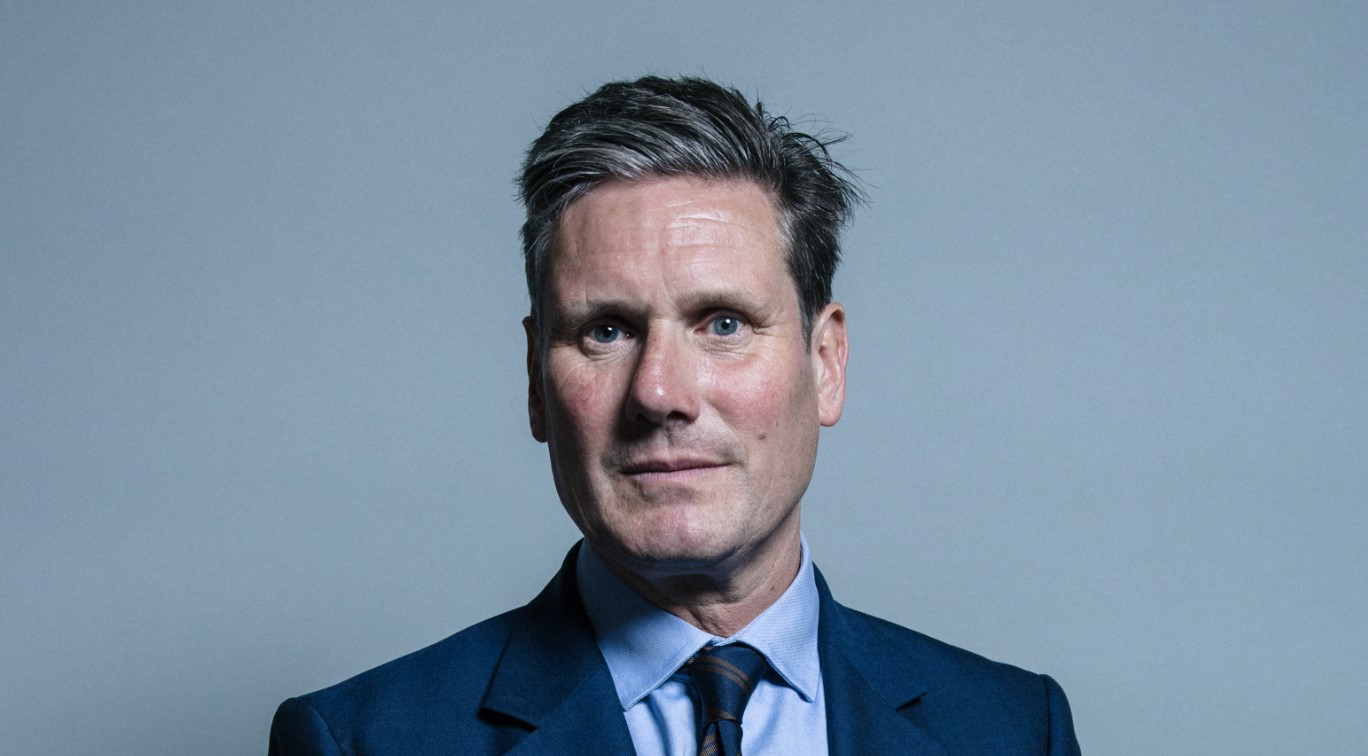
Keir Starmer ©House of Commons

Tech companies have had years to fix this

Prime Minister Keir Starmer said tech companies had “their chance and failed”, while Technology Secretary Liz Kendall said companies had “countless opportunities to keep children safe”.

Whether you agree with the exact form of the ban or not, it is hard to argue that the current system is working well.

Children are growing up in an online environment designed by some of the most powerful companies in the world, using systems built to maximise attention, engagement and screen time. The algorithms do not care whether a child has homework, needs sleep, is anxious, is vulnerable, or is being drawn into something harmful.

They are designed to keep people watching, scrolling, reacting and returning.

The Gadget Man view

As someone who loves technology, I do not think the answer is to pretend the internet is bad and children should be wrapped in cotton wool. Technology can be brilliant. It can educate, connect, entertain and inspire.

But childhood should not be outsourced to algorithms.

There is a huge difference between children using technology creatively and children being pulled into endless feeds, livestream pressure, anonymous messaging, harmful trends and AI driven emotional traps.

The challenge is that the online world has become too powerful, too persuasive and too profitable for parents to manage alone. Many families are trying to set boundaries while their children’s friends are all using the same apps, the same platforms and the same online spaces.

That makes it very difficult for one household to say no.

A national rule changes the conversation. It gives parents something firmer to stand on. It also forces the technology companies to design systems around children’s wellbeing, rather than leaving families to pick up the pieces afterwards.

But enforcement and privacy must be taken seriously

There are still major questions to answer.

How will age verification work? What data will be collected? Who will store it? Will smaller platforms be able to comply? Will children be pushed into less regulated corners of the internet? What happens when a child uses a parent’s account or device?

These details matter.

A poorly designed system could create new risks while trying to solve old ones. A well designed system could mark a genuine turning point in how we treat children’s digital lives.

A cultural shift, not just a technical fix

The Government has framed this as part of a wider effort to reclaim childhood, including more access to sport, creativity, nature and the arts.

That is important, because banning or restricting something only works properly if there is something better to replace it with.

Children need places to go, things to do, people to meet and chances to explore the world beyond a screen. If this policy is going to work, it needs to be part of a bigger cultural change, not just a login screen that says “computer says no”.

Final thoughts

This is a landmark moment for online safety in the UK.

The proposed social media ban for under 16s will be controversial, complicated and difficult to enforce perfectly. But the fact that the Government is now prepared to draw a clear line shows how serious the issue has become.

For years, parents have been told to use parental controls, have conversations, monitor screen time and keep up with every new app. Those things still matter, but they are not enough on their own.

The online world has changed childhood. Now the Government is saying it wants to change the online world in response.

Whether this becomes a successful turning point will depend on the details, but one thing is clear: the days of letting tech companies mark their own homework may finally be coming to an end.


The UK’s AI Opportunities Action Plan: A Bold Vision for the Future

Artificial Intelligence is not just the technology of the future—it’s the force shaping our present. Recognising this, the UK government has unveiled the AI Opportunities Action Plan, an ambitious roadmap designed to cement Britain’s position as a global AI superpower.

Prime Minister Keir Starmer, in his foreword to the plan, described AI as “the defining opportunity of our generation”, highlighting its transformative potential across public services, healthcare, education, and beyond. The plan outlines 50 recommendations aimed at harnessing AI’s potential to drive innovation, improve lives, and ensure Britain leads in this fiercely competitive sector.


A Vision Rooted in Innovation and Leadership

The Action Plan reflects the UK’s rich history of innovation—from Turing to Lovelace—and leverages the country’s strengths in world-class universities, pioneering tech companies, and a commitment to ethical AI. The government’s mission is clear: be a creator, not just a consumer, of AI breakthroughs.

Key priorities include:

  • Building cutting-edge AI infrastructure.
  • Creating AI Growth Zones to attract investment and foster innovation.
  • Supporting AI adoption in public and private sectors.
  • Addressing the growing demand for AI skills and talent.
  • Strengthening regulations to build trust and promote innovation.
The UK's AI Opportunities Action Plan: A Bold Vision for the Future
The UK’s AI Opportunities Action Plan: A Bold Vision for the Future

Key Highlights from the AI Opportunities Action Plan

  1. Supercomputing for AI:
    The UK will expand its sovereign compute capacity by 20x by 2030, starting with the creation of a state-of-the-art supercomputing facility. AI researchers and SMEs will benefit from powerful resources like Isambard AI in Bristol and Dawn in Cambridge, helping drive economic growth through innovation.
  2. AI Growth Zones (AIGZs):
    The government will pilot AI Growth Zones at sites like Culham, home to the UK Atomic Energy Authority, which will feature one of the UK’s largest AI data centres. These zones aim to accelerate AI infrastructure development while creating jobs and boosting local economies.
  3. Energy for AI:
    With AI’s energy demands growing, the government will establish an AI Energy Council to explore clean, renewable energy solutions, including the use of Small Modular Reactors (SMRs), ensuring sustainable growth in the sector.
  4. The National Data Library:
    Public sector data will be unlocked securely and ethically to drive AI research. The National Data Library will give researchers access to high-value datasets, ensuring that AI advancements directly benefit society.
  5. AI Skills Pipeline:
    To address the skills gap, the government will launch initiatives like an AI scholarship programme and expand pathways into AI education and careers, ensuring diversity in the talent pool.
  6. Safe and Trusted AI:
    By strengthening institutions like the AI Safety Institute, the UK will ensure that advanced AI models are safe, reliable, and aligned with societal goals.
  7. Public Sector Transformation:
    AI pilots, like the Caddy project, will revolutionise public services by automating tasks, improving efficiency, and giving staff more time for meaningful face-to-face interactions.

Why This Matters

AI has the potential to transform every aspect of our society, from reducing NHS waiting lists to revolutionising education and speeding up planning applications. The UK government’s proactive stance reflects the importance of staying ahead in the global AI race.

“Some countries will make AI breakthroughs and export them to the world. Others will be left to import them. This plan ensures Britain is the former,” said the Prime Minister.


Next Steps

The government is already taking action to implement the recommendations. From scaling up compute resources to introducing sector-specific AI champions, the Action Plan is geared to deliver tangible results. By Spring 2025, further details will emerge, including a Compute Strategy, additional AI Growth Zones, and updates on AI regulation.


A Bold Plan for a Transformative Future

The AI Opportunities Action Plan is more than a vision—it’s a blueprint for securing the UK’s place as a global leader in AI innovation. Whether it’s creating jobs, improving public services, or fostering groundbreaking discoveries, the plan is set to shape a future where AI works for everyone.

What do you think of the UK’s bold AI ambitions? Will this plan keep Britain at the forefront of global innovation? Share your thoughts in the comments below!

The UK’s AI Strategy: A Step Towards Global Leadership?

In a bold move to position the UK as a global leader in artificial intelligence, Prime Minister Keir Starmer and Technology Secretary Peter Kyle have unveiled a new AI plan.

The Rt Hon Peter Kyle, Secretary of State for Science, Innovation and Technology ©House of Commons

The strategy aims to harness the nation’s strengths in talent, research, and innovation, while addressing key challenges that could limit the UK’s potential. But is this a game-changer for the UK’s tech future? The Social Market Foundation (SMF) seems to think so.


Ambition Meets Reality

Sam Robinson, AI Policy Lead and Senior Researcher at the SMF, welcomes the government’s ambitious vision. He notes, “The UK can be one of the top three world leaders on artificial intelligence…we now need the right infrastructure and regulation.”

Sam Robinson - Image Credit https://www.smf.co.uk/people/sam-robinson/
Sam Robinson – Image Credit https://www.smf.co.uk/people/sam-robinson/

While the UK may not match the AI powerhouses of the US and China in sheer scale, the government’s strategy aims to carve out a niche by embracing pro-innovation policies and shying away from the over-regulated approach of the EU. This signals a clear shift from the previous government’s cautious focus on safety, recognising the need for agility and adaptability in a rapidly evolving field.


Challenges Ahead: Energy, Infrastructure, and Regulation

Robinson points out critical hurdles that could stifle progress if not addressed decisively:

  • High Energy Costs: The “absurdly high cost of industrial electricity” is a significant barrier, particularly as data centres—the backbone of AI infrastructure—are power-hungry operations.
  • Delays in Planning and Grid Connections: The sluggish pace of grid upgrades and planning approvals is throttling the development of data centres, potentially putting the UK at a disadvantage compared to more agile competitors.
  • Copyright Consultation: The government’s ongoing consultation on AI and copyright laws is another make-or-break issue. If the outcome imposes excessive costs or creates uncertainty, it could deter investment and hinder the ability of UK-based companies to train advanced AI models.

The Public Sector: A Unique Opportunity

Where the UK may have a competitive edge is in demonstrating how AI can transform public services. From healthcare to local government, the UK could lead the way in applying AI to improve efficiency and outcomes. As Robinson suggests, “The UK is uniquely well placed to demonstrate how AI can improve the productivity and quality of public services.”

Technology Secretary Peter Kyle has already been making waves, building a reputation as someone who understands the transformative potential of AI. His leadership could play a pivotal role in ensuring the UK capitalises on this opportunity.


AI: The Next Industrial Revolution?

The parallels between AI and the industrial revolution are impossible to ignore. As Robinson highlights, “Countries that modernise will be much better placed than those that get left behind.” While the government’s strategy is still light on specific policy details, the direction is clear: embrace innovation, seize opportunities, and address risks pragmatically.

Of course, challenges remain. How the government balances innovation with ethical considerations, energy demands, and fair regulation will ultimately determine whether this vision becomes reality.


A Bright Future for AI in the UK?

The UK’s AI strategy sets an ambitious tone, but action will be needed to match the rhetoric. Addressing energy costs, streamlining infrastructure planning, and fostering an attractive environment for investment and talent will be key to achieving the lofty goal of becoming a top-three AI leader.

As the government moves forward, the public sector may well become the proving ground for AI’s potential to revolutionise lives. The world will be watching to see if the UK can strike the right balance between ambition and practicality.

What are your thoughts on the government’s AI strategy? Is the UK ready to lead in this fast-paced and transformative field? Let us know in the comments below!


Does this align with the tone and perspective you’d like to convey? Let me know if you’d like to refine any part of it further!