Tag Archives: Digital Photography

When “AI Slop” Becomes the Argument: Are We Losing the Ability to Criticise Technology Properly?

There is a phrase being thrown around with increasing enthusiasm whenever artificial intelligence is involved in the production of something creative: AI slop.

Sometimes it is entirely deserved. There is unquestionably an enormous amount of low-effort, mass-produced material being pumped onto the internet using generative AI. Endless fake photographs, meaningless motivational posts, automatically generated articles, bizarre videos, cloned voices and thousands of images created apparently for no greater reason than the fact that somebody could create them. Calling some of that “slop” seems perfectly reasonable.

But something else is starting to happen. “AI slop” is gradually becoming less of a criticism of the work and more of a label applied to the tool used to make it. Those are very different things.

The criticism is becoming the conclusion

I have noticed this increasingly when discussing creative projects involving generative AI. The criticism often begins and ends with “It was made with AI”, “It looks like AI”, or simply “Slop”.

There is no discussion about composition, storytelling, typography, pacing, characterisation, continuity, editing, design, or whether the finished thing actually succeeds at what it is trying to do. The presence of AI becomes the entire review.

It is a rather strange way of judging creative work. Imagine reviewing a photograph by saying “Photoshop”, or reviewing an album with “Synthesiser”, or dismissing a film because it uses “Computer graphics”. Those things may be relevant to how something was produced, but they do not tell you whether the finished work is any good. And yet with AI, increasingly, the production method appears to have become the criticism itself.

We have been here before

Whenever a significant new technology appears, there tends to be a period where society struggles to separate reasonable concerns from fear of the technology itself. The Luddites are probably the most famous example.

Today the word “Luddite” is generally used to describe somebody who simply dislikes technology. The actual Luddites were considerably more interesting than that. They were skilled textile workers in early nineteenth-century England who attacked certain machinery being introduced into their industry, but their dispute was not simply “machines bad”.

They were concerned about what those machines were being used to do. Mechanisation could allow employers to replace skilled workers with cheaper labour, reduce wages, weaken working conditions and dismantle established trades. Their objection was therefore partly technological, but also economic and social.

That distinction matters, because ironically the historical Luddites often had a far more sophisticated criticism of technological change than the caricature of them that survives today. They were asking who benefits, who loses, what happens to skilled labour, what happens to quality and what happens to wages.

Those are sensible questions. We should be asking exactly the same sort of questions about artificial intelligence.

There are plenty of things about AI worth criticising

The frustrating thing about the current “AI slop” debate is that there are genuinely important issues surrounding generative AI, and they deserve far more attention than a dismissive label.

We should be discussing copyright and how training data is obtained. We should be discussing the rights of artists, writers, musicians and photographers. We should be discussing consent when voices or likenesses are reproduced, hallucinations and misinformation, bias, what automation means for employment, and the environmental and computational cost of enormous models.

We should absolutely be discussing quality too. Perhaps most importantly, we should be discussing where human creativity sits when machines can increasingly participate in the creative process.

Those are interesting questions.

“Slop” is not a particularly interesting answer.

Tools have never guaranteed talent

Technology has always made creative production easier. Desktop publishing meant you no longer needed a typesetter and printing department to produce something resembling a magazine. Digital photography removed the cost of film. Photoshop allowed people to perform manipulations that once required an extremely skilled darkroom technician.

Digital audio workstations allowed musicians to record entire albums in bedrooms. WordPress allowed practically anybody to become a publisher. YouTube allowed practically anybody to become a broadcaster. Smartphones put a television studio in everybody’s pocket.

Every one of those developments resulted in an explosion of mediocre content. They also resulted in some extraordinary work.

The technology lowered the barrier to entry. It did not eliminate the difference between good and bad work.

AI is doing the same thing, although at a speed and scale we have never seen before. That scale is understandably alarming, but the existence of millions of terrible AI images does not mean every image involving AI is terrible, just as the existence of millions of dreadful photographs does not invalidate photography.

“It looks like AI”

This is another criticism I find interesting. People increasingly claim they can recognise an “AI style”, and sometimes they can.

Certain visual clichés have emerged very quickly. Overly dramatic lighting, perfectly centred subjects, glowing edges, excessively smooth faces, pseudo-cinematic colour grading and hyper-detailed fantasy artwork are all familiar examples. It is the visual equivalent of somebody shouting: LOOK HOW EPIC THIS IS.

Those clichés deserve criticism, but again, we should criticise the cliché rather than merely the technology that produced it.

If every photographer suddenly started using the same Lightroom preset, we would criticise the photographers for producing repetitive work. We would not declare photography itself creatively bankrupt.

The prompt myth

There is also a persistent idea that creating something with generative AI consists entirely of typing a sentence into a box.

Sometimes it does. Someone types “Make me a cool picture of a robot in Tokyo”, thirty seconds later they upload the result, and that probably qualifies as fairly low-effort creative production.

But generative AI can also be incorporated into much larger workflows involving writing, editing, reference material, character design, storyboarding, image generation, compositing, typography, colour correction, layout, iteration and human judgement.

At that point, saying “AI made it” becomes rather meaningless.

Which AI? At what stage? Under whose direction? How many iterations? What was generated? What was manually changed? What decisions were made before and afterwards?

The interesting question is no longer whether AI was involved. The interesting question is how it was used.

The new technological snobbery

There is something slightly uncomfortable developing around this subject. Some people appear to have decided that using AI automatically makes creative work less legitimate.

Not worse. Not less successful. Less legitimate.

That begins to resemble technological snobbery rather than criticism.

Creative history is full of arguments about which tools count. Electronic musicians were accused of not being “real musicians”. Digital photographers were accused of cheating. Sampling was dismissed as stealing rather than music. Computer-generated effects were considered inferior to practical effects. Even photography itself was once regarded by some painters as a mechanical process rather than art.

Eventually we stopped obsessing quite so much about the machinery and started judging what people made with it.

I suspect the same thing will happen with AI.

Good criticism requires more effort

Perhaps this is the real problem. “AI slop” is easy. Proper criticism requires considerably more thought.

If you dislike an AI-generated illustration, tell me why. Is the anatomy wrong? Is the composition derivative? Is the lighting inconsistent? Does the character lack personality? Is the visual style inappropriate? Does the storytelling fail? Does it resemble another artist’s work too closely? Are the design decisions lazy?

Those are useful criticisms. They give the creator something to think about.

Saying “AI slop” does not. It is simply the technological equivalent of saying “I don’t like it”.

That is perfectly valid as an opinion, but not particularly useful as criticism.

Perhaps we need to become better Luddites

There is an irony here. Maybe we should actually learn something from the real Luddites.

Not the cartoon version who supposedly smashed machines because they were frightened of progress, but the real workers who questioned how technology was being introduced and who benefited from it.

Artificial intelligence deserves scrutiny. A great deal of scrutiny. But that scrutiny should be precise.

Ask who owns the technology. Ask where the training material came from. Ask how creators are compensated. Ask whether people are being displaced. Ask whether the output is misleading. Ask whether someone else’s work has simply been imitated. Ask whether the result is any good.

Those questions move the conversation forward.

Automatically attaching the word “slop” to anything touched by generative AI does not.

Because once the label becomes the argument, we are no longer criticising the work. We are simply announcing which side of the technological barricade we happen to be standing on.

And history suggests that technology rarely waits for us to finish arguing about whether it should exist.

How to Better Indulge in Your Photography Hobby

Photography feels like one of those hobbies that starts out innocently. You take a few nice sunset shots, maybe a Moody coffee cup or two, and suddenly you’re researching lenses and printers and the wee hours of the morning. If you’re going to indulge, you may as well do it properly, right? Here’s how to lean into your photography hobby without losing your mind or your savings.

Slow down and actually see.

Before you buy anything new, work on your eye. Great photography isn’t about having the fanciest gear, but about noticing light, shadow, colour and moment and how they all work together. Start by paying attention to how sunlight hits buildings at different times of the day and watch how people move in a crowd. Observe reflections in puddles. A simple exercise for this one is to pick a subject and photograph it 10 different ways. Change your angle, distance and framing and you’ll be surprised how creative you can get without spending anything.

Experiment with different formats.

If you’ve only ever shot on your phone, try a dedicated camera. If you’ve only shot digital, consider experimenting with film. There’s something magical about loading a roll of 35mm colour film and not knowing exactly how each shot will turn out. It forces you to slow down and think before you press the shutter, but don’t make it a personality trait. Film, digital, mirrorless, DSLR. Each has its strengths and the point is to explore, not to start debates on the Internet.

Learn the basics.

It sounds obvious, but indulging in photography gets way more fun when you understand the core trio Aperture, shutter speed, and ISO. They’re not scary. Aperture controls the depth of the field, shutter speed controls the motion, and ISO controls the light sensitivity. That’s all you need to know. When you understand how they work together, you stop guessing and start creating intentionally. If you want creamy, blurry backgrounds, widen that aperture. If you want to freeze the action, crank up the shutter speed. Suddenly you’re not just taking pictures, you’re making them.

Set mini projects.

Instead of wandering aimlessly with your camera, give yourself themes, A red objects project, a stranger’s hand series, a rainy day reflections collection projects Give your hobby direction and purpose. They also make editing much easier because you’re curating with a goal in mind. Plus, it feels incredibly satisfying to complete something, even if it’s just a 12 photo mini series.

Upgrade smart, not impulsively. 

Gear is fun. New lenses are shiny, but upgrades should solve a problem, not just scratch and itch. Ask yourself whether you’re limited by your current equipment or whether you’re just bored. Often improving your skills will do more for your photos than buying a new lens. Invest in education before equipment, because a good course or workshop can level you up faster than new things.

This is supposed to be a fun hobby. It’s part art, part technology, part treasure hunt. So dive in and experiment boldly. 
The Relics of Technology: A Stroll Down Memory Lane

In the rapidly evolving world of technology, it’s easy to forget the gadgets and gizmos that once dominated our lives. Today, we’ll take a nostalgic trip down memory lane, reminiscing about the tech tools that have faded into the annals of history.

  1. Floppy Disks and CD-ROMs:
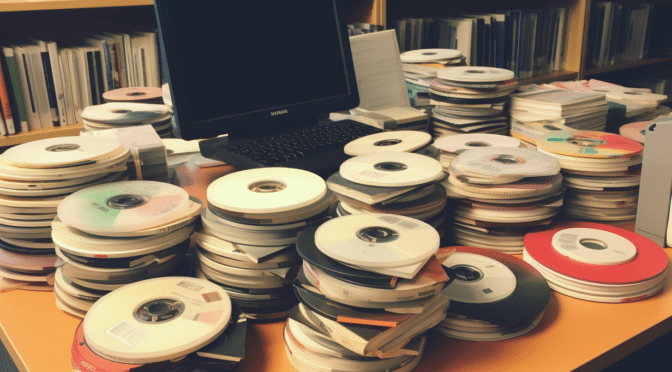
    Once, the clunky floppy disks and shimmering CD-ROMs were our only recourse to data storage and transfer. They have now gracefully bowed out, making way for sleek USB drives, capacious external hard drives, and the omnipresent cloud storage that promises accessibility from every corner of the globe.
  2. VHS Tapes and VCRs:
    The ritual of rewinding VHS tapes and the magic of VCRs bringing images to life on screen are chapters from a bygone era. They’ve been overshadowed by the crisp clarity of DVDs, Blu-rays, and the instant gratification delivered by streaming services.
  3. Fax Machines:
    The whirring and buzzing of fax machines, once music to the ears of office-goers have been replaced by the silent, instantaneous delivery of emails and other digital communication channels.
  4. BlackBerry:
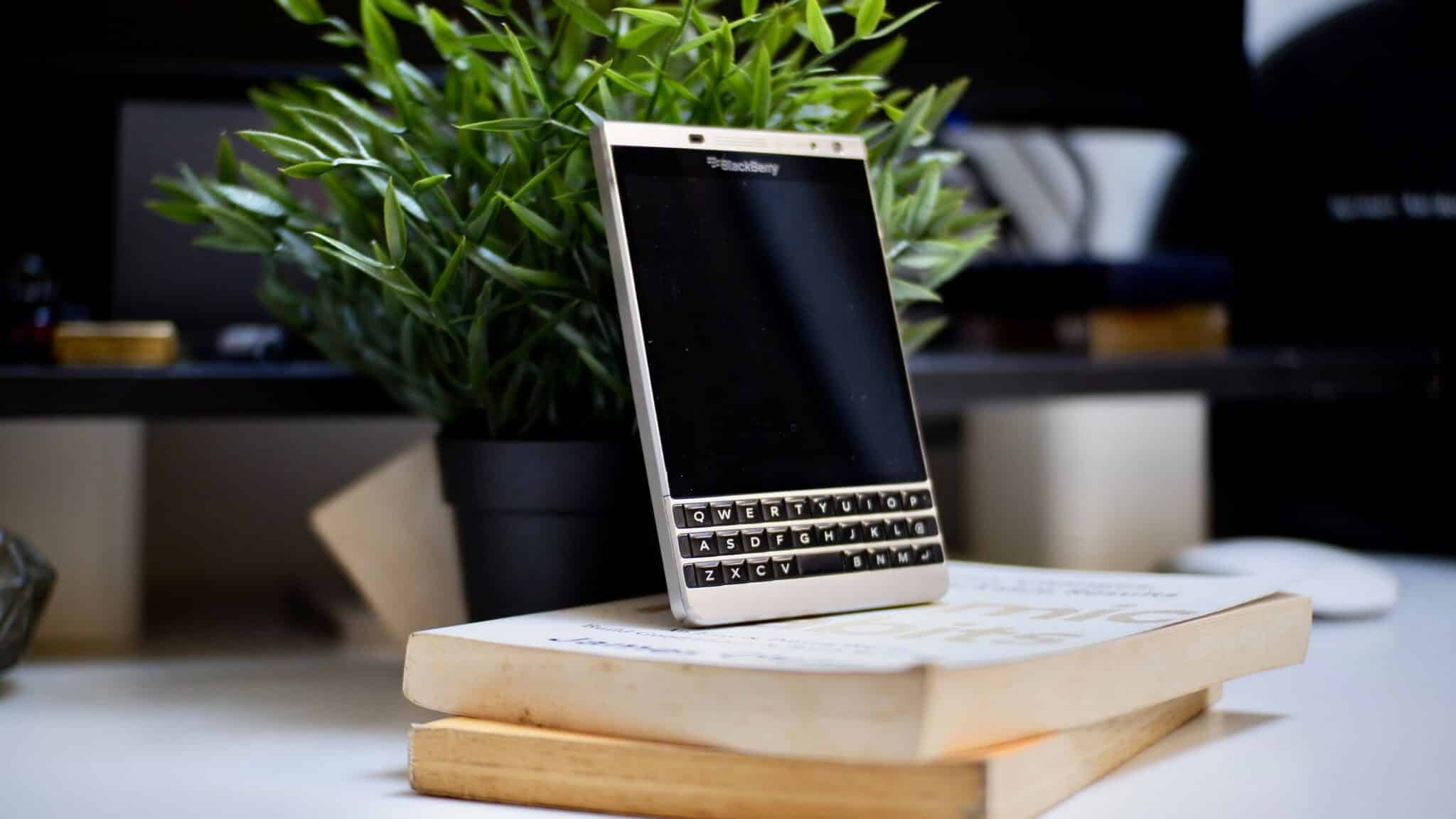
    Once the pinnacle of business communication with its iconic QWERTY keyboard, BlackBerry has been overshadowed by the touchscreen revolution led by smartphones that offer an array of features and applications making communication and management seamless.

    Once the pinnacle of business communication with its iconic QWERTY keyboard, BlackBerry has been overshadowed by the touchscreen revolution led by smartphones that offer an array of features and applications making communication and management seamless.
    Once the pinnacle of business communication with its iconic QWERTY keyboard, BlackBerry has been overshadowed by the touchscreen revolution led by smartphones that offer an array of features and applications making communication and management seamless.
  5. The Pager:
    The humble pager, a precursor to the mobile revolution, once clipped to belts, has quietly retreated to the shadows as smartphones dominate the communication landscape with various features unimaginable back in the day.
  6. Film Cameras:
    The instant gratification of digital photography has replaced the thrill of loading film and the patience of development. Though a niche of enthusiasts still cherishes the craft of film photography, digital cameras and smartphones have become our lenses to the world.
  7. CRT Monitors:
    The bulky CRT monitors that once occupied desks were replaced by sleek LCD and LED monitors, marking a significant leap in aesthetics and technology.
  8. Cassette Tapes and Players:
    The tactile joy of flipping a cassette tape is a forgotten pleasure. Digital audio and streaming services have ensnared the auditory senses with a promise of endless playlists.
  9. Typewriters:
    The rhythmic clacking of typewriter keys is a sound from a bygone era, replaced by the soft tapping on modern-day keyboards as computers and word-processing software took over.
  10. Rotary Phones:
    The nostalgic spin of the rotary dial has been replaced by the swift taps on touch-tone and mobile phones, making communication faster and smoother.
  11. The Evolution of Industrial Automation:
    Beyond personal gadgets, industrial technology has also undergone dramatic transformations. Take, for example, the
    servo convertidor, an essential component in early automation systems that controlled motor speed with precision.Once a staple in manufacturing plants, these devices have gradually been replaced by more advanced digital controllers and AI-driven automation. The seamless efficiency of modern robotics and smart technology has streamlined production like never before, leaving behind the once-revolutionary servo convertidor as a relic of industrial progress.

Each piece of outdated technology carries with it stories and memories that shaped the era they belonged to. As we embrace the new, it’s a sweet reminiscence to look back at the tech relics that paved the path for today’s digital wonderland.

You can also listen in to my chat with Steve Ladner on BBC Radio Kent by clicking on the play button at the top of the post