Tag Archives: online security

Think Before You Scan: That QR Code May Be a Scam

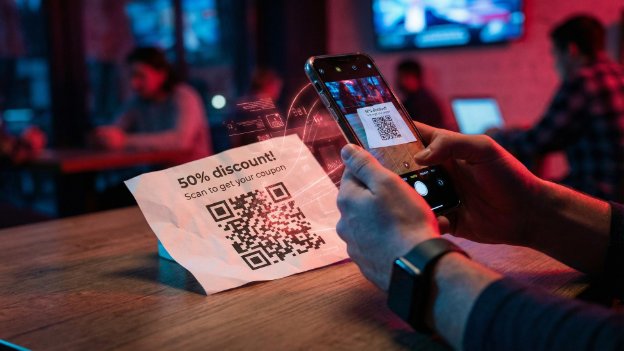
QR codes have become part of everyday life. Parking meters, restaurant menus, parcels, emails. A quick scan feels harmless. That is exactly why cybercriminals are increasingly abusing them.

This growing threat is known as quishing, short for QR code phishing. Instead of asking you to click a suspicious link, attackers persuade you to scan a code that quietly sends you somewhere you really did not intend to go.

At the start of January, the FBI issued a warning about a wave of attacks linked to North Korean cybercriminals who were using fake QR codes to harvest personal information. Security experts say this is not just a US problem. Similar attacks are now appearing across multiple countries, including the UK, as criminals look for new ways to make money.

The technique is simple but effective. Fake QR codes are placed over legitimate ones in public locations such as parking machines, cafés and kiosks. Scan the code and you are redirected to a convincing looking website that may ask for payment details or login credentials. Last year, UK government bodies warned motorists about QR stickers on parking meters that led victims to spoofed payment pages.

QR codes are also being used in email attacks. In one example highlighted by the FBI, a state sponsored group embedded malicious QR codes in emails to employees, presenting them as a way to download extra information. Scan first, think later. That is what the attackers are counting on.

According to cybersecurity experts at Planet VPN, the outcome is usually the same wherever the QR code appears. Once scanned, users are forwarded to a fake site designed to look genuine, whether that is a restaurant menu or a payment page. From there, credit card details, passwords or even full device access can be compromised.

Planet VPN co founder Konstantin Levinzon explains why QR codes are proving so effective. People tend to trust them. They became widespread during the pandemic and still do not trigger the same suspicion as a dodgy looking link. The risk feels lower because there is no visible URL to inspect, just a quick scan.

There is another reason attackers favour QR codes in emails. Many anti phishing systems analyse text and links but do not properly inspect images. A QR code can slip through where a traditional phishing email might be blocked. Even when detection improves, attackers adapt by changing colours or designs to evade filters.

The scale of the problem is significant. Cybersecurity researchers estimate that millions of QR related threats were recorded in just the first half of last year, and experts believe the real number is likely higher due to undetected scams.

Think Before You Scan: That QR Code May Be a Scam

So what should you do?

Be deliberate about scanning QR codes. Ask yourself why it is there and whether it makes sense. If a scan takes you to a site asking for payment or login details, treat that as a serious warning sign.

If a QR code arrives via email from someone you do not know, or even someone you do know but were not expecting to hear from, pause and verify it before entering any details or downloading anything.

Most importantly, apply the same common sense you would use elsewhere online. Stay sceptical. Use a VPN on public Wi Fi. Keep your devices updated. Use strong passwords and enable multi factor authentication wherever possible.

QR codes are convenient, but convenience is often what attackers exploit. A second of caution can save a great deal of hassle later.

What is DNS? The Hidden Hero Behind Every Click

When you open your browser and type in a web address like www.thegadgetman.org.uk, how does your computer know where to go? That’s where DNS – the Domain Name System – comes into play. It’s one of the hidden heroes of the internet, and understanding it can help you browse smarter and more securely.

What is DNS?

In simple terms, DNS translates human-friendly domain names into machine-friendly IP addresses. Think of it as the internet’s phone book. Instead of remembering a string of numbers like 172.217.169.206, you just remember a name – like google.com – and DNS handles the rest.

Every website, email server, and online service has an IP address. DNS ensures you don’t have to memorise any of them.

How Does DNS Work?

Here’s what happens behind the scenes when you visit a website:

  1. Your browser checks its cache to see if it already knows the IP address.

  2. If not, it asks your operating system, which checks its own cache.

  3. If still no luck, it asks the DNS server provided by your internet service provider (ISP).

  4. If the ISP’s server doesn’t know, it asks a chain of other DNS servers – starting from the root, to TLD (.com, .uk), and finally to the domain’s authoritative server.

  5. Once the IP address is found, it’s returned to your browser, and the connection is made.

All this typically takes milliseconds – faster than blinking.

Why Should You Care About DNS?

Most people never think about DNS, but it plays a vital role in your online experience. Here’s why it matters:

  • Speed: A faster DNS can mean faster browsing, especially when accessing new websites.

  • Privacy: Many DNS providers log your queries. That means they know every website you visit.

  • Security: Some DNS services help block malicious websites or phishing attempts.

Surfshark’s DNS: Private and Free

Surfshark, known for its VPN services, offers a free public DNS designed with privacy in mind. Unlike many default ISP DNS services, Surfshark’s DNS doesn’t log or track your online activity.

Key Benefits of Surfshark DNS:

  • No logs or tracking – Your DNS requests aren’t saved, sold, or snooped on.

  • Improved privacy and anonymity – Especially useful when combined with a VPN.

  • Free to use – No hidden costs or annoying ads.

  • Reliable infrastructure – Globally distributed servers for stable, fast resolution.

How to Change Your DNS

Switching to a privacy-focused DNS like Surfshark’s is easy:

  • On Windows or macOS, you can change DNS settings via your network preferences.

  • Routers often allow DNS changes at the network level, covering all your connected devices.

  • Surfshark also offers setup guides for specific devices and platforms.

Final Thoughts

DNS is like the backstage crew of the internet – you rarely see it, but it keeps the show running. Understanding how DNS works gives you more control over your online experience. And by switching to a privacy-first service like Surfshark DNS, you can enhance your digital safety without spending a penny.

If you’re serious about your gadgets, online privacy, and speed, don’t overlook your DNS.

Cybernews Cracks the Password Puzzle: What 19 Billion Passwords Reveal About Us

We’ve all been there — that moment when the password box blinks impatiently, waiting for your brain to produce something secure and memorable. But what if I told you that billions of us are still relying on “123456” or “password” to guard our digital front doors?

Researchers at Cybernews have just released a fascinating and somewhat alarming analysis of 19,030,305,929 leaked passwords, and the findings tell a revealing story about human behaviour, pop culture obsessions, and our often lacklustre approach to security.


Only 6% of Passwords Are Unique – Let That Sink In

Out of 19 billion passwords, only 1.1 billion were unique. That means 94% of people are using the same passwords as someone else — and in the world of hacking, that’s music to a cybercriminal’s ears.

The most common passwords? You’ve guessed them:

  • “password” – used 56 million times

  • “admin” – 53 million times

  • “123456” – 338 million times

  • “1234” – found in nearly 4% of all passwords (that’s 727 million accounts!)

It’s 2025 and we’re still living in a world where “qwerty” and “abc123” are considered acceptable safeguards.


What We Love Shows Up in Our Passwords

The team at Cybernews created themed wordlists to understand what people use in their passwords. The results are both amusing and a little worrying.

Pop Culture Reigns Supreme

Characters like:

  • Mario (9.6M)

  • Batman (3.9M)

  • Joker (3.1M)

  • Thor (6.2M)

  • Elsa (2.9M)

Yes, even a magical ice queen made it onto the hacker’s dictionary.

Our Favourite Animals?

  • Lion (9.8M)

  • Fox (7.8M)

These majestic creatures might be noble, but they’re not secure.

Love, Tea, and Swear Words

  • Love” appears in 87 million passwords.

  • Tea – our national treasure – is in 36 million!

  • And surprisingly (or not), words like “ass” (165M), “fuck” (16M), and “shit” (6.5M) are extremely common.

Seems like when people get frustrated with password rules, they get… expressive.


The Human Factor: Names, Cities, and Seasons

We seem to really love personal and familiar things:

  • Ana is the most-used name (178.8M times).

  • Rome is the top city (13M).

  • Summer (3.8M) leads the seasons, while May (28M) and April (5.2M) dominate the months.

  • Monday is weirdly the most popular weekday (800,000).

And professions like boss, cook, and hunter show up in millions of passwords. Is that confidence or wishful thinking?


Big Brands in Passwords: Not a Great Idea

Believe it or not, some people think referencing tech giants will protect them:

  • Google – 25.9M passwords

  • Facebook – 18.7M

  • Kia – 12.7M (your guess is as good as mine)


Why This Matters (and What You Should Do About It)

With only 6% of passwords being unique, dictionary attacks and credential stuffing become a walk in the park for bad actors. If your password is on one of these lists, your account could be next.

Top Tips for Better Passwords:

  1. Use a Password Manager – Tools like Bitwarden, 1Password or KeePass make strong passwords easy.

  2. Avoid Dictionary Words – Even “FrostyTheSnowman1983” isn’t safe if enough people use it.

  3. Go Long and Complex – At least 12 characters, mixing letters, numbers, and symbols.

  4. Don’t Reuse Passwords – Ever.

  5. Turn On 2FA – Always enable two-factor authentication where possible.


The Bottom Line

Your password is often the only thing standing between your private data and a very bad day. The Cybernews report doesn’t just expose poor habits — it’s a stark reminder that humans are the weakest link in cybersecurity.

So, before you set your next password to “GadgetMan2025”, take a moment. You’re worth a better lock on your digital door.


Matt Porter – The Gadget Man

Have you checked your passwords recently? Would you like me to review any password manager tools for you next?