Tag Archives: maker community

Fire Safety In The Workshop: Why A Simple precaution Makes All The Difference

There is a moment in every workshop when the familiar hum of a machine reminds you how much heat is being generated just out of sight. Whether you are shaping a design with a laser cutter or pushing a long print through the night, both processes rely on concentrated heat and electronics working in perfect harmony. Most of the time everything behaves exactly as expected, but all it takes is a small fault, a stray ember or a damaged cable to turn that hum into something altogether more worrying.

Fire safety is rarely the glamorous side of making, yet it is one of the most important. Over the years I have seen how quickly a small flare can take hold and how easily it can damage tools, materials and the room around them. The risks are low, but they are real, and a little preparation can make an extraordinary difference.

The usual advice stands. Keep machines clean, check wiring regularly, make sure ventilation is clear and never leave cutting material that contains adhesives or unknown coatings unattended. Smoke and heat detectors are essential, as is good airflow and sensible layout. These form the invisible foundation of a safe workshop. They work quietly in the background and never ask for attention.

Then there is the final line of defence. The moment when you see something beginning to smoke or flame and you know you have only seconds to stop it becoming anything serious. Traditionally this has meant reaching for a dry powder extinguisher or a CO2 cylinder. Both will deal with a fire effectively, but both have their drawbacks in a small workshop. Powder settles everywhere and can ruin equipment long after the flames are out. CO2 works well but tends to be large, heavy and not always convenient if you need something you can grab in an instant.

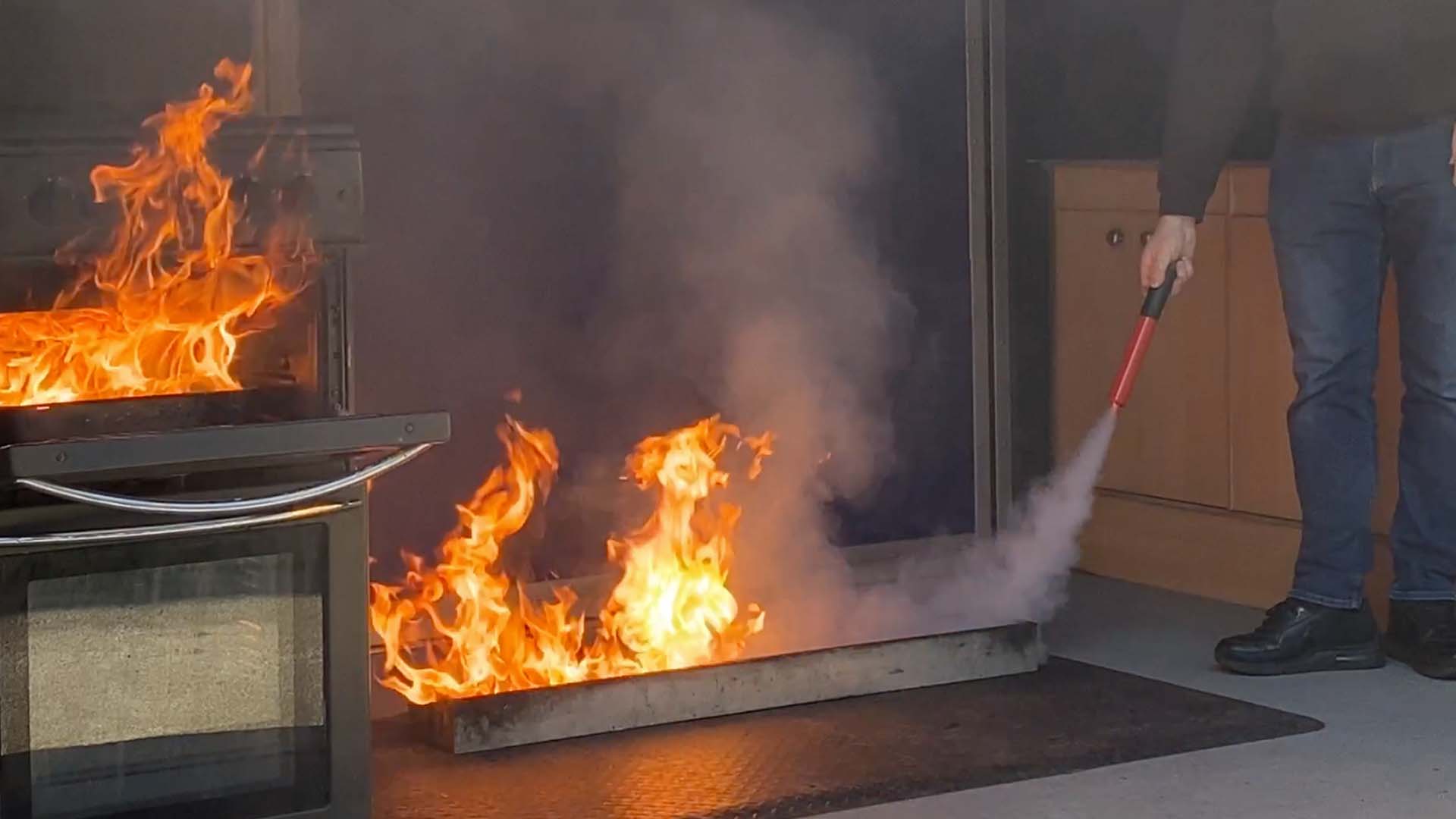
This is where the Fire Safety Stick becomes so valuable. I keep one mounted on the wall near my machines for one simple reason. It allows me to deal with a developing fire without coating the entire workspace in a layer of residue that could permanently damage the very equipment I am trying to save. It produces no settling dust and no lingering film. Once the flame is out there is no clean up and no lasting harm to delicate components, optics or electronics.

The Fire Safety Stick answers many of the concerns that makers often raise. It is compact, straightforward to operate and requires no servicing. It can be used on the types of fires likely to occur around 3D printers and laser cutters, and because the discharge is clean, it allows you to act quickly without wondering how much collateral damage you are about to create. In a space filled with tools, materials and sensitive hardware, that freedom matters.
Fire Safety In The Workshop: Why A Simple precaution Makes All The Difference

This does not replace sensible precautions. It simply adds a layer of protection that fits naturally into the rhythm of a workshop. You can strike it, place it near the source of the problem and step back, letting it continue to suppress the fire while you stay safe. It buys time, and in an environment where heat and electronics are always working together, time is the most valuable thing you have.

I encourage anyone who spends hours printing, engraving or cutting to think seriously about fire safety. It is easy to assume that nothing will ever go wrong, but experience has taught me that peace of mind is something you only appreciate after the moment you wish you had it. A clear workspace, a basic understanding of your equipment and a Fire Safety Stick within reach is a simple combination that gives you that reassurance.

In a world filled with clever tools and creative possibilities, sometimes the most important equipment is the one you hope you never need to use.

Fire Safety Stick is available in 50 second and 100 second discharge rates and are available from Amazon  at https://amzn.to/48fRCob
Title: The Art of Watching 3D Prints: Satisfying or Simply Hypnotic?

As 3D printing continues to weave its way into our lives—from prototyping and manufacturing to hobbyist creations—there’s a unique phenomenon that many of us in the maker community have either experienced or pondered: the act of watching a 3D print come to life. Whether you’re the creator of the object or a casual observer, the sight of a nozzle meticulously layering molten plastic can evoke a surprising array of emotions.

But the question remains: is it truly satisfying to watch a 3D print? And does the experience differ for the person who designed the print versus a general viewer? Let’s explore this fascinating intersection of technology, creativity, and psychology.

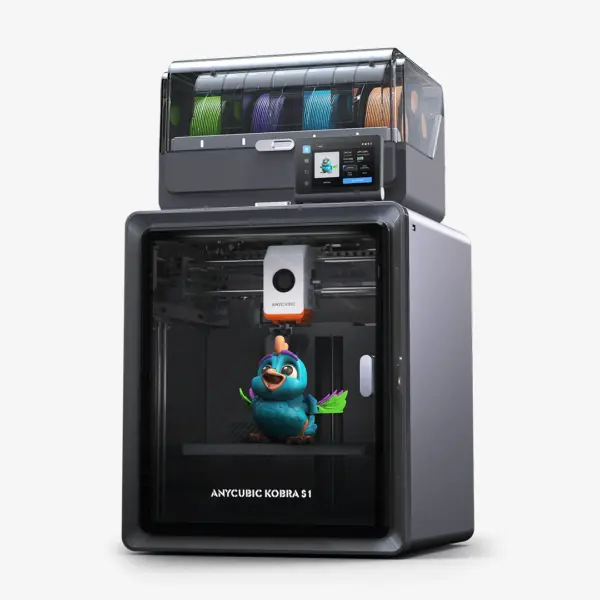
The Anycubic Kobra S1 Combo offers an internal camera for both viewing live print job via the mobile app or slicing software along with a time-lapse function (which you can see above featuring the construction of a ‘poop-bin’).

Anycubic Kobra S1 Combo

The Creator’s Perspective

For those of us who have spent hours—sometimes days—designing a model, watching it come to life can feel akin to witnessing a sculptor carving marble. The experience is deeply personal, tied to the creative process and the anticipation of seeing your vision materialise.

There’s also a practical aspect: watching a print unfold can provide critical insight into potential design flaws. The layers reveal everything, from the perfect flow of filament to those dreaded moments when a miscalculation results in spaghetti-like chaos. For the creator, this isn’t just satisfying—it’s a vital part of refining their craft.

But let’s be honest: once the novelty wears off, even the most enthusiastic maker might find the process a tad monotonous. After all, watching a large print can take hours, if not days. Remote monitoring via a video link often becomes a preferred alternative—practical, yes, but does it carry the same visceral satisfaction?


The Viewer’s Perspective

For the uninitiated, the spectacle of a 3D printer at work can be downright mesmerising. There’s something hypnotic about the rhythmic movements of the print head, the hum of the stepper motors, and the slow but steady transformation of raw filament into a tangible object.

Platforms like YouTube and TikTok are filled with time-lapse videos of prints, condensed into seconds or minutes. These videos are undeniably satisfying, combining the visual appeal of precision engineering with the gratification of seeing a project completed in record time. But is the live experience equally captivating?

Casual viewers often find the real-time process relaxing but not necessarily engaging for extended periods. Much like watching a pot boil, the anticipation can sometimes outpace the actual event. Still, there’s a niche group of enthusiasts who liken the experience to watching a campfire—soothing, meditative, and strangely addictive.


The Role of Remote Monitoring

Remote monitoring adds an interesting layer to the debate. For creators, tools like OctoPrint or a webcam setup allow for constant oversight without being tethered to the printer. This practical solution can also serve as a bridge between creators and viewers, enabling live streams of prints for a global audience.

Most modern printers now come equipped with built-in cameras and the ability to create time-lapse videos. Open-source tools like OctoPrint have even enhanced this experience by homing the print head during time-lapse capture, resulting in cleaner and more engaging footage. These advancements not only make monitoring more practical but also elevate the viewing experience for creators and audiences alike.

However, the satisfaction derived from remote monitoring often depends on the context. Is it a high-stakes print with intricate details? Or a simple functional piece? For viewers tuning in remotely, the experience can feel less immersive but still enjoyable, especially when paired with commentary or a clear narrative about the object’s purpose.


The Verdict

So, is watching a 3D print satisfying? The answer, unsurprisingly, is subjective. For creators, the process can be a blend of satisfaction, anticipation, and anxiety. For viewers, it’s often a mix of curiosity and relaxation, with the level of engagement varying based on personal interest.

Perhaps the real magic lies in the shared appreciation for the technology. Whether you’re a maker checking for flaws, a viewer marvelling at the process, or someone enjoying a time-lapse on social media, 3D printing offers a unique window into the intersection of art and engineering.

So, next time you find yourself mesmerised by a print—either in person or remotely—take a moment to reflect on what it is that holds your attention. Is it the satisfaction of creation, the joy of discovery, or simply the hypnotic beauty of precision in motion? Whatever your answer, one thing’s for sure: 3D printing continues to capture our imagination, one layer at a time.