Tag Archives: local heritage.

The Pub That Became My House: The Woodbines and the Three Horse Shoes

Regular readers will know this blog usually concerns itself with things that have plugs, screens, or at the very least an exciting number of megapixels. Bear with me, then, because this post is about a Victorian pub. It is also, I promise, a gadget story — because everything you’re about to read was uncovered in a single evening, from the sofa, on a phone, well past midnight. No archives were visited. No white gloves were worn. There’s a roundup of the tools that did the heavy lifting at the end, in case you fancy turning detective on your own four walls.

First, though, the pub.

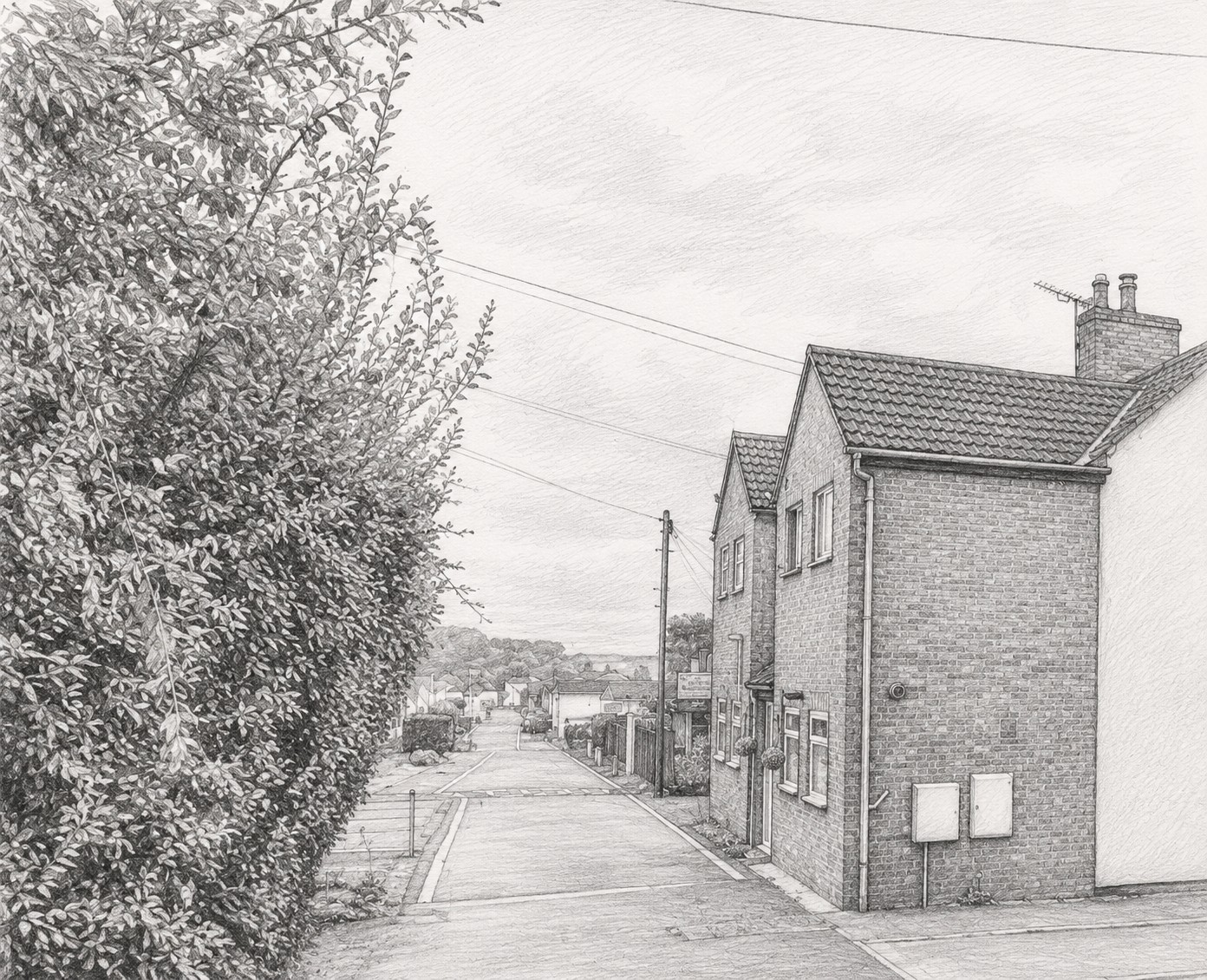
I used to live in one. I should clarify that before anyone gets the wrong idea — by the time I moved in, it had been a perfectly respectable house for decades. But the building at 38 and 39 Long Close, Lower Stondon — both halves called Rose Cottage — spent the first part of its life as the Three Horse Shoes public house. And the story of how a village pub became a pair of cottages turns out to be the story of one remarkable family, a prize cabbage, a misleading photograph, and very nearly the story of an entire street.

A photograph that lies

If you go looking for the Three Horse Shoes, the first thing you’ll find is a photograph in the Francis Frith Collection, labelled “The Three Horse Shoes c.1955, Lower Stondon” (ref. L213010). It’s a lovely image. It’s also, in one important respect, wrong.

What the photographer actually captured was the pub sign, which stood out on Station Road at the entrance to what is now Long Close. The pub itself sat further down, set well back from the road — you can see it plainly marked “Three Horseshoes (P.H.)” on the old Ordnance Survey maps, a comfortable distance from where the sign caught the eye of passing trade.

And remarkably, this arrangement was confusing people long before any photographer turned up. At the Ampthill licensing sessions, when the tenant of Stondon’s Red Lion applied for a Sunday licence and the Three Horseshoes objected, his solicitor complained that the magistrates had misunderstood the position of the two houses — because the Three Horseshoes, “though having a sign on the main road, was yet forty yards away down a tortuous lane.” There it is, in sworn evidence: sign on the main road, pub forty yards down the lane. The very lane, give or take a few park homes, that is now Long Close.

A sensible bit of marketing in its day, then. A century-long red herring for anyone researching it since. I know this because I lived in the building, and I’m setting it down here so the next person to find that photograph doesn’t go hunting in the wrong spot.

The Woodbines

The earliest licensee I’ve traced is Emery Cooper, a Stondon man all his life and Chief Ranger of the Foresters at Shillington Lodge. He died on 2 March 1933, aged seventy-two, and his funeral report records that he had kept the Three Horse-shoes until a few years before — placing his retirement from the pub in the late 1920s, just as the next chapter was about to begin.

But the family whose name runs through the pub’s final decades is the Woodbines. John Woodbine was born at March in Cambridgeshire and came to Stondon around 1910, working first for Tom Simkins and then for the Bedfordshire County Council for twenty-five years. He and his wife Rosina — Stondon born and bred — took on the Three Horse Shoes around 1930, and John was its proprietor for twenty-four years. The 1939 Register duly finds the family at “2, Three Horse Shoes, Station Road, Lower Stondon.”

John was, by all accounts, a well-known figure in the district, and his chief passion was the garden. The year before he died he grew the largest cabbage ever seen in the district — it weighed twenty-eight and a half pounds, and the local paper thought it worth recording in his obituary. Quite right too.

John Woodbine died at the Three Horseshoes on 20 September 1954, aged sixty-nine. And here the arithmetic gets satisfying: Rosina’s own obituary, years later, records that she was licensee for twenty-seven years until the pub closed. Twenty-seven years from 1930 lands at 1957 — and sure enough, a court report from 1957 still gives “The Three Horseshoes, Lower Stondon” as a working address. So the picture comes into focus: the widowed Rosina carried on as landlady in her own right for about three years after John’s death, and called last orders for the final time around 1957. The Frith photographer, whether he knew it or not, caught the sign in the pub’s last trading years.

The pub makes the papers

The Three Horse Shoes had its moment of notoriety in 1948, when it managed to appear before the Ampthill magistrates twice in quick succession.

In September of that year, a lodger at the pub — Michael Maroney, a twenty-seven-year-old painter — was fined for assaulting a builder named Alan Cooper. The dispute was over twelve shillings in wages, and it ended with Cooper invited into the pub’s scullery, grabbed by the waistcoat, told “You are going to have this,” and struck over the eye. The papers gave it the immortal headline “ASSAULT IN A SCULLERY: MAN FINED.” For good measure, Maroney also admitted stealing two bottles of gin, valued at £2 18s — the property of one Rosina Woodbine. He was fined for both, his solicitor explaining that he had been under the influence of drink at the time, which, given where he was living, can’t have come as an enormous surprise to anyone.

Rosina herself gave evidence in the case. Earlier the same summer, the family had been through a far less comic episode, when an airman from the camp stood trial — and was acquitted — over an alleged assault on the Woodbines’ twenty-year-old daughter Joan, who lived at the inn with her parents.

And Maroney? Here’s the thing about village life. Six years later, there he is in the list of mourners at John Woodbine’s funeral — still lodging at the Three Horseshoes, gin theft evidently long forgiven. He wasn’t entirely reformed, mind: he later found himself remanded at a special Ampthill Magistrates’ Court over a pound taken from a neighbour’s house down Fakeswell Lane, having told the police, with a certain weary candour, “All right. I’ll tell you about it. I took a pound.” His address was still given as the Three Horseshoes. Some lodgers come with the fixtures and fittings.

The pub becomes a house — and a street

When the Three Horse Shoes closed around 1957, Rosina didn’t leave. The solid-walled old pub became her home, renamed Rose Cottage — and you don’t need to squint very hard to see the landlady’s own name softened into the house’s. Rosina’s cottage. Rose Cottage. Seventy years on, the connection is all but invisible unless someone tells you.

Her obituary adds the detail that ties everything together: when the pub closed, the land around it was made into a caravan park. That caravan park is what grew into the residential park home site at Long Close — the very lane whose entrance the old pub sign once marked. The Three Horse Shoes didn’t just become a house. In a roundabout way, it became the whole street.

Rosina Woodbine died at Rose Cottage on 6 November 1978, aged 81, and was buried at Stondon church that week — a well-known resident, as the paper put it, who was born in the village and never left it. Some time after, the old building was extended towards the road and divided into two houses, numbers 38 and 39, both keeping the Rose Cottage name. One of them, years later, had me in it.

A small correction to the record

So if you ever come across that Frith photograph, now you know: the sign stood at the entrance to Long Close, the pub stood forty yards down the lane, and behind both stood the Woodbines — John with his prodigious cabbages, Rosina the landlady of twenty-seven years, and the quiet reason a house called Rose Cottage exists at all.

Lower Stondon’s history is famously hard to pin down — the village spent a century buried in Shillington’s records, and even the Parish Council admits the cupboard is rather bare. Consider this one small jar put back on the shelf.

The Gadget Man bit: how it was done

As promised, the tools. Because the genuinely remarkable thing about this story isn’t the cabbage — though it’s a close-run thing — it’s that a hundred years of a building’s history can now be reassembled in an evening, in bed, on a phone.

The workhorse was Findmypast and its digitised British newspaper archive. Type a name like “Rosina Woodbine” or “Three Horseshoes Stondon” into the search box and decades of local papers — the courts, the funerals, the prize vegetables — surface in seconds, each one searchable, highlightable, and clippable. This is the stuff that, twenty years ago, meant a day at the county archives winding through microfilm with a bag of pound coins for the printer. The 1939 Register on the same site did something quietly brilliant: it didn’t just list the family at “2, Three Horse Shoes, Station Road”, it overlaid their address on a historical Ordnance Survey map — which is how the pub’s true position, forty yards down the lane, jumped off the screen.

The Francis Frith Collection (francisfrith.com) supplied the photograph that started it all — free to browse, and with a memories feature where locals can correct the record, which I intend to do. And I’ll admit to a research assistant: I bounced findings off Claude, an AI chatbot, as I went — it helped join the dots between clippings, spotted that 1930 plus twenty-seven years of Rosina’s licence landed precisely on the 1957 court report, and generally played the role of an enthusiastic colleague who never needs a tea break.

Total cost: a Findmypast subscription and a late night. Total equipment: one phone. If your house is more than a lifetime old, somebody’s story is sitting in those archives waiting for you. Go and find them.


Sources: Francis Frith Collection ref. L213010; 1939 Register (RG101/1995C/020/30); Ampthill Division licensing sessions report (Red Lion seven-day licence application); Bedfordshire press reports, September 1948; Hertfordshire Express, 1 October 1954 (obituary of John Woodbine); Bedfordshire Times and Independent, 10 March 1933 (funeral of Emery Cooper); Bedfordshire press, 1957; obituary and funeral reports of Rosina Woodbine, November 1978; Ordnance Survey mapping; and the author’s own knowledge of the building.