We’re now on the home straight with the Retro Gadgets Series and what better classic gadget to feature but the legendary Nokia 3310 mobile phone.
This is certainly a gadget that needs very little introduction, after being introduced in 2000, the handset went on to sell more than 126,000,000 units. What’s more, the handset continues to be used in many households today. I previously discussed the handset in Episode 98 with James Hazell.
Nokia’s new owners HMD relaunched the device in 2017 with a homage to the original device, attempting to capture a new market of low-cost mobile phones. This too was covered in Episode 102 with Mark Murphy.
The Original Nokia 3310 and the the 2017 HMD Nokia 3310 reboot
Today, however, it was the turn of Matt Marvell to listen to my lament about this classic piece of technology history.
You can listen in to the recording by clicking at the top of the post. Don’t forget to LIKE, SUBSCRIBE, SHARE and most importantly COMMENT. I’ll catch up with you next time
The UK Government’s ‘Department for Health and Social Care’ have today announced a collaboration between themselves and Multi-Billion Dollar tech firm Amazon to provide NHS website information via the popular Alexa platform.
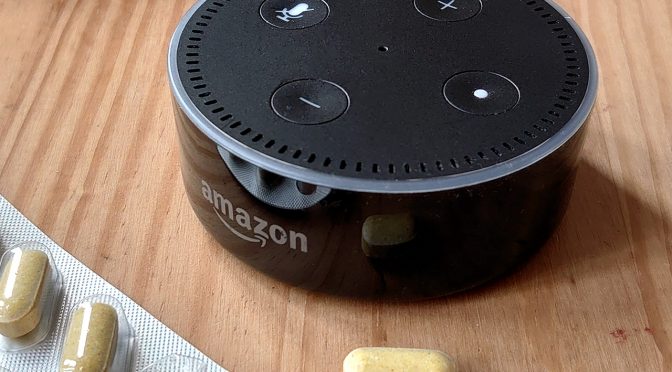
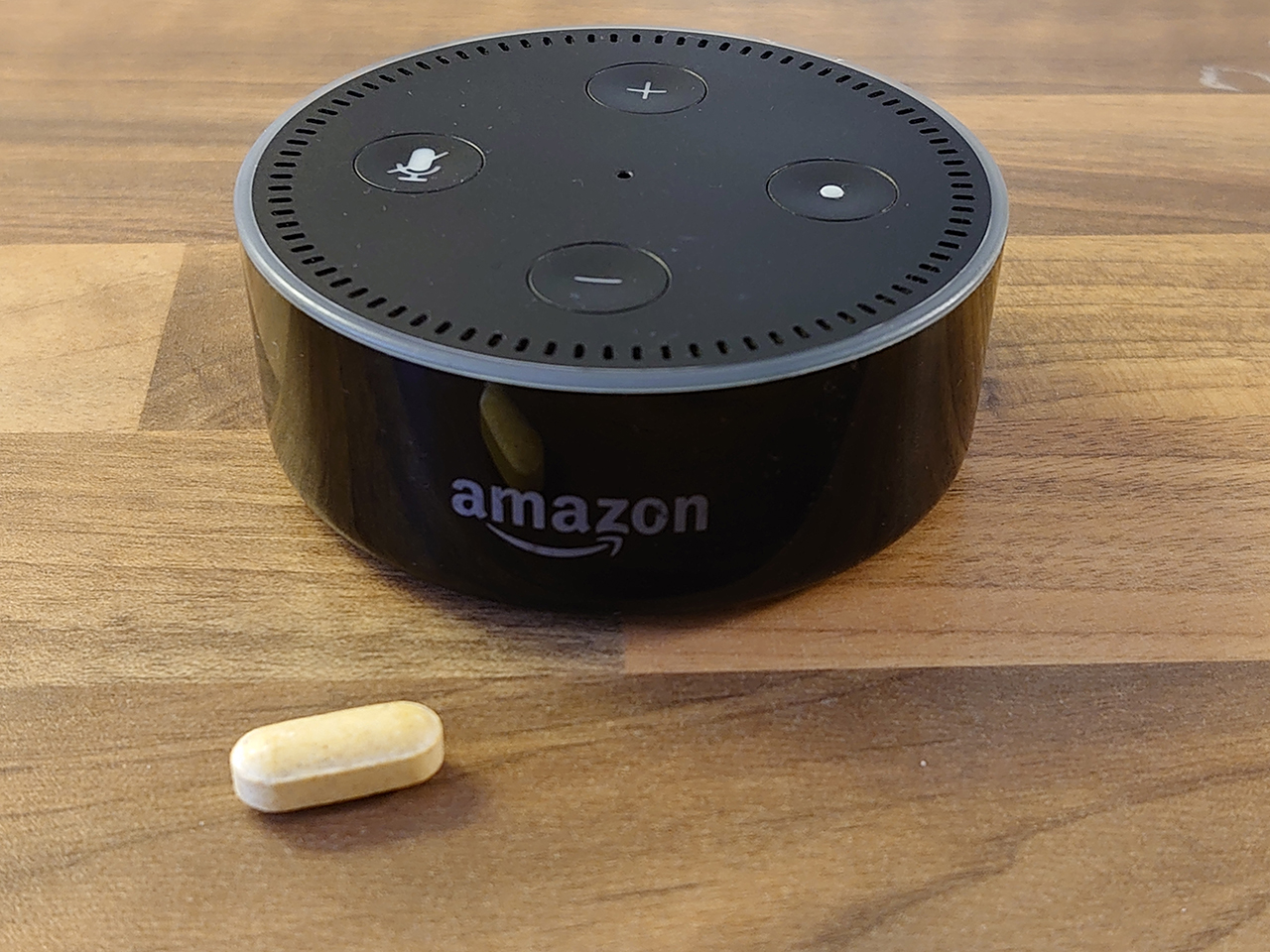
Amazon Dot running Alexa can now assist with NHS based medical information
With immediate effect, UK owners of the Alexa based devices such as the Amazon Echo and Echo Dot will now be able to request medical information by asking their devices.
This morning, I spoke to Mark Murphy from BBC Radio Suffolk about the devices and their potential uses in health. You can listen in via the link about. Don’t forget to Like, Share, Subscribe and Comment!!
[videopress NgjTfiDu]
The press release is as follows:-
Press Release – 10 July 2019
The NHS is collaborating with Amazon to provide reliable health information from the NHS website through voice-assisted technology.
The technology will help patients, especially the elderly, blind and those who cannot access the internet through traditional means, to get professional, NHS-verified health information in seconds, through simple voice commands.
Amazon’s algorithm uses information from the NHS website to provide answers to voice questions such as:
“Alexa, how do I treat a migraine?”
“Alexa, what are the symptoms of flu?”
“Alexa, what are the symptoms of chickenpox”
The technology has the potential to reduce the pressure on the NHS and GPs by providing information for common illnesses.
Voice search has been increasing rapidly. By 2020, half of all searches are expected to be made through voice-assisted technology.
NHSX will look at ways of making more NHS services available to all patients through digital technology. The announcement supports the commitment in the NHS Long Term Plan to make more NHS services available digitally.
Secretary of State for Health and Social Care Matt Hancock said:
We want to empower every patient to take better control of their healthcare and technology like this is a great example of how people can access reliable, world-leading NHS advice from the comfort of their home, reducing the pressure on our hardworking GPs and pharmacists.
Through the NHS Long Term Plan, we want to embrace the advances in technology to build a health and care system that is fit for the future and NHSX will drive this revolution to bring the benefits to every patient, clinician and carer.
Matthew Gould, Chief Executive of NHSX, said:
The public need to be able to get reliable information about their health easily and in ways they actually use. By working closely with Amazon and other tech companies, big and small, we can ensure that the millions of users looking for health information every day can get simple, validated advice at the touch of a button or voice command.
Part of our mission at NHSX is to give citizens the tools to access services and information directly, and partnerships such as this are an important part of achieving this.
It only seems like yesterday when I was talking about the World Wide Web turning 25 years old and now before we know it, it’s now 30 years since the first HTML web page was authored and published by Sir Tim Berners-Lee.
The Web is, without doubt, the greatest invention of all time. It has made our planet smaller, brought together people from all walks of life and from every corner of the globe. It has made the world a much more accessible place, we can reach out to our idols and they can communicate back to us. We can transverse the globe and watch sunrises on opposite sides of the planet as they happen.
It truly is a modern wonder of the world. Cheers, Sir Tim!!
Sir Tim arriving at the Guildhall to receive the Honorary Freedom of the City of London – Image Credit – Paul Clarke
With the wonders of the web brings ‘Smart Assistants’, they are on our phones, computers and now independently as ‘Smart Speakers’, another true wonder borne from the internet, serving our every need and answering the answerable. These ubiquitous electronic pucks offer a gateway to enormous artificial intelligence-driven knowledgebases that are themselves learning as well learn from us, Machine Learning is driven by millions of users.
Of course, every now and then our assistants flicker or make strange noises, we might wonder if these are simply glitches or the first sparks of self-awareness?
I spoke to Mark Murphy at BBC Radio Suffolk about both Smart Speakers and the 30th Anniversary of the Web. Listen in above and don’t forget to LIKE, SHARE and SUBSCRIBE. See you next time!!
For the last 24 hours, there has been collective panic across the digital world! Was this panic caused by the continued disaster that is the Brexit negotiations and repeated House of Commons votes?
No, it was because the worlds largest Social Networks were failing all around us. Literally MILLIONS of Facebook, Instagram and WhatsApp users were panicking at the loss or at least interruption of their services.
There are many reasons for these failures, Facebook has denied DDoS attacks, but there is a myriad of other reasons, software corruption, network failure or hardware issues. There has even been the discussion of AI being involved in the problems!
** UPDATE – 14/03/19 21:59 ***
Facebook has now officially explained the reasons for the issues suffered over the past 24 hours as follows:-
Yesterday, as a result of a server configuration change, many people had trouble accessing our apps and services. We've now resolved the issues and our systems are recovering. We’re very sorry for the inconvenience and appreciate everyone’s patience.
Currently, we haven’t had an explanation and as soon as we do (see above), I will post it on this blog, until then, you can listen in to me talking to James Hazell at BBC Radio Suffolk about the problem.
Before I go, make sure you watch The Truman Show, in particular watch the very end, as the show draws to an end, everyone goes back to their normal lives. Maybe, we should too.
Don’t forget to Like, Subscribe and Share using the appropriate buttons.
Some 30 years ago, I was inexplicably drawn into a high-speed car chase across my home town of Hitchin.
When I left The Bird in Hand in Gosmore on that rainy night in 1987, I had no idea that the following 10 or so minutes would stay with me until now.
In my case, I managed to ‘lose my tail’, but it has always troubled me how the Police would have viewed my plight at the time. Back then, we didn’t have mobile phones in order to call the authorities, so I took it upon myself to try and outrun my potential assailant. If the same had happened now, I would have driven to the nearest Police Station whilst calling them on the way.
Suffolk Police Officer
Now, thirty-two years later, I have my answer (sort of), in the form of a Police Inspector from Suffolk.
In the above audio, you can find out what happened to cause the chase, how I evaded them and what the Police’s view is three decades later.
Don’t forget to LIKE, SUBSCRIBE, SHARE and COMMENT, see you next time!!
Thanks to James Hazell for chatting to me about the chase and for contacting the police about it!!
Last week, I spoke with James Hazell on BBC Radio Suffolk about the new film classifications and how they can be applied to online video streaming sites.
I also discussed YouTube’s ban on videos that contain or encourage dangerous pranks that endanger people or could cause harm to people copying them.
BBFC has revised it’s classifications
Following a public consultancy of more than 10,000 people, the BBFC (British Board of Film Classification) has now revised its classifications to make it more consistent across platforms, including online services.
David Austin, Chief Executive Officer at the BBFC, said: “Over the last five years the way we consume film and video has changed beyond all recognition. That’s why it’s so important that there is consistency between what people watch on and offline. The research shows that parents and teenagers want us to give them the information and guidance that they need to view what’s right for them.
We’re here to listen to what people want, which is why they trust our age ratings. So it’s encouraging to know that we’ve been classifying content in line with what people want and expect when it comes to difficult themes around credible real life scenarios. We also know that people are more comfortable with issues such as action violence, if it’s in a way that they are expecting – such as a Bond or Bourne film. We are updating our standards around depictions of sexual violence and very strong sex references to reflect changes in public attitudes.”
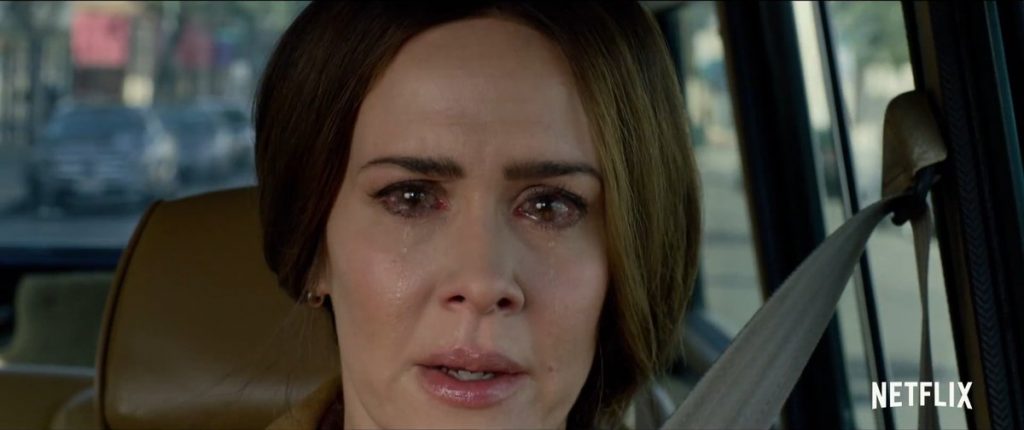
A scene from Bird Box – Image Credit: Netflix
In discussing YouTube enforcing rules banning videos which either put people in danger or promoted acts which might lead people copying those acts to either suffer harm or place others in danger, we discussed recent movies such as the Netflix production; Birdbox which led some people to challenge others to go about day-to-day activities whilst blindfolded and may have led a driver in the US to become involved in a motor vehicle accident.
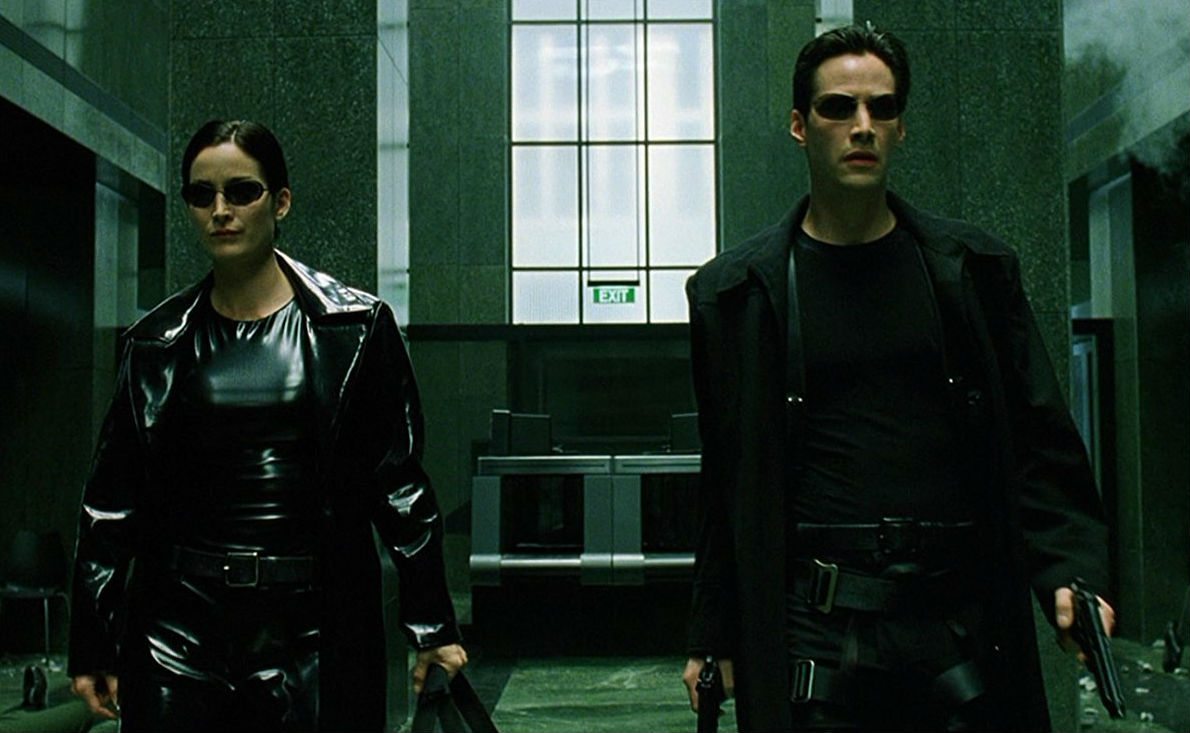
Trinity and Neo from The Matrix – Image Credit: The Wachowskis / Silver Pictures / Warner Bros
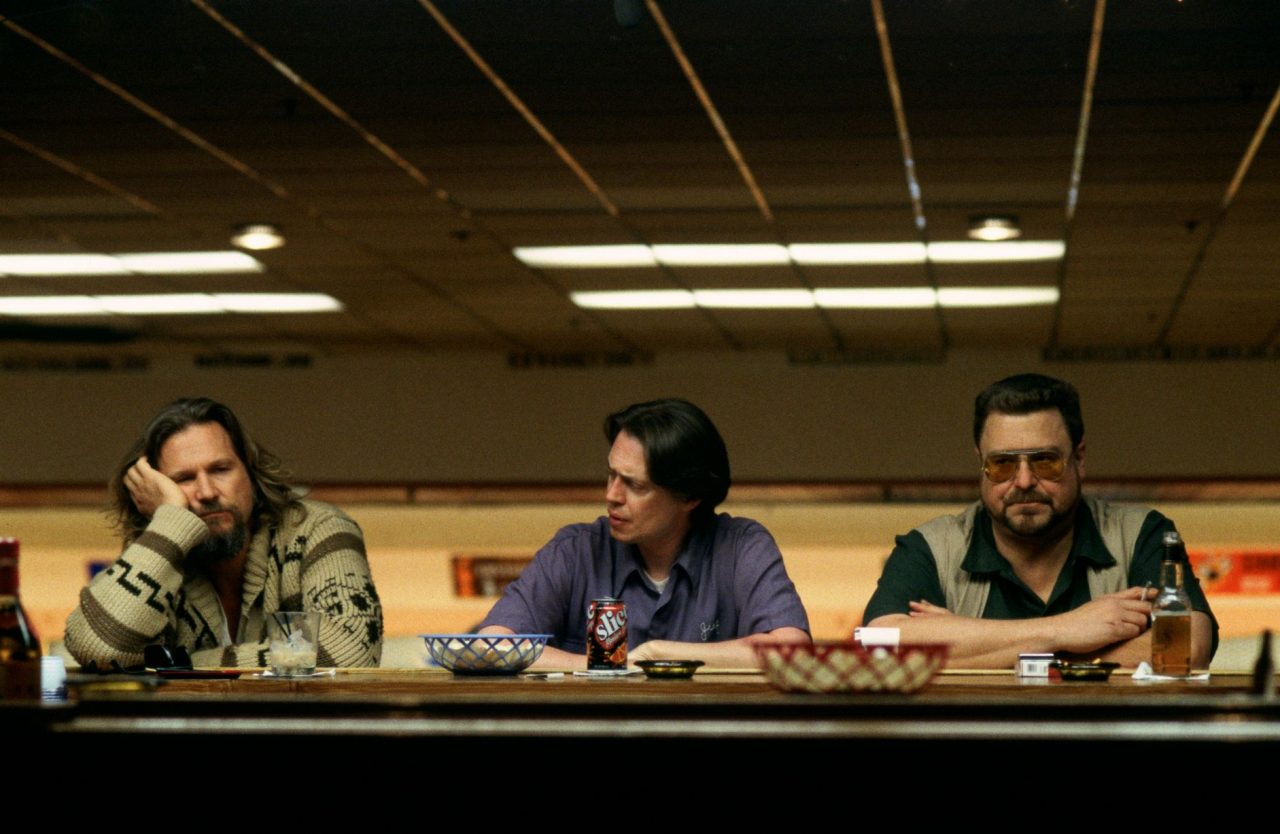
On a lighter note, I owned up to buying a pair of ‘Neo from the Matrix’ inspired sunglasses and my continuing search for ‘The Dude’s Cardigan’ from The Big Lebowski.
The Big Lebowski – Image Credit: The Coen Brothers / Working Title Films
You can listen in to the stream, by clicking on the play button above, or you can subscribe to The Gadget Man podcast using the links above listen in via iTunes, Tune-in, Google Podcasts and more! Don’t forget to show your support by ‘liking’, ‘sharing’ and ‘subscribing’.
Matt
The Gadget Man
[amazon_link asins=’B0089X2GLQ,B00FI3OOF6,0007529902,B001CEE1YE’ template=’ProductCarousel’ store=’thgama03-21′ marketplace=’UK’ link_id=’367400d7-3b16-48c4-83c3-b9ef7549c045′]
As we enter the final year of the second decade of the 21st century, the smartphone will surely be considered the most revolutionary gadget of the last 10 years.
Our phones are now firmly ingrained in our lives, joining us at home, at work, at play, at the dinner table, in bed, they come with us everywhere! Our lives are documented in detail, where we go, what we do, what we think and what we eat. We’ve now become news gatherers, critics and voyeurs all without realising it was happening in front of us.
Too Much Smartphone III
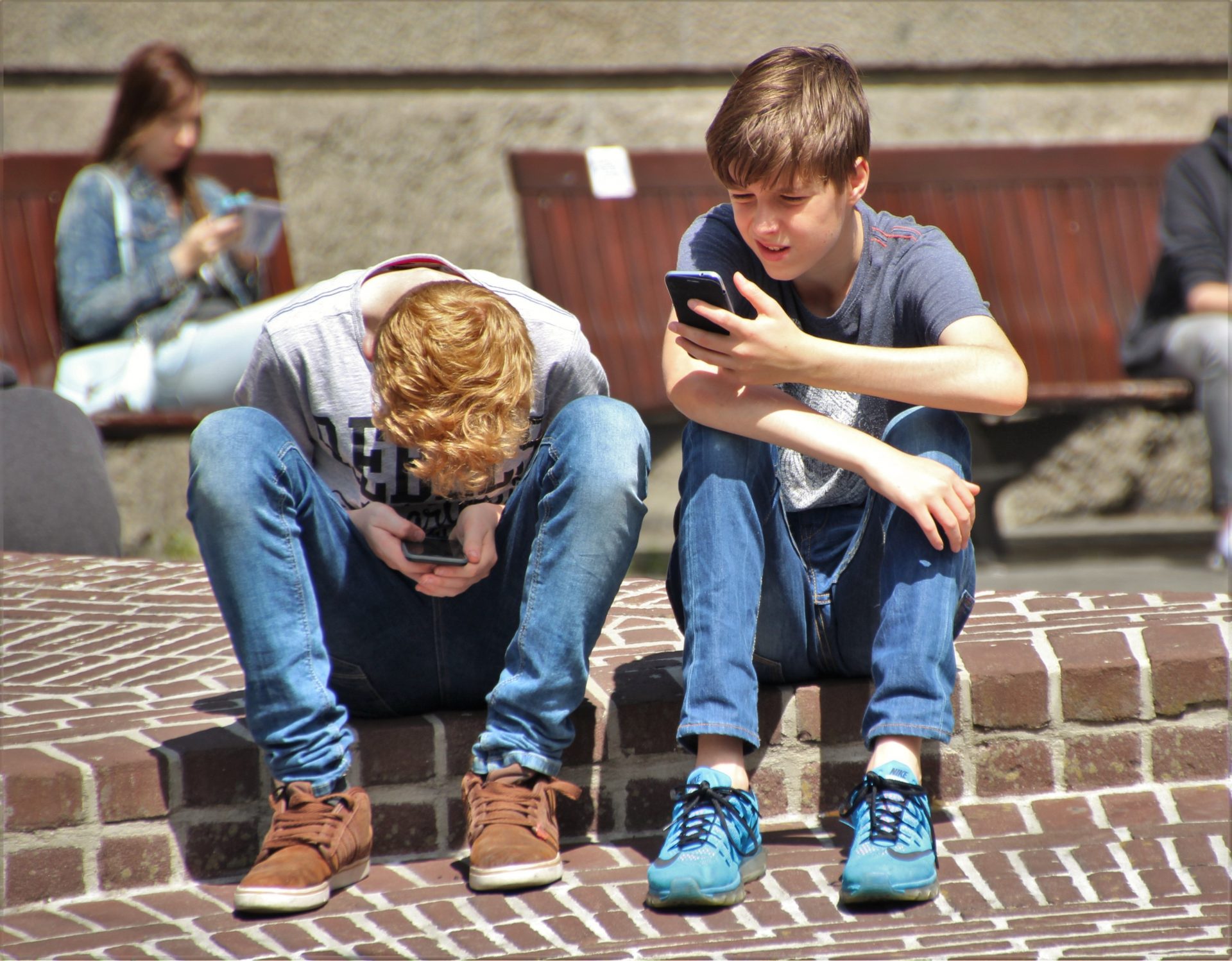
The use of mobile phones stretches to every age group, from the elderly to the very young and with this comes concern as to the use of these devices. Should young people be allowed to use their phones at any time of the day OR night? Does it reduce conversation? Are we become LESS social?
I have now covered this subject twice in the past, you can read a listen in here and here, however now reports are informing us that phones DON’T cause our children harm, listen in to the podcast, where I talk to Mark Murphy on BBC Radio Suffolk about this latest contentious report.
As ever, if you enjoy listening in, Like, Share, Subscribe and Comment, I will see you soon!













 Our phones are now firmly ingrained in our lives, joining us at home, at work, at play, at the dinner table, in bed, they come with us everywhere! Our lives are documented in detail, where we go, what we do, what we think and what we eat. We’ve now become news gatherers, critics and voyeurs all without realising it was happening in front of us.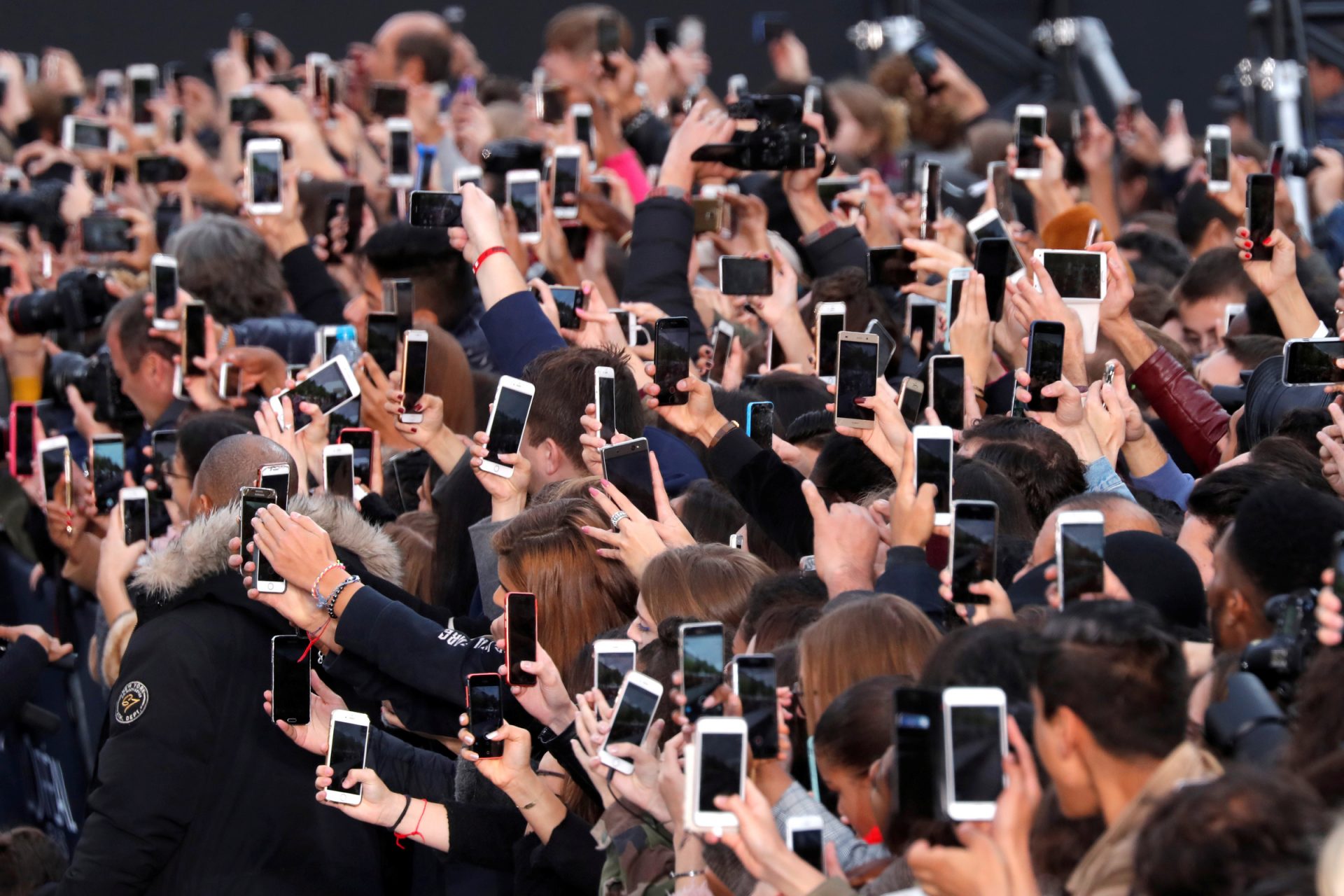
 I have now covered this subject twice in the past, you can read a listen in