It only seems like yesterday when I was talking about the World Wide Web turning 25 years old and now before we know it, it’s now 30 years since the first HTML web page was authored and published by Sir Tim Berners-Lee.
The Web is, without doubt, the greatest invention of all time. It has made our planet smaller, brought together people from all walks of life and from every corner of the globe. It has made the world a much more accessible place, we can reach out to our idols and they can communicate back to us. We can transverse the globe and watch sunrises on opposite sides of the planet as they happen.
It truly is a modern wonder of the world. Cheers, Sir Tim!!
Sir Tim arriving at the Guildhall to receive the Honorary Freedom of the City of London – Image Credit – Paul Clarke
With the wonders of the web brings ‘Smart Assistants’, they are on our phones, computers and now independently as ‘Smart Speakers’, another true wonder borne from the internet, serving our every need and answering the answerable. These ubiquitous electronic pucks offer a gateway to enormous artificial intelligence-driven knowledgebases that are themselves learning as well learn from us, Machine Learning is driven by millions of users.
Of course, every now and then our assistants flicker or make strange noises, we might wonder if these are simply glitches or the first sparks of self-awareness?
I spoke to Mark Murphy at BBC Radio Suffolk about both Smart Speakers and the 30th Anniversary of the Web. Listen in above and don’t forget to LIKE, SHARE and SUBSCRIBE. See you next time!!
Who would have believed that at the dawn of the World Wide Web 30 years ago that almost all of our lives would be controlled via logins and passwords exchanged over the internet?
Whilst it is incredibly convenient to be able to access our bank accounts, insurance policies, email, social networks, discussion forums and many many other services. It is also very important to remember that ALL of the services require user names and passwords.
So, what happens when suddenly the owner of all these credentials passes away or becomes unable to continue to access the services independently?
On this episode, James Hazell discusses just that with both myself and a solicitor to explain what can be done to avoid all of our lives being locked away indefinitely.
You can tune in to the podcast above or subscribe via your favourite Podcast app. If you enjoy what you hear, don’t forget to Like, Share and Subscribe and I will see you next time!
For the last 24 hours, there has been collective panic across the digital world! Was this panic caused by the continued disaster that is the Brexit negotiations and repeated House of Commons votes?
No, it was because the worlds largest Social Networks were failing all around us. Literally MILLIONS of Facebook, Instagram and WhatsApp users were panicking at the loss or at least interruption of their services.
There are many reasons for these failures, Facebook has denied DDoS attacks, but there is a myriad of other reasons, software corruption, network failure or hardware issues. There has even been the discussion of AI being involved in the problems!
** UPDATE – 14/03/19 21:59 ***
Facebook has now officially explained the reasons for the issues suffered over the past 24 hours as follows:-
Yesterday, as a result of a server configuration change, many people had trouble accessing our apps and services. We've now resolved the issues and our systems are recovering. We’re very sorry for the inconvenience and appreciate everyone’s patience.
Currently, we haven’t had an explanation and as soon as we do (see above), I will post it on this blog, until then, you can listen in to me talking to James Hazell at BBC Radio Suffolk about the problem.
Before I go, make sure you watch The Truman Show, in particular watch the very end, as the show draws to an end, everyone goes back to their normal lives. Maybe, we should too.
Don’t forget to Like, Subscribe and Share using the appropriate buttons.
Some 30 years ago, I was inexplicably drawn into a high-speed car chase across my home town of Hitchin.
When I left The Bird in Hand in Gosmore on that rainy night in 1987, I had no idea that the following 10 or so minutes would stay with me until now.
In my case, I managed to ‘lose my tail’, but it has always troubled me how the Police would have viewed my plight at the time. Back then, we didn’t have mobile phones in order to call the authorities, so I took it upon myself to try and outrun my potential assailant. If the same had happened now, I would have driven to the nearest Police Station whilst calling them on the way.
Suffolk Police Officer
Now, thirty-two years later, I have my answer (sort of), in the form of a Police Inspector from Suffolk.
In the above audio, you can find out what happened to cause the chase, how I evaded them and what the Police’s view is three decades later.
Don’t forget to LIKE, SUBSCRIBE, SHARE and COMMENT, see you next time!!
Thanks to James Hazell for chatting to me about the chase and for contacting the police about it!!
How many of us own and drive a vehicle with a keyless entry system? Well, it appears that many thousands of us that do have woken up this morning to a very worrying report from the General German Automobile Club (ADAC),
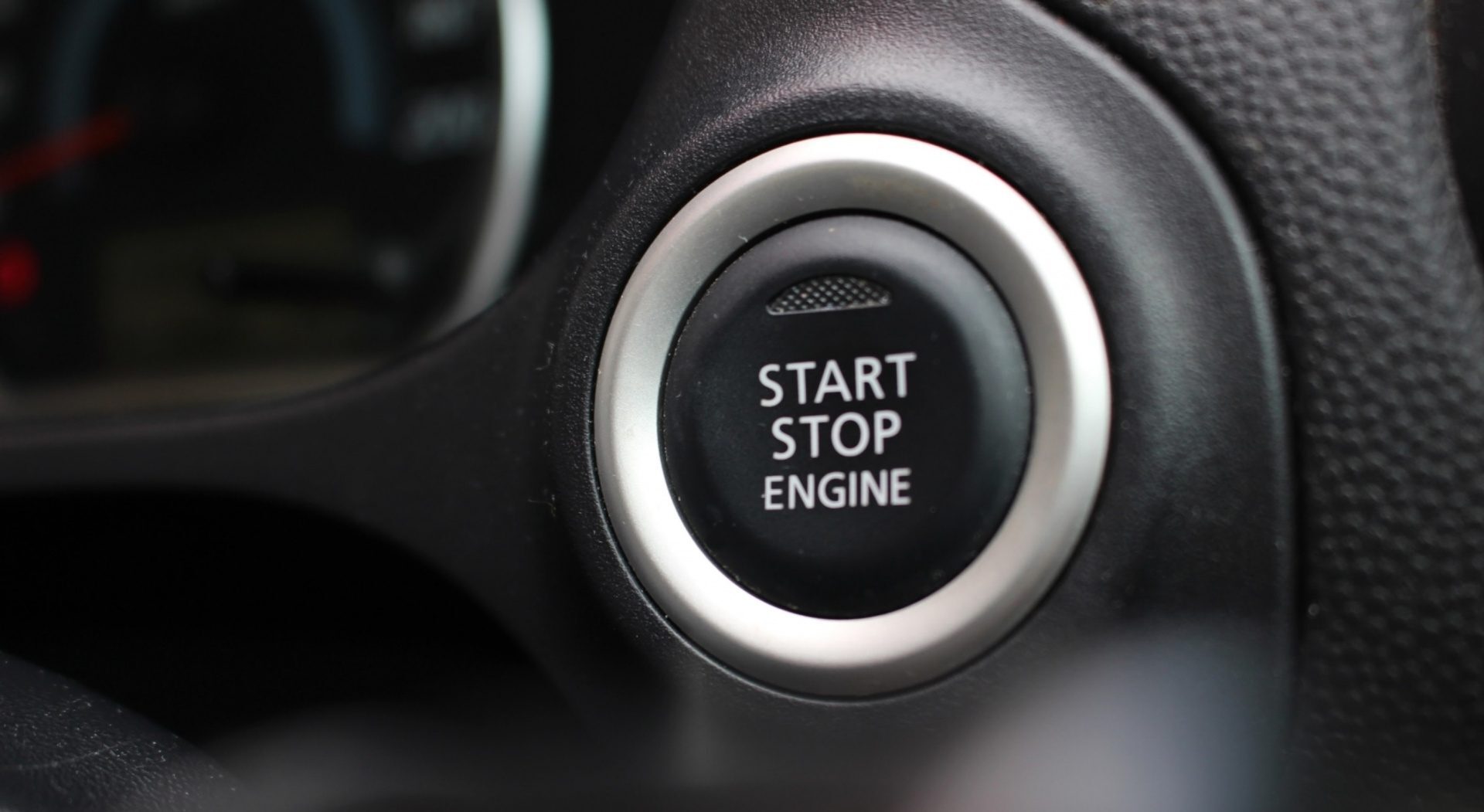
In order to unlock your keyless entry vehicle, you simply need to carry your key-fob. As you approach the vehicle, it recognises the encrypted signal transmitted from the fob. This, in turn, instructs the vehicles central-locking system to unlock the doors when you either touch the door handle or press the button on the door-handle. There is no requirement to insert the key into the ignition as the car is fitted with a start/stop button. If you own a car with both keyless entry and start/stop system, you aren’t alone, they are now widely used in hundreds of models or cars and in some cases motorbikes.
Now for the bad news. A recent study by the General German Automobile Club (ADAC) has discovered that the technology is far from secure in all but THREE cases and in fact the method of stealing a keyless vehicle is extremely simple.
In order to steal a keyless vehicle, a thief simply employs a rudimentary transceiver which takes the relatively weak signal transmitted and received from the fob to the car and amplifies it, it is then possible for the signal to reach from the fob to the car and hey presto, the car is unlocked and can (in most cases) be started.
[videopress VxMJuooi]
Once the car is running, the need for a key is obsoleted and the car can now be driven until it is depleted of fuel. In most cases, the cars are taken abroad and the retrofitted with standard locking and start systems. As long as the car does not stall, it will run for as long as the fuel tank will take it.
NO AMOUNT of hacking or decryption is needed, it is reliant solely on the amplification of the already transmitted signal!
Arnulf Thiemel, car-technician at the ADAC. Image Credit: ADAC
Arnulf Thiemel, car-technician at the ADAC, said “The ADAC demands that vehicles be protected against any kind of manipulation and illegal access. For the affected vehicles, there must be solutions put in place to improve the security. All new vehicles should also be equipped with a methodologically that ensures secure safety solutions which also withstands neutral side checks”
Which cars and manufacturers were affected?
Unfortunately, it would appear that EVERY manufacturer tested has at least one model which could be stolen using the method above.
The following vehicles could NOT be opened or started using this method.
Jaguar i-Pace (2018) Land Rover Discovery (2018) Land Rover Range Rover (2018)
The vehicles above are currently immune from this method of attack. This is because they employ a variation of the keyless system by broadcasting using ultra-wideband frequencies. Basically, the equipment used to amplify the signal is ‘currently’ unable transmit or receive at the radio frequencies used in these models of cars.
Jaguar-Land Rover filed the patent for this method of keyless access in 2017. We can now only hope that they freely license these patents to other car makers or a comparable technology can be developed.
What Now?
All too often our deep-rooted human needs to be ‘waited upon’ result in solutions which in the first instance appear to solve a problem that really didn’t exist, but in real-world use turn out to have a sting in the tail. In the case of the study by ADAC, it would appear that there are very urgent questions to answer and drivers should be aware of the security issues surrounding their vehicles.
Faraday Cases?
Prior to speaking to BBC Radio Suffolk, many listeners talked about using Faraday Cases or Bags to house their keys. The theory behind this was to block the signal completely whilst the car isn’t in use (ie. whilst the keys were stored in the home or place of work).
Faraday Bag for Keyless Fobs from Amazon
I personally believe that keeping the keys away from the car or placing them in a container which COMPLETELY blocks radio signals is the only way to avoid the potential theft of vehicles using this method. However, radio signals can travel through types of metal, so be ABSOLUTELY confident that anything you purchase to secure your fobs, does indeed work as described.
Immediate Steps to Take
If you are concerned about the security of your keyless car fob, contact your car’s manufacturer as soon as possible and ask them what steps they have taken to secure your car? Ask them if there are software updates to improve security? Ask them if these systems can be deactivated until such time as they can be completely secure?
Listen in!
This morning I spoke to Mark Murphy on BBC Radio Suffolk about the use of Faraday Cage technology to try and reduce the chances of Keyless entry cars being stolen. Listen in to the stream above. If you like what you hear or read, don’t forget to LIKE, SHARE and SUBSCRIBE. See you next time!
Matt
The Gadget Man
I previously spoke about this topic a while back, you can read and listen at this link Gadget Man – Episode 113
Last week, I spoke with James Hazell on BBC Radio Suffolk about the new film classifications and how they can be applied to online video streaming sites.
I also discussed YouTube’s ban on videos that contain or encourage dangerous pranks that endanger people or could cause harm to people copying them.
BBFC has revised it’s classifications
Following a public consultancy of more than 10,000 people, the BBFC (British Board of Film Classification) has now revised its classifications to make it more consistent across platforms, including online services.
David Austin, Chief Executive Officer at the BBFC, said: “Over the last five years the way we consume film and video has changed beyond all recognition. That’s why it’s so important that there is consistency between what people watch on and offline. The research shows that parents and teenagers want us to give them the information and guidance that they need to view what’s right for them.
We’re here to listen to what people want, which is why they trust our age ratings. So it’s encouraging to know that we’ve been classifying content in line with what people want and expect when it comes to difficult themes around credible real life scenarios. We also know that people are more comfortable with issues such as action violence, if it’s in a way that they are expecting – such as a Bond or Bourne film. We are updating our standards around depictions of sexual violence and very strong sex references to reflect changes in public attitudes.”
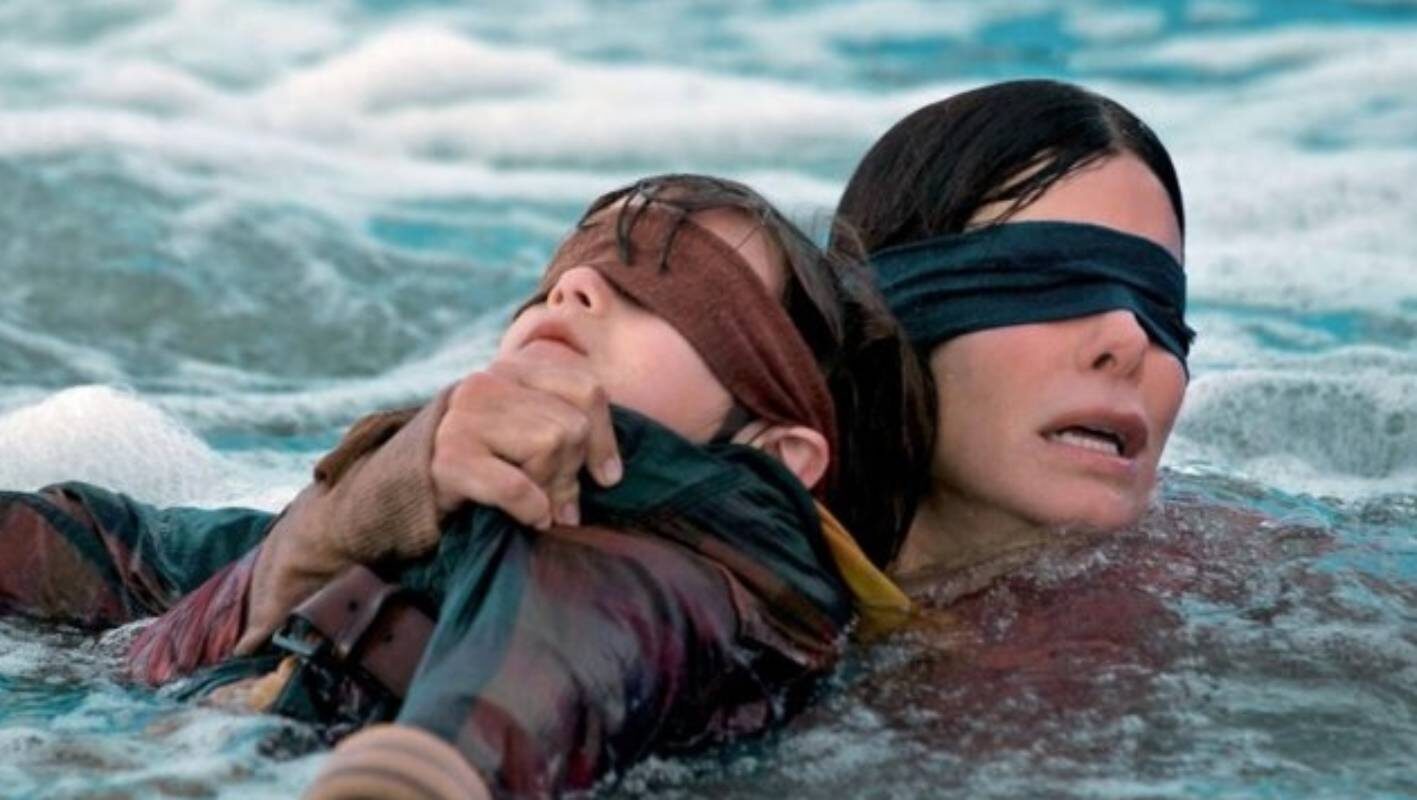
A scene from Bird Box – Image Credit: Netflix
In discussing YouTube enforcing rules banning videos which either put people in danger or promoted acts which might lead people copying those acts to either suffer harm or place others in danger, we discussed recent movies such as the Netflix production; Birdbox which led some people to challenge others to go about day-to-day activities whilst blindfolded and may have led a driver in the US to become involved in a motor vehicle accident.
Trinity and Neo from The Matrix – Image Credit: The Wachowskis / Silver Pictures / Warner Bros
On a lighter note, I owned up to buying a pair of ‘Neo from the Matrix’ inspired sunglasses and my continuing search for ‘The Dude’s Cardigan’ from The Big Lebowski.
The Big Lebowski – Image Credit: The Coen Brothers / Working Title Films
You can listen in to the stream, by clicking on the play button above, or you can subscribe to The Gadget Man podcast using the links above listen in via iTunes, Tune-in, Google Podcasts and more! Don’t forget to show your support by ‘liking’, ‘sharing’ and ‘subscribing’.
Matt
The Gadget Man
[amazon_link asins=’B0089X2GLQ,B00FI3OOF6,0007529902,B001CEE1YE’ template=’ProductCarousel’ store=’thgama03-21′ marketplace=’UK’ link_id=’367400d7-3b16-48c4-83c3-b9ef7549c045′]
As we enter the final year of the second decade of the 21st century, the smartphone will surely be considered the most revolutionary gadget of the last 10 years.
Our phones are now firmly ingrained in our lives, joining us at home, at work, at play, at the dinner table, in bed, they come with us everywhere! Our lives are documented in detail, where we go, what we do, what we think and what we eat. We’ve now become news gatherers, critics and voyeurs all without realising it was happening in front of us.
Too Much Smartphone III
The use of mobile phones stretches to every age group, from the elderly to the very young and with this comes concern as to the use of these devices. Should young people be allowed to use their phones at any time of the day OR night? Does it reduce conversation? Are we become LESS social?
I have now covered this subject twice in the past, you can read a listen in here and here, however now reports are informing us that phones DON’T cause our children harm, listen in to the podcast, where I talk to Mark Murphy on BBC Radio Suffolk about this latest contentious report.
As ever, if you enjoy listening in, Like, Share, Subscribe and Comment, I will see you soon!