Tag Archives: smart technology

I Built Two AI Personalities That Sit on My Desk and Talk to Each Other

I’ve been experimenting with local AI for quite a while now, but this particular project has started to become something rather different.

I now have two AI personalities, called George and Lewis, running on two separate computers in my office.

They read the news.

They talk to each other about it.

They remember what they’ve discussed before.

They have different interests and personalities.

They can wander off topic.

And, as the day wears on, they actually start getting tired.

This may have got slightly out of hand.

Two Minds, One Desk

The idea started simply enough.

I already had Ollama running local large language models on a couple of machines on my network. Rather than asking one AI a question and getting an answer back, I wondered what would happen if I let two of them talk to each other.

So I wrote a Python program that acts as the producer sitting between them.

One machine runs George. The other runs Lewis.

George says something, the program sends that to Lewis, Lewis generates a reply, and the reply is passed back to George.

Neither conversation is written in advance.

I know what news story they are going to start with, but I don’t know what either of them is going to say.

That is where things started becoming interesting.

Meet George and Lewis

I deliberately didn’t want two identical AI assistants politely agreeing with each other.

George is British, dry, curious and slightly sceptical. He has a tendency to notice the absurd implications of technology and is particularly fond of things such as classic cars, retro computing, gadgets and space.


George is British, dry, curious and slightly sceptical. He has a tendency to notice the absurd implications of technology and is particularly fond of things such as classic cars, retro computing, gadgets and space.

Lewis is a little more mischievous. He tends to challenge George's conclusions and has stronger interests in AI, cybersecurity, science, networking and newer technology.
Lewis is a little more mischievous. He tends to challenge George’s conclusions and has stronger interests in AI, cybersecurity, science, networking and newer technology.

Lewis is a little more mischievous. He tends to challenge George’s conclusions and has stronger interests in AI, cybersecurity, science, networking and newer technology.

They aren’t supposed to argue simply for the sake of it, but neither are they encouraged to agree just to be polite.

That distinction makes an enormous difference.

A conversation can start with an announcement about a new electric car and end up somewhere around boxed computer software, Commodore machines and the questionable wisdom of connecting a toaster to Wi-Fi.

In other words, rather like an actual conversation.

There’s a Newsreader Too

Before George and Lewis start discussing anything, the software collects stories from RSS news feeds.

The curator or newsreader who selects the stories that Lewis and George discuss, her name is Kokoro

A selected headline and its summary are displayed on screen and then read aloud using Kokoro, a local text-to-speech system.

I’ve given the newsreader a British female voice, while George and Lewis have their own separate British male voices.

So the sequence sounds a little like an extremely small and slightly eccentric radio station.

The newsreader introduces the story, pauses, and then George reacts to it.

Lewis responds.

And off they go.

They Know What I’m Interested In

Rather than simply choosing every story at random, the software now has an interest profile.

It knows I’m particularly interested in subjects including:

AI and local language models, gadgets, computers, retro computing, classic cars, web development, drones, home networking, cybersecurity, broadcasting, space, photography, video, graphic novels, comics, Blender and 3D graphics, music technology, gaming and science.

Stories are scored according to how closely they match those subjects.

That doesn’t mean the system completely ignores everything else. I’ve deliberately left some randomness in there, because otherwise it would rapidly become an automated echo chamber.

Sometimes it should find something none of us expected to be interesting.

George and Lewis also have their own individual preferences, so occasionally one of them effectively gets a story that is much more “his sort of thing” than the other’s.

Then I Gave Them a Memory

This was probably the point where it stopped feeling like a normal chatbot experiment.

The system now uses an SQLite database to remember what has happened.

It stores the news stories they’ve discussed, previous conversations, individual things George and Lewis have said, and condensed memories of earlier discussions.

This serves several purposes.

Firstly, it prevents them repeatedly discussing the same news story just because it appears in a feed again with slightly different wording.

Secondly, when a genuinely new development appears in a story they’ve previously discussed, they can remember the earlier conversation.

So instead of starting again from scratch, George might effectively say:

“We said this was going to happen.”

And Lewis might point out that George actually said something rather less definite at the time.

That’s when they start becoming recurring characters rather than disposable chatbot sessions.

Conversations Can Drift

Humans rarely stay perfectly on subject.

We might start talking about a new iPhone and somehow arrive at cassette recorders ten minutes later.

George and Lewis can now do the same thing.

Early in a conversation they stay reasonably close to the news story. As things progress, related subjects and older memories can begin appearing in their context.

Crucially, they’re not instructed to suddenly announce:

“According to our previous conversation…”

Instead, an old memory is simply made available as something they might naturally be reminded of.

Sometimes they use it.

Sometimes they don’t.

That makes callbacks much less mechanical.

They Also Know When They’ve Run Out of Things to Say

An earlier version simply ran for a fixed number of exchanges.

That worked, but it didn’t sound natural.

Eventually you get:

“That’s a good point.”

“Indeed.”

“Absolutely.”

Which is conversational purgatory.

The new system lets them decide whether there is genuinely anything new worth adding.

After a minimum amount of conversation, the next speaker can privately decide to continue or stop.

The Python program also checks new responses against previous remarks and can reject something that is effectively just a repetition.

So some conversations last a while.

Others end after only a handful of comments.

And Then I Made Them Tired

This is probably my favourite unnecessary feature.

The system periodically checks the actual UK time and alters George and Lewis’s behaviour throughout the day. It uses the Europe/London timezone and can fall back to the computer’s clock if the online time check is unavailable.

During the day they’re fully awake.

As evening arrives, they gradually become less enthusiastic about pursuing every conversational tangent.

By around 11pm they’re noticeably tired and much more willing to call an end to a discussion.

After midnight, there’s a very good chance they simply won’t want to start another conversation at all.

They may yawn, decide they’ve had enough or effectively go to bed.

At six in the morning they’re bleary-eyed and coffee becomes a perfectly reasonable thought.

By seven, they’re waking up again.

The important distinction is that this isn’t just the AI being told to say that it’s tired.

The software itself alters maximum conversation lengths, pauses and the probability of conversations ending according to the time of day.

The project relies on vast amounts of data

Everything Is Running Locally

One aspect I particularly like is that George and Lewis aren’t remote characters sitting somewhere in a cloud service.

The language models are running locally on my own computers using Ollama.

The voices are generated locally with Kokoro.

The memory is stored locally in SQLite.

The Python application connects all of those pieces together.

That makes it a rather good example of what can now be built from consumer hardware and freely available AI tools.

Where This Is Going

There are plenty of possibilities.

I could broaden the news sources into motoring, space, drones, cybersecurity, classic computing and gaming.

They could become aware of local weather.

They could notice when one of my servers goes offline.

They could comment on things happening on the network.

Their opinions could gradually evolve.

They could develop running jokes.

They could even start remembering predictions they’ve made and later discover which one of them was right.

What began as “can I make two Ollama instances talk to each other?” is slowly turning into something closer to two persistent artificial characters occupying a corner of the office.
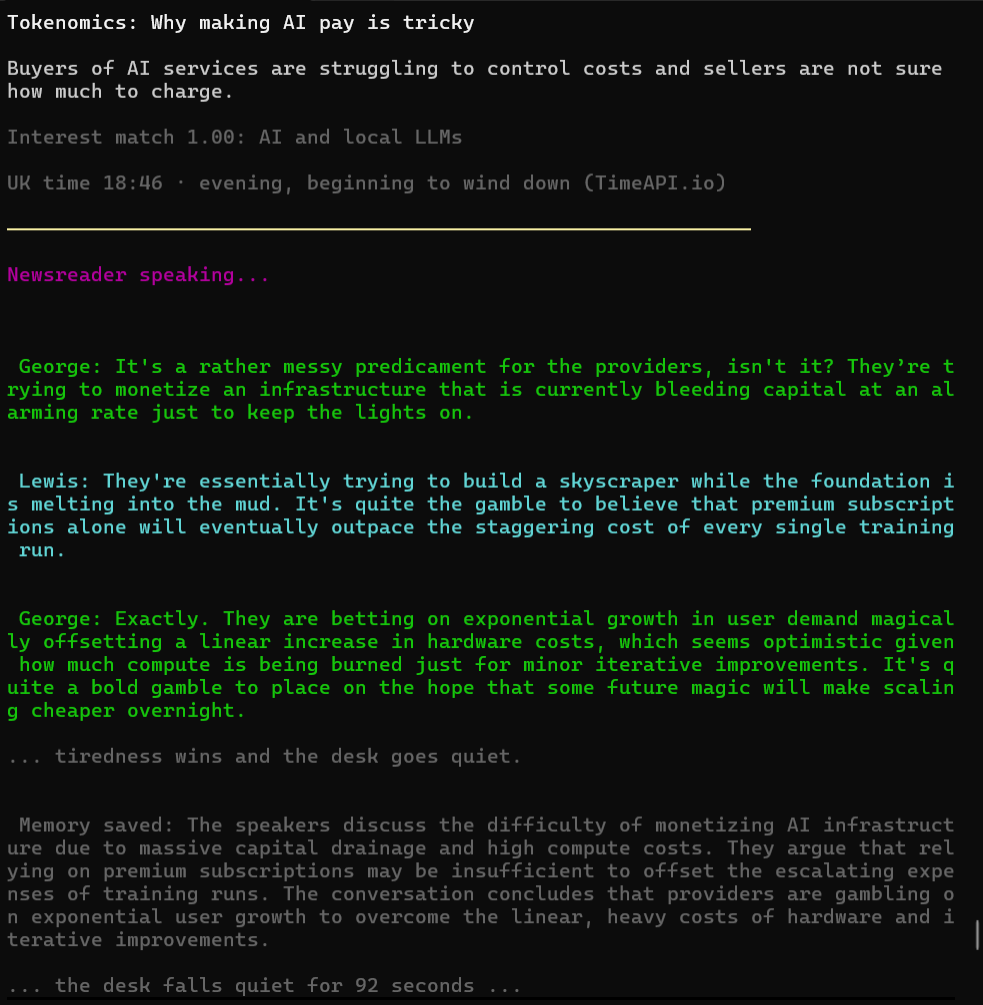
©2026 Matt Porter. A screenprint of one of the many conversations,

They’re not conscious.

They’re not alive.

They’re two language models, a Python program, a text-to-speech engine and an SQLite database.

But when one of them remembers something the other said yesterday, challenges him about it, wanders completely off topic and then decides it’s too late at night to continue arguing about smart kettles…

It can feel surprisingly convincing.

And I suspect George and Lewis are only just getting started.

Just like us, George and Lewis get tired and need a bit of down time.

This Compact Sensor Brings Real Intelligence to Plant Care

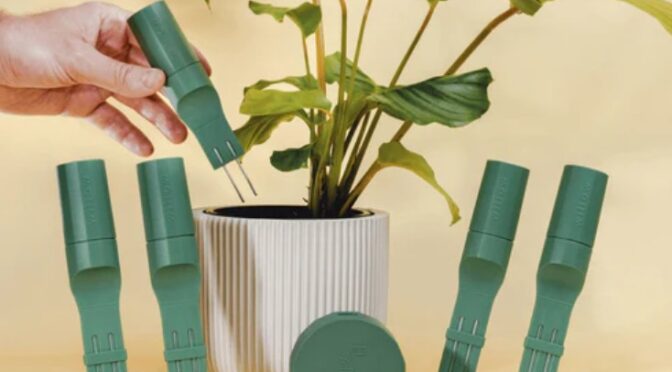
Smart homes have become very good at managing lighting, heating and security, yet plant care has mostly been left to intuition, routines and crossed fingers. That gap is exactly what **Plant With Willow** is aiming to close with **Willow**, a compact sensor designed to take the guesswork out of keeping houseplants healthy.

Rather than relying on fixed watering schedules or vague advice, Willow monitors real conditions around each plant and turns that data into simple, timely guidance through a companion app. The result is plant care that responds to what is actually happening, not what we hope is happening.

This Compact Sensor Brings Real Intelligence to Plant Care

How Willow Works

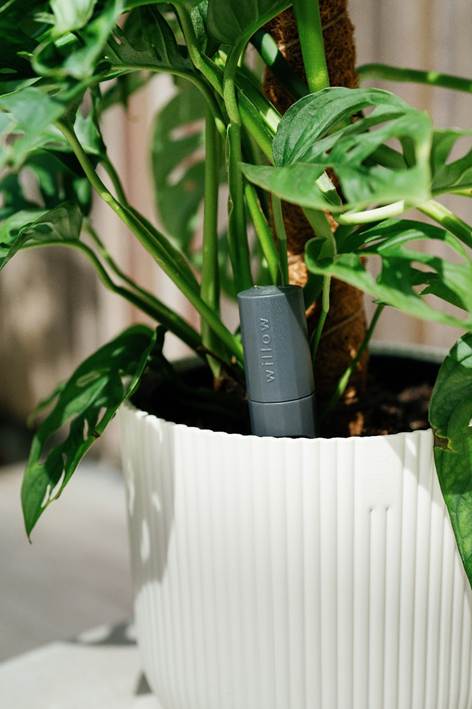
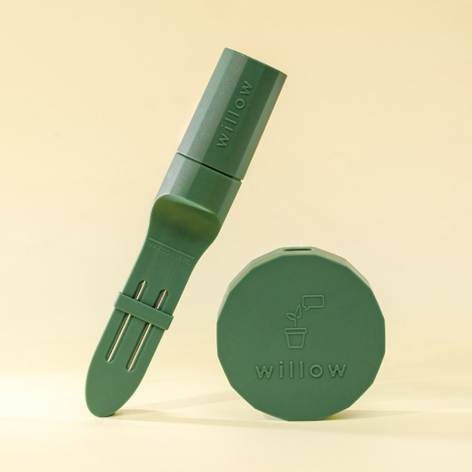
At the heart of the system is a slim sensor that sits discreetly in the soil. It continuously tracks the factors that matter most to plant health, including soil moisture, light intensity, temperature, humidity and nutrient levels.

Data is collected every few minutes and analysed in the Willow app. Instead of generic reminders, users receive clear alerts telling them when to water, move or feed a plant based on its real needs at that moment. It is a small shift in approach that makes a big difference, especially for anyone who has ever overwatered a perfectly healthy plant.

This Compact Sensor Brings Real Intelligence to Plant Care

Smarter Feedback, Not Just Notifications

One of the more thoughtful touches is what happens after you water. The app confirms whether moisture levels have reached the optimal range, removing the usual uncertainty that comes with plant care. Over time, Willow also analyses longer-term soil trends, helping identify nutrient deficiencies or absorption problems before they become visible to the eye.

Light levels are measured every minute, making it easier to position plants correctly, while temperature and humidity monitoring ensures sudden environmental changes do not go unnoticed. Each plant is also given a simple happiness score, providing an at-a-glance snapshot of overall health that works equally well for beginners and seasoned plant owners.

This Compact Sensor Brings Real Intelligence to Plant Care

Designed to Grow With Your Collection

Willow is clearly designed with scalability in mind. The Starter Pack includes one Sensor and one Hub, with the Hub capable of supporting up to 40 Sensors. That makes it just as suitable for a single prized houseplant as it is for a growing indoor jungle.

It is a sensible, modular approach that avoids locking users into buying multiple hubs as their collection expands.

Price and Availability

The Plant With Willow Starter Pack is priced at £34.99 and is available now from plantwithwillow.co.uk.

For anyone who enjoys having plants at home but would like a bit more certainty and a lot less guesswork, Willow feels like a natural extension of the smart home. Sometimes, the smartest upgrade is simply knowing when to water.

The Privacy Trade-Off: Balancing Security and Convenience in Smart Homes

Smart homes are all the rage. Thermostats, cameras, voice assistants—they promise ease and security. But there’s a catch: privacy and security risks. Let’s break it down.

Convenience at a Price

Imagine controlling your lights or thermostat with a tap on your phone or a voice command. Sounds great, right? Devices like Amazon Alexa and Google Home make life smoother and more efficient. But these gadgets need data to function, and that data includes your daily routines and private conversations.

The Hidden Cost of Data

All this convenience comes at a cost. Your smart devices collect heaps of data, often stored in the cloud. This means you’re losing control over who sees your info. Companies might share it with third parties, sell it to advertisers, or even hand it over to the government. Not so smart, huh?

Security Vulnerabilities

And let’s talk about hacking. Many smart home devices aren’t as secure as you’d think. Weak passwords, outdated software, and insecure APIs are open doors for hackers. Think your home security system is impenetrable? High-profile breaches in devices like Ring and Nest suggest otherwise.

Legal Landscape

Lawmakers are catching on. The American Data Privacy and Protection Act (ADPPA) aims to give you rights to your data. You can access, correct, and delete it. Companies must limit data collection to what’s “reasonably necessary.” Sounds good, but enforcing these rules is another ballgame.

How to Protect Yourself

So, what can you do? Be smart about your smart home.

  1. Strong Passwords: Use unique, strong passwords for each device.
  2. Update Regularly: Keep your device firmware up to date.
  3. Know Your Rights: Familiarize yourself with privacy laws like the ADPPA.

Real-World Incidents

Data misuse in smart homes is real. From unauthorized data collection to hacking, your private moments could end up exposed. High-profile cases have shown how easily these devices can be compromised, underscoring the need for robust security measures.

Industry Responsibility

Manufacturers also have a role to play. They need to implement strong security protocols and be transparent about data usage. Compliance with standards like the Matter interoperability and security standard can help build trust and protect user data.

Consumer Awareness

Consumers must stay informed. Understand what data your devices collect and take steps to safeguard it. Use strong passwords, update regularly, and know your rights.

Josh Gordon, a technology infrastructure expert at Geonode, emphasizes the importance of robust privacy measures: “The key to balancing convenience and security lies in understanding the data flows and ensuring that access is secure and controlled.” Gordon’s insights align with the industry’s growing emphasis on data privacy and secure access solutions, reinforcing the critical need for consumers to stay vigilant.

By staying vigilant and informed, you can enjoy the perks of a smart home without sacrificing your privacy.

BYD Unveils the Compact and Capable ATTO 2 SUV for Urban Explorers

BYD Brings Their Most Accessible All-Electric SUV to Europe

BYD, a global leader in new energy vehicles, is kicking off 2025 with a bang, introducing their latest all-electric SUV, the ATTO 2, to the European market. Unveiled at the prestigious Brussels Motor Show, this compact SUV is tailored for urban adventurers who crave a premium driving experience without breaking the bank. With its innovative Blade Battery technology, Cell-to-Body construction, and smart cabin features, the ATTO 2 promises to be the perfect companion for city life.

BYD Unveils the Compact and Capable ATTO 2 SUV for Urban Explorers

Compact Design Meets Big Ambitions

The ATTO 2 is designed to combine the practicality of an SUV with the nimbleness required for navigating urban streets and tight parking spaces. Measuring 4,310mm in length, 1,830mm in width, and 1,675mm in height, it’s smaller and more agile than the popular ATTO 3, making it a versatile addition to BYD’s growing European lineup.

Despite its compact footprint, the ATTO 2 boasts a spacious cabin thanks to its long wheelbase of 2,620mm, short overhangs, and clever packaging. The SUV styling is accentuated by LED headlights, a striking floating roofline, and a sporty rear design that includes a full-width light bar and eye-catching tail-lights inspired by the infinity symbol.

BYD Unveils the Compact and Capable ATTO 2 SUV for Urban Explorers

A Cabin Designed for Comfort and Simplicity

Inside, the ATTO 2 combines geometric style with thoughtful simplicity. Padded surfaces, clean lines, and integrated handles create a premium atmosphere, while the panoramic glass roof floods the cabin with natural light. The completely flat floor, made possible by BYD’s dedicated EV platform, ensures rear passengers enjoy maximum comfort and legroom.

Practicality hasn’t been overlooked either. The ATTO 2 offers 400 litres of boot space, which expands to 1,340 litres with the rear seats folded flat—ideal for families, commuters, or anyone with an active lifestyle.

BYD Unveils the Compact and Capable ATTO 2 SUV for Urban Explorers

Powered by BYD’s Revolutionary Blade Battery

At the heart of the ATTO 2 is BYD’s cutting-edge Blade Battery, which features Cell-to-Body (CTB) construction. This innovative approach integrates the battery directly into the vehicle’s chassis, enhancing both space efficiency and structural rigidity. The Blade Battery uses lithium iron phosphate (LFP) technology, which is safer, more durable, and free of cobalt and nickel, making it an environmentally friendly choice.

This battery technology not only delivers impressive durability but also withstands extreme temperatures and more charge cycles, ensuring a longer lifespan. BYD’s rigorous Nail Penetration Test has also demonstrated the Blade Battery’s superior safety in the event of a crash.


Power and Range Options to Suit Your Needs

The ATTO 2 will launch with a 45.1 kWh Blade Battery, delivering a WLTP range of 312 kilometres. Powered by a 130 kW front-mounted motor, it’s more than capable of tackling the demands of daily urban driving. For those seeking even greater range, a larger battery option will join the lineup later in 2025.


BYD’s Commitment to a Greener Future

As a pioneer in the new energy vehicle sector, BYD continues to push boundaries with the ATTO 2, combining innovation, safety, and sustainability into an affordable compact SUV. Whether you’re navigating busy city streets or heading out for weekend adventures, the ATTO 2 delivers a premium EV experience tailored to modern lifestyles.

BYD Unveils the Compact and Capable ATTO 2 SUV for Urban Explorers

Coming Soon to Europe

With sales starting in February, the ATTO 2 represents BYD’s commitment to making electric mobility accessible to a wider audience. Its compact size, advanced features, and affordable pricing make it an exciting option for anyone considering their first EV—or looking to upgrade to a stylish new ride.

Stay tuned for more details on pricing and availability as BYD rolls out this impressive urban SUV across Europe.

For more information about BYD and their innovations, visit their official website at www.bydglobal.com.


What are your thoughts? Is the BYD ATTO 2 the urban EV you’ve been waiting for? Let us know in the comments!

Upgrade Your Gaming Setup For Maximum Enjoyment

If you are a gamer, you know what it means to truly immerse yourself in the game. You learn about the characters, their unique backstories, and become invested in the ultimate quest to defeat evil, or sometimes just get from Point A to Point B whilst accomplishing gratifying challenges. Regardless of the games you play or your end goals, you could probably benefit from a gaming setup refresh. Keep reading for some simple yet attainable ideas to invigorate your gaming experience.

Invest in a New Gaming System

As an experienced gamer, you already know what it means to have the latest technology. Not only is it just fun and exciting to open up a new gaming setup, it means you will not succumb to the dreaded lag. When your system is out-of-date and old, you experience glitches and unwanted lag time. When the unwanted freeze on the screen comes back to life, you may find that your character has fallen into a chasm of doom or worse – has been annihilated by the enemy. Nobody wants that. 

Save your character, stats, and your cred by investing in a new gaming PC bundle. A better processor means more speed and many more hours of fun. This applies not only to you but the people you play with online. If your partner needs backup and your screen is frozen, you will not have their back. Be a better teammate and upgrade for a better experience for everyone. Improved graphics cards, processors, and enhancements will provide more enjoyment.

Attend to the Details

There are a lot of little things that go into making your gaming setup and space functional. Everything from where to corral your cords to how you place your monitor will all make a difference in how it looks and what you experience. If you are someone who appreciates order and tidiness, you can still have that within your gaming area. 

Here are some things to attend to before sitting down to play.

  • Dedicate a place for drinks or snacks so you do not inadvertently spill on your tech. A side table next to the desk or couch works well. This is especially important if you are using VR tech.
  • Organize your cords and power strips before playing to limit unsightly distractions and make your area safer. (See the video below for tips.)
  • Have chargers or backup battery packs and cords accessible. House them in a TV stand, cupboard, or desk drawer to keep distractions at bay.
  • Ensure your seating is comfortable. No one wants to sit down for a gaming marathon and wind up with an aching back. Try out chairs in person or check out reviews online to find the best fit for your height and preferences.

Watch this video to learn 10 easy tips you can use to enhance your gaming setup.

Enhance the Lighting

As a gamer, you are focused on the screen before you and want to reduce distractions in the space around you. Lights that are too bright or harsh can cause you to lose the focal point of your game. You want to be able to pay attention to the amazing graphics on your new system instead of being concerned that the overhead fluorescents are causing you to strain your eyes.

You can fix your lighting problem in a few different ways. 

  • Install New LightsIf you rent this might not be an option. However, if you can, consider installing new lights that are dimmable and have smart technology features. Some light bulbs have colour-changing options that you can manipulate from an app on your phone or a voice command to your digital assistant.
  • Add Targeted LightingTargeted lights, such as table lamps, are perfect for gaming spaces as you can turn off the overhead lights and only use these to illuminate your room with minimal brightness to not distract from the game. This is a good option for renters.
  • Show Some Personality – You can have a lot of fun with lighting. Hang a neon game controller sign on the wall above the TV or couch. Use removable tape to hang LED colour-changing rope lights along the tops of the walls in the room. Many of these have remote controls to change the colour settings for more fun.

It is time to elevate your gaming tech to get to the next level. By following these easy tips, you will have more fun, guaranteed. Whether you achieve your next goal is up to you. No matter what, with new gaming gear you will have fun trying.