Every so often, a PC announcement makes me mentally rearrange the desk to work out where another computer might fit.
NVIDIA’s RTX Spark has managed exactly that.
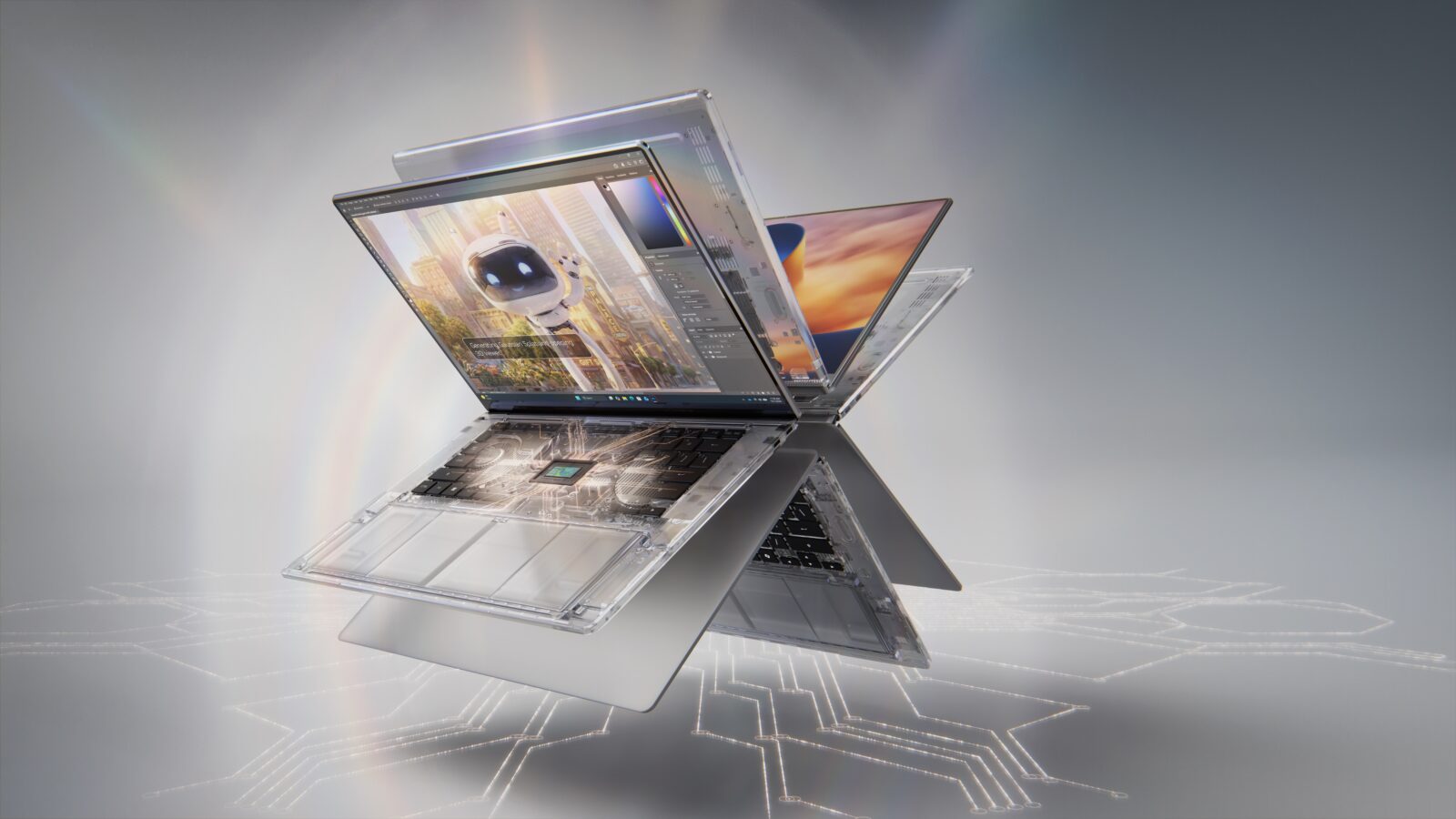
The first RTX Spark laptops have arrived, bringing NVIDIA’s graphics and AI technology into a new generation of premium Windows machines. NVIDIA is calling it a new beginning for Windows PCs. That is quite a claim, but there is something here that deserves attention beyond the launch-day enthusiasm.
For me, the interesting bit is what this could mean for people who actually want to build things with AI.
Why the Memory Matters
RTX Spark combines an NVIDIA Grace CPU with Blackwell RTX graphics and up to 128GB of unified memory. NVIDIA also quotes up to one petaflop of FP4 AI performance. That last figure measures a particular kind of low-precision AI calculation, so it needs rather more context than simply declaring the laptop a supercomputer.
The shared memory is what catches my eye.
Anyone who has experimented with running AI locally will recognise the frustration of finding an interesting model, downloading it, then discovering that it will not fit comfortably into the graphics card’s memory.
Unified memory gives the CPU and GPU access to a shared pool. It does not automatically make every task faster, but it changes the size of the projects you can realistically attempt.
NVIDIA advertises support for models with up to 120 billion parameters and 3D scenes reaching 90GB. Those are platform claims, with the achievable experience depending on configuration and workload, but they explain why this is more interesting than another AI badge on a laptop lid.
Bringing More of the Work Home
I already spend time experimenting with local language models, voice tools and creative workflows. There is something enormously satisfying about having those capabilities running on equipment you control.
For my own projects, I would want to explore whether a machine like this could bring more of the writing, coding and asset-production process together.
Local processing can reduce the need to upload material or pay for each inference. Of course, the hardware, electricity and any paid software still cost money. “Local” does not mean that every application suddenly becomes free.
It does, however, offer a different relationship with the tools.
The Software Will Decide It
NVIDIA says RTX Spark includes native CUDA support, with Windows Subsystem for Linux available for familiar Linux development tools. That matters to anyone whose AI experiments already involve Python and GPU acceleration.
There are launch qualifications worth checking. Native Photoshop and Premiere support arrives through beta releases, for example. Before moving a working production setup, I would want to test the precise applications, plugins and dependencies I use.
My benchmark would be fairly straightforward: can I get useful work done without spending the afternoon fixing the environment?
And Yes, It Plays Games
NVIDIA also promotes RTX Spark as a gaming platform, quoting over 100fps at 1440p with DLSS in supported scenarios. I would want to see the individual game, settings and contribution of frame generation before drawing conclusions.
A machine that handles creative work and provides some evening gaming certainly has appeal. Battery life, cooling and noise would all feature prominently on my testing list.
The Gadget Man’s Take
With announced prices starting at $2,599, and regional pricing varying, these are substantial purchases.
I have not tested one, so this is an interested raised eyebrow rather than a buying recommendation.
What appeals to me is the possibility of running more ambitious tools locally, with enough memory to experiment properly and a software ecosystem developers already know.
That could make RTX Spark a very useful addition to the creative toolkit.
Now, about that space on the desk…
Discover more from The Gadget Man | AI & Tech News and Reviews | Matt Porter
Subscribe to get the latest posts sent to your email.