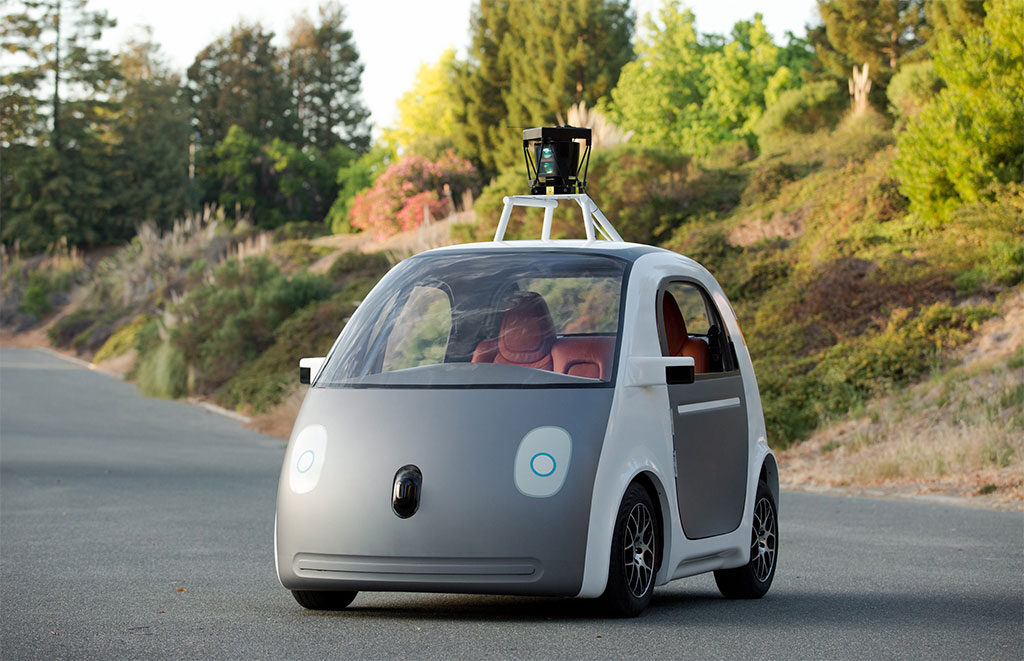
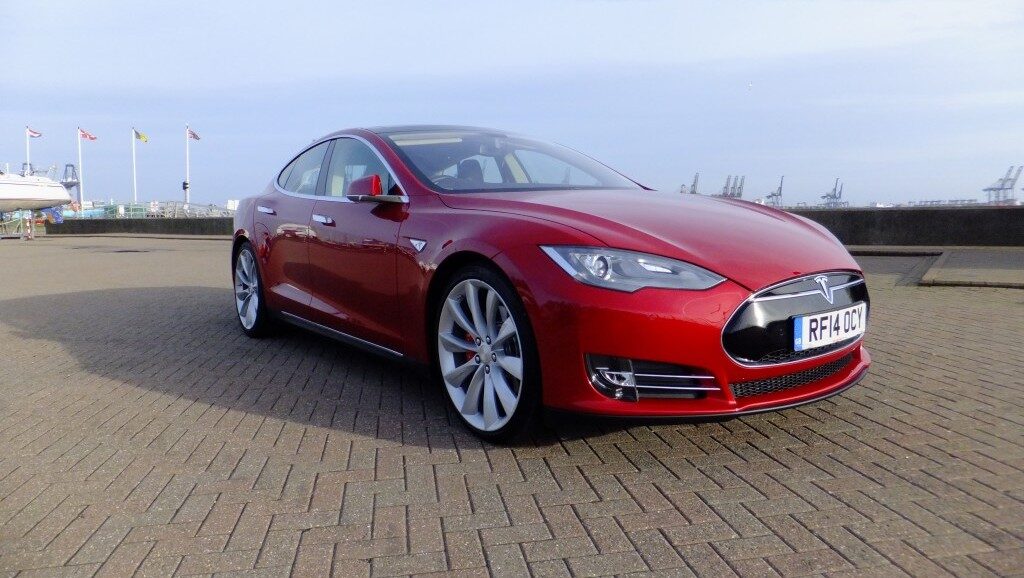
Self Driving Cars are never far from the news, and last week whilst taking a few days away in sunny West Sussex, I spoke to Mark about what the future holds for Self Driving Cars and Truck Platooning.
Tune in to the audio stream to find out what we had to say on the matter, and whether I think you would will have ‘had it’ if a fuse blows in your autonomous vehicle.
Below is a also a video where Google talk about their dreams of driverless cars and truck platooning technology.
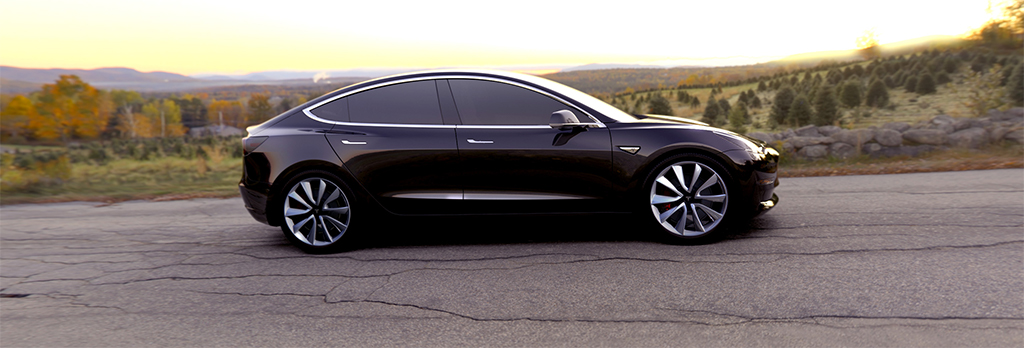
Last night (or very early this morning if you live in the UK), Elon Musk CEO of Tesla Motors finally revealed the much anticipated 3rd part of his electric vehicle master plan, the Tesla Model 3.
Tesla Model 3 in red – Image Credit : Tesla
As an established player in the EV market, Tesla were looking for a vehicle with ‘mass market appeal’. In order to do this successfully they needed sell a vehicle with was considered ‘affordable’ to the masses, this doesn’t necessarily mean everyone should be able to purchase one, but affordable in the it’s target market, which in the Model 3’s case would be Audi A3 saloon or BMW 3 series.
Image Credit : Tesla
Elon Musk has consistently quoted that the Model 3 will be priced at $35,000 which is around £25,000 and he is not budging on this price in the USA anyway. In the UK, I would suggest £30,000 is going to be the starting price minus any remaining UK Government plugin grant that might exist by the time it launches in the UK late 2017 / early 2018.
Image Credit : Tesla
There is undoubtably going to be several models in the Model 3 range such as the P and D derivatives of the Model S and Model X, the standard entry level model is looking to have a projected range of 210 miles per charge, and accelerate to 60mph in under 6 seconds. It will be available in rear wheel and four wheel drive. Owing to it’s shorter wheel base, I would expect the battery size to be smaller than the current 90 kWh of the current top end P90D of the Model S and Model X, perhaps more likely to be 65 – 70 kWh, but this is simply guessing. However with this in mind, I would expect a Model 3 65, Model 3 P65 and Model S P65D but upon release the battery technology is going to be 2 years ahead of what we have now, so we might be in for a surprise however based on the projected ranges, I would go for a 65 kWh or smaller battery, with much less powerful powertrains than the existing models.
Image Credit : Tesla
The Model 3 is all about mass market and to achieve this the car needs to be built in a mass market car plant which Tesla already owns in Freemont, California which was used in the past to manufacture GM / Toyota cars but now is refitted to build the Model S, Model X and now the Model 3. Again I would summise that the assembly plant in Tilburg, Netherlands will look after the European assembly of the Model 3 using parts shipped from the USA. Tesla has made an awful lot of noise about the Gigafactory in Sparks, Nevada which when fully up to speed will be able to manufacture more lithium ion batteries annually than were manufactured worldwide in 2013. This manufacture by economies of scale is projected to drive down the cost of the batteries needed to power Tesla’s vehicles and consequently bring down the price of the vehicles coming off the production line as well as the Tesla Powerwall home batteries.
The Model 3 can according to Elon Musk, seat 5 adults comfortably, even on a smaller vehicle footprint. Tesla does this by moving the driving position forward into the space that would contain an engine if this was a traditional petrol or diesel car. It retains the centre console screen that graces the Model S and Model X, but is now a 15 inch landscape arrangement rather than the giant 17 inch portrait version. Inside the car, it retains the quality of the other Tesla models, but is significantly more sparse, perhaps similar to the BMW i3 which sacrifices refinement for space. As before, the car includes trunk and frunk (frunk trunk), for British readers, the bonnet area can be used for luggage as can the boot space.
Outside of the vehicle, the design has been refined again completely removing the ‘grill’ of the Model S and taking the smoother front lines of the Model X to produce a completely seamless nose cone. The general design of the car echoes the Model S, but downsizing it in a similar fashion that the BMW 3 series downsizes to the 2 series. The front and rear lighting remains the same as the Model S and X, and the wheels appear to be available in a number of choices as the other current models.
The Model 3 will support Tesla’s Super Charger network from the outset meaning that fast charging on long journeys will be easily achievable.
The Model 3 is still a year away from final production, but that hasn’t stopped the flood of orders which mean’t that in less than 24 hours more that 135,000 232,000 pre-orders (and associated $1000 deposits) have been made with some people queuing around the block from their local Tesla Stores to get their order in first.
Check out the images from last night and launch video, all courtesy of Tesla Motors Inc.
I thought I would post a short video showing the Tesla Model S P85D performing an Auto Park manoeuvre. This will hopefully form a series of posts and videos detailing the new updates to the car which include ‘Autopilot’ which is basically an advanced cruise control system. In the meantime, enjoy…
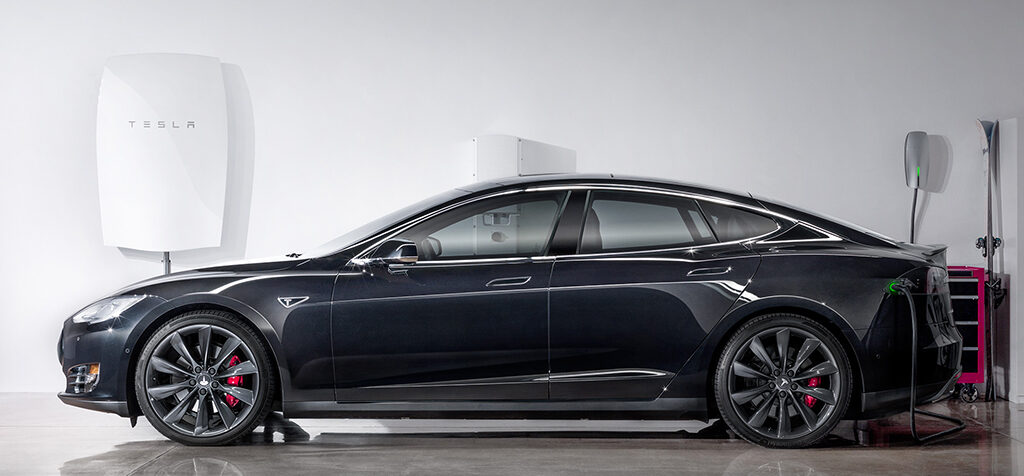
This week we talk about the Tesla Powerwall. The powerwall is an electricity storage solution for homes, businesses an more!
Tesla Powerwall
The Tesla Powerwall is a rechargeable lithium-ion battery designed to store energy at a residential level for load shifting, backup power and self-consumption of solar power generation. The Powerwall consists of Tesla’s lithium-ion battery pack, liquid thermal control system and software that receives dispatch commands from a solar inverter. The unit mounts seamlessly on a wall and is integrated with the local grid to harness excess power and give customers the flexibility to draw energy from their own reserve.
The battery can provide a number of different benefits to the customer including:
Load shifting – The battery can provide financial savings to its owner by charging during low rate periods when demand for electricity is lower and discharging during more expensive rate periods when electricity demand is higher
Increasing self-consumption of solar power generation – The battery can store surplus solar energy not used at the time it is generated and use that energy later when the sun is not shining
Back-up power – Assures power in the event of an outage
The Powerwall Home Battery increases the capacity for a household’s solar consumption, while also offering backup functionality during grid outages.
The Powerwall is available in 10kWh, optimized for backup applications or 7kWh optimized for daily use applications. Both can be connected with solar or grid and both can provide backup power. The 10kWh Powerwall is optimized to provide backup when the grid goes down, providing power for your home when you need it most. When paired with solar power, the 7kWh Powerwall can be used in daily cycling to extend the environmental and cost benefits of solar into the night when sunlight is unavailable.
Tesla’s selling price to installers is $3500 for 10kWh and $3000 for 7kWh. (Price excludes inverter and installation.) Deliveries begin in late Summer in the US. Plans are for Powerwall to be available in the UK before for the end of the year with more details to follow.
Powerwall specs:
Mounting: Wall Mounted Indoor/Outdoor
Inverter: Pairs with growing list of inverters
Energy: 7kWh or 10kWh
Continuous Power: 2kW
Peak Power: 3kW
Round Trip Efficiency: >92%
Operating Temperature Range: -20C (-4F) to 43C (110F)
Warranty: 10 years
Dimensions: H: 1300mm W: 860mm D:180mm
When thinking about electric cars, most people conjure up images of 60 sci-fi movies with passengers sitting in a bubble of glass on empty elevated roads. This is very far from the reality of 21st century electric vehicles, which are very similar in look to their petrol drinking cousins and literally bursting at the seams with technology.
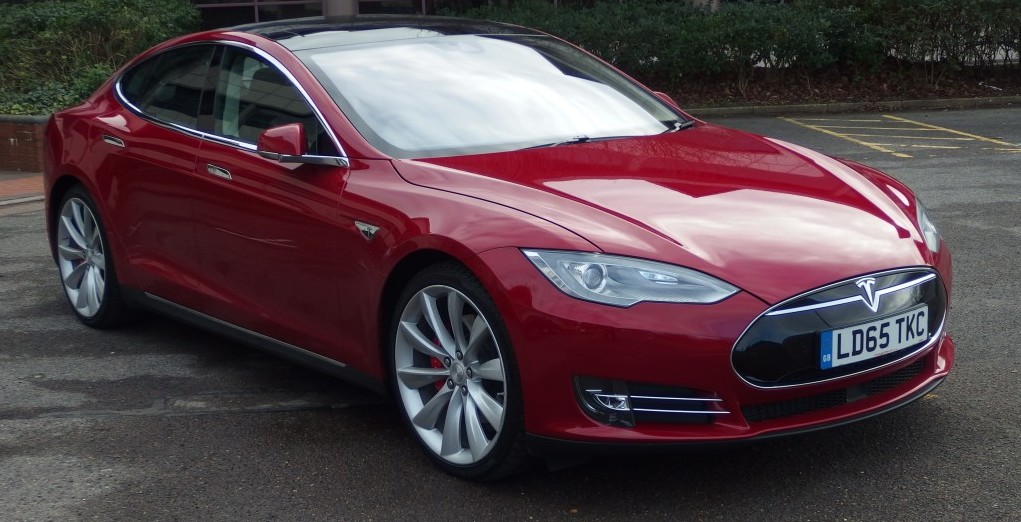
Over the past months, I have been given the amazing opportunity to test five of these vehicles, from the quirky two seater Renault Twizy to the awesome BMW i8. However nothing was going to prepare me for the most recent vehicle, designed and built by a Silcon Valley based company headed up by Elon Musk who spends the other half of his day heading up SpaceX, the private space rocket business.
It’s been a great year reviewing such a wide range of gadgets from smart watches to high end sports cars. It’s been quite a ride, I’ve really enjoyed the whole experience, so thank you to all involved from BBC Radio Suffolk to the PR agencies and companies that have been so generous allowing me to try out all the wonderful tech!
This morning I spoke to Mark Murphy about my favourite gadgets of the year and the Gadget which won the gadget of the Year.
Smart Watches
We have a lot of fun reviewing some smart wear. We reviewed the Samsung Gear 2, Sony Smartwatch 2 and Sony Smartband. My favourite was the Gear 2, purely for James Bond features. However we have been asking to review other watches, but none have been sent out. Let’s hope this improves next year.
Samsung Galaxy Gear 2 – Wearable of the Year 2014
Sony Smartwatch 2
Sony Smartband
Smart Phones and Tablets
We were never short of phones and tablets which is not surprising given the size of the marketplace. HTC, Samsung, LG, Asus, Nokia and Motorola all supplied us with review units. HTC phones exhibited the best built quality and screen sharpness. LG had the best screen of the two Quad HD displays (the other being the Galaxy Note 4). Motorola was the best value for money with it’s Moto G.
Overall, our favourite handset started and remained the Nokia Lumia 1520. A six inch incredibly vibrant screen, superb battery life and exquisite camera. Although very large, it was by far the nicest of the all the handsets we reviewed
We also reviewed three tables, the Samungs Galaxy Tab Pro 12.2, the Nokia Lumia 2520 and the Asus Transformer. The Tab Pro 12.2 was our favourite with massive 12.2 inch screen with better than HD quality, the Nokia 2520 with Windows 8.1RT on board was close behind.
HTC One M8 HTC One Mini 2 Nokia Lumia 1520 – Smart Device of the Year 2014 Sony Xperia Z2 Moto G Samsung Galaxy Tab Pro 12.2 Nokia Lumia 2520 Tablet Nokia Lumia 630 Asus Zenfone 6 Asus Transformer LG G3 Asus Zenfone 5 Samsung Galaxy S5 Samsung Galaxy Alpha Samsung Galaxy Note 4
Cameras
We reviewed a number of cameras this year, as expected the GoPro models come ahead of most others for their durability and quality of movies and photos. The Samsung Galaxy Camera 2 was excellent and was a fully functional Android device to boot. The Sony Actioncam was good, but kept fogging up which spoilt most of it’s footage. The Autographer was…. weird.
GoPro Hero 3+ Black Edition – Camera of the Year 2014 Samsung Galaxy Camera 2 Sony Actioncam Autographer BT Homecam GoPro Hero Selfie Stick
Electric Bikes
I loved reviewing the electric bikes this year. I started out with the mindset that electric bikes would be a welcome relief from simply reviewing mobile phones for a year, but I ended up extending my ‘E’ vehicle reviews to cars. It was thoroughly interesting and liberating to get out in the Suffolk countryside and off the beaten track to test out these bikes. The Sparta is not really designed for off-road, but was capable and fast used for travelling to work. The Smart Ebike was fabulous and I loved every minute of using it, especially off-road. The Batribike was excellent in every area, I only marked if down for off-road use, but this was a little unfair as it had road tyres.
Sparta Ion/RX+ Smart Ebike – Ebike of the Year 2014 – Joint Winner Batribike Granite Pro – Ebike of the Year 2014 – Joint Winner
Electric Cars
This was an amazing experience from the beginning. The Renault Twizy was small and exciting to drive, but really only designed to replace moped type use. The Renault Zoe was an excellent car, out of all, this was the one car which could truly offer and alternative to fossil fuelled cars both in size and price. The BMW i3 was interesting and very fast. Design wise it hardly resembled an standard BMW but it was high spec and beautiful to drive. The BMW i8 was outstanding to look at and drive. It was like sitting in Red 5 at the end of Star Wars Episode IV, and the most exhilarating drive so far (electric car wise). I didn’t get to test the Tesla Model S this year, but in a week or so, I am looking forward to reviewing it.
I also got to experience 3 AMG ‘normally’ aspirated vehicles. I say normal, there was nothing normal about these vehicles. I experienced the G63 (G Wagon), the S63 and the C63 Edition 507. The C63 was simply mind shattering. When a manufacturer electronically limits to the top speed to 171mph, you know something is afoot.
Renault Twizy
Renault Zoe
BMW i3
BMW i8 – Car of the Year 2014
The Rest
I got to test out other gadgets and gizmos, ranging from domestic gadgets to toys and drones. The drones were fun, but in some cases difficult to control. The Ankidrive was fun and the Samsung Smart TV with Soundbar was very cool indeed. However, by far the best gadget we tried out was the iRobot Roomba 880. This is a fantastic vacuum cleaner and has remained in use at least three times a day since July this year. It does a brilliant job of vacuuming up just about any type of debris on any surface. It was fantastic!!
iRobot Roomba 880 – Winner Samsung Smart TV and Soundbar Ankidrive Parrot AR.Drone 2.0 Parrot Jumping Sumo
Overall Gadget of the Year 2014
The Gadget Man – Gadget of the Year 2014 – iRobot Roomba 880
We’ve certainly tried and tested many gadgets this year. Some were disappointments, some were surprising successes. But at the end of the year, you simply have to hand the Gadget of the Year award to a recipient that deserves it for providing above and beyond expectation. With this in mind, we simply have to award the Gadget of the Year Award 2014 to iRobot Roomba 880. It’s a fantastic piece of equipment which has genuinely helped us around the house.