Category Archives: Gadgets

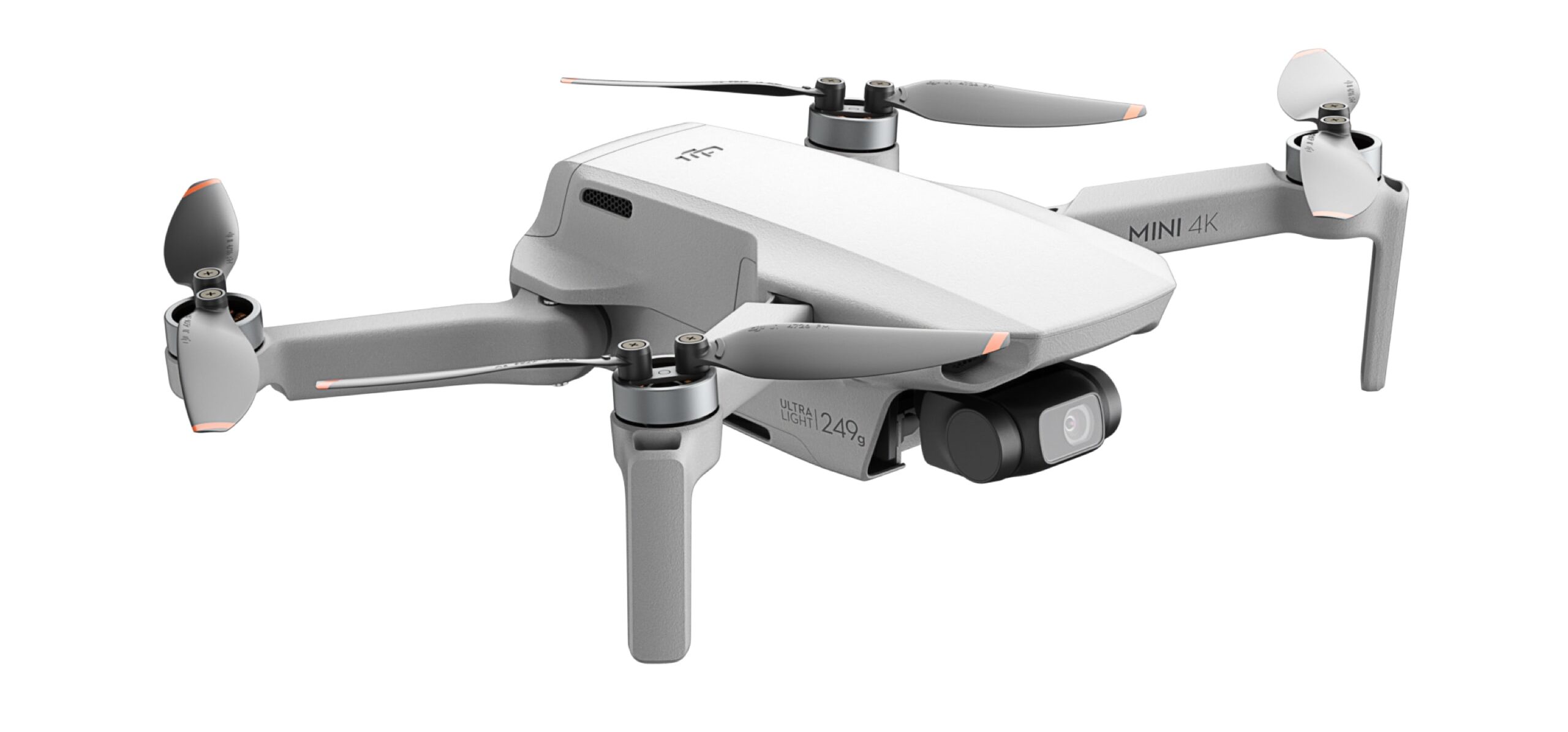
DJI Mini 4K Fly More Combo Review: Proper 4K Drone Flying on a Sensible Budget

I have been flying drones for quite a few years. I previously held a Permission for Commercial Operations, better known as a PfCO, and have owned or flown aircraft including the DJI Phantom 3, Inspire 1 and Mavic Pro Platinum.

Those were all impressive machines, but they were also relatively large, expensive and accompanied by a fair amount of equipment. Taking the Inspire 1 out for a flight, in particular, felt more like organising a small expedition than grabbing a camera for an afternoon walk.

The DJI Mini 4K Fly More Combo represents a very different kind of drone ownership. It is compact, remarkably light, capable of recording genuine 4K video and, most importantly, affordable enough to open aerial photography to a much wider audience.

Small Drone, Serious Camera

The DJI Mini 4K weighs approximately 246g, including its battery, propellers and a microSD card. Folded, it is small enough to fit comfortably into the supplied shoulder bag without dominating everything else you are carrying.

Despite its size, this is not a toy drone.

It uses a 12-megapixel, 1/2.3-inch CMOS sensor and can record video at up to 4K resolution at 30 frames per second. It also supports 2.7K and Full HD recording at up to 60 frames per second, along with JPEG and DNG RAW photography.

The camera is mounted on a proper three-axis mechanical gimbal, which makes an enormous difference. Rather than the shaky, electronically stabilised footage associated with cheaper drones, the Mini 4K can produce smooth, cinematic-looking movement when flown carefully.

The footage is crisp, colourful and more than good enough for holidays, social media, YouTube videos, property footage and general content creation. It does not offer the larger sensor, HDR modes or advanced colour profiles found on DJI’s more expensive models, but that is missing the point. For the size and price, the results are extremely impressive.

Familiar DJI Flying Experience

Having previously flown the Phantom 3, Inspire 1 and Mavic Pro Platinum, the Mini 4K immediately feels familiar.

The DJI Fly app provides a clear live view, camera controls, flight information and access to the drone’s automated functions. Take-off and landing can be performed with a tap, while GPS positioning and downward vision sensors help the aircraft hover steadily.

DJI’s Return to Home feature is also present. This can automatically bring the aircraft back towards its recorded home point if the battery becomes low, the connection is lost or the pilot activates the function manually.

The Mini 4K uses DJI’s O2 transmission system. Although DJI advertises a maximum transmission distance of 10km under FCC conditions, the official maximum under the CE standard used in the UK is 6km in an unobstructed, interference-free environment. In practice, pilots must always maintain direct visual contact with the aircraft, so this specification is primarily an indication of connection strength rather than a suggested flying distance.

What matters is that the video connection feels reassuringly solid for a drone at this price.

DJI Mini 4K Fly More Combo Review: Proper 4K Drone Flying on a Sensible Budget

More Capable Than Its Size Suggests

DJI quotes a maximum flight time of 31 minutes per battery under controlled conditions. Real-world flight time will naturally be lower once wind, manoeuvring, recording and a sensible landing reserve are taken into account, but it still provides enough time to plan and capture a useful selection of shots.

The drone is also rated for Level 5 wind resistance, equivalent to approximately 38kph or 10.7 metres per second. That does not mean I would recommend sending such a light aircraft into difficult weather, but it is reassuring to know that the Mini 4K has enough power to remain stable when conditions are less than perfect.

Several automated QuickShots are available, including Dronie, Helix, Rocket, Circle and Boomerang. These allow beginners to create impressive reveal shots and sweeping camera movements without having to master every control input immediately.

Panorama modes, automatic exposure bracketing and RAW photography provide additional creative flexibility for stills photographers.

Why the Fly More Combo Makes Sense

The basic Mini 4K package will get you flying, but the Fly More Combo is the version I would recommend.

It includes three Intelligent Flight Batteries in total, a two-way charging hub, a shoulder bag, additional propellers and other useful accessories.

Having several batteries changes the experience completely. Instead of travelling somewhere, flying for a short period and packing everything away, you can swap batteries and continue shooting.

The charging hub also keeps the batteries organised and charges them sequentially. The supplied bag is compact but large enough to carry the aircraft, controller, charging hub, batteries, cables and spares as a single kit.

For anyone planning to use the Mini 4K regularly, the Fly More Combo offers considerably better practicality than buying the drone alone.

DJI Mini 4K Fly More Combo Review: Proper 4K Drone Flying on a Sensible Budget

The Importance of Being Under 250g in the UK

The Mini 4K’s sub-250g weight is one of its biggest attractions, particularly for UK pilots.

A drone below 250g can be flown in the A1 Open subcategory, allowing it to be operated closer to uninvolved people than heavier legacy drones. It can also be flown over individual uninvolved people, although pilots should minimise this wherever possible and must never fly over crowds.

That flexibility opens many more possibilities for recreational flying, travel photography and lower-risk commercial work. It makes spontaneous flying far more practical than it was with aircraft such as the Phantom, Inspire or original Mavic.

However, sub-250g does not mean rule-free.

Under the current UK rules, anyone flying a drone weighing 100g or more must hold a Flyer ID. Because the Mini 4K has a camera, its operator must also have an Operator ID and display that ID correctly on the aircraft. Pilots must remain below 120 metres, keep the drone in direct visual sight, avoid restricted airspace and respect other people’s privacy.

Anyone buying a Mini 4K should read the latest CAA Drone and Model Aircraft Code before flying.

What Is Missing?

The most obvious omission is obstacle avoidance.

The Mini 4K has downward sensing to help with positioning and landing, but it does not have forward, backward or omnidirectional obstacle detection. The pilot is responsible for watching for trees, cables, buildings and other hazards.

It also lacks advanced subject tracking and some of the intelligent camera features found on DJI’s more expensive Mini models.

Those limitations are entirely understandable at this price, but beginners should not mistake its stable hovering and automated modes for complete autonomy. It still needs to be flown carefully and responsibly.

Gadget Man Verdict

The DJI Mini 4K Fly More Combo is one of the easiest ways to begin taking aerial photography seriously without committing to an expensive professional drone system.

It combines a proper three-axis gimbal, sharp 4K video, RAW photography, reliable DJI flight controls and useful automated shooting modes in an aircraft weighing less than 250g.

Coming from the Phantom 3, Inspire 1 and Mavic Pro Platinum, I am genuinely impressed by how much capability DJI has compressed into such a small package. Those larger drones still have their strengths, but the Mini 4K is far easier to carry, quicker to deploy and much less intimidating to use.

Most importantly, it opens up the possibilities of drone flying on a sensible budget. You can put the entire Fly More kit into one small bag, take it on a walk or holiday and capture viewpoints that would once have required a far larger and more expensive aircraft.

For newcomers, it is a superb introduction to proper camera drones. For experienced pilots, it is an affordable and highly portable aircraft that can be kept ready for occasions when carrying a full-size drone simply is not practical.

The lack of obstacle avoidance means you need to fly with care, but viewed as an entry-level 4K camera drone rather than a stripped-down professional model, the DJI Mini 4K Fly More Combo is extremely easy to recommend.

Gadget Man Rating: 9/10

Positives

  • Genuine 4K video recording
  • Smooth three-axis mechanical gimbal
  • Less than 250g
  • Compact and easy to carry
  • Three batteries in the Fly More Combo
  • RAW photography and panorama modes
  • Familiar and reliable DJI flight experience
  • Excellent value for new and returning pilots

Considerations

  • No forward or omnidirectional obstacle avoidance
  • No advanced subject tracking
  • Smaller camera sensor than premium DJI Mini models
  • Flyer ID and Operator ID are still required in the UK

The DJI Mini 4k was available from Amazon at time of review

Robot Beggars, QR Codes and the Strangest Glimpse Yet of the AI Future

There are some news stories that make you stop, read the headline again, and then wonder whether you have accidentally fallen asleep in front of an episode of Black Mirror.

This is one of them.

According to Oddity Central, humanoid robots have reportedly been spotted on the streets of several Chinese cities, apparently begging for money with signs asking passers-by to help pay their electricity bills.

Yes, you read that correctly.

Not a human asking for spare change. Not even one of those slightly unsettling robot dogs trotting around with a camera on its back. A humanoid robot, kneeling or crouching in the street, complete with a QR code for digital donations and messages such as “Please pay my electricity bill”.

It is funny, bleak, clever and faintly horrifying all at the same time.

Humanoid robots have reportedly been spotted begging on Chinese streets. Is it a stunt, social commentary, or a strangely perfect symbol of the AI age?

The future has arrived, and it wants a top up

The reported scenes are almost too perfect as a piece of modern satire. A robot, presumably worth thousands of pounds, sitting on the pavement asking humans to help it recharge.

If Charles Dickens were alive today, he would probably be writing about a small Victorian automaton clutching a tin cup outside a data centre.

The reports suggest that these “robot beggars” have appeared in cities including Beijing, Chengdu and Fuzhou. Some appear to be posed with bowed heads, others with signs, bowls, QR codes and digital payment details.

Of course, the big question is whether this is real begging, performance art, marketing, or simply somebody with a very expensive sense of humour.

My money is on stunt or social commentary.

And in many ways, that makes it even more interesting.

The QR code is the clever bit

The most modern detail in the whole thing is not the robot. It is the QR code.

That tiny square turns the whole scene from a daft novelty into something strangely plausible. A robot begging for power while accepting digital payments feels like a perfect little snapshot of where technology is going.

It is absurd, but only just.

We already live in a world where buskers, cafés, market stalls and even charity collectors use contactless payments. In China, mobile payments are deeply embedded in daily life, so a begging robot with a QR code is not as far fetched as it might first appear.

The technology is not really the shocking part.

The shocking part is how quickly we accept it.

A decade ago, this would have looked like a comedy sketch. Today, people are debating whether the robot is genuine, whether it is an art installation, whether it is a marketing campaign, and whether even begging has now been automated.

That last point is obviously ridiculous.

But also, somehow, not ridiculous enough to dismiss completely.

Are robots really coming for every job?

The lazy version of the AI debate is that robots are coming for factory workers, call centre staff, writers, designers, drivers and anyone who has ever touched a spreadsheet.

But a begging robot flips the whole conversation on its head.

Nobody seriously expected “street beggar” to appear on the great AI replacement list. Yet here we are, staring at photos and videos of humanoid machines apparently asking humans for money.

It is probably not a new economic model. I doubt anyone has run the numbers and decided that placing a Unitree humanoid on a pavement is the fastest route to financial independence.

These machines are still expensive, and they are not exactly discreet. You would need a lot of generous pedestrians to cover the cost of the robot, let alone its maintenance, transport and charging.

But as a symbol, it is brilliant.

It says: if a robot can be made to mimic labour, service, companionship, entertainment and now even desperation, where exactly do we draw the line?

The unsettling human reaction

What fascinates me most is not the robot itself, but how humans react to it.

Do people laugh?

Do they feel sorry for it?

Do they scan the QR code?

Do they take photos and walk away?

We are very good at projecting feelings onto machines. Give a robot a face, a posture and a slightly pathetic sign, and suddenly we start treating it as something more than plastic, metal, servos and software.

This is why robot dogs feel different from wheeled drones. It is why humanoid robots attract so much attention. They borrow just enough from us to make our brains do the rest.

A robot kneeling on a pavement does not need to be sentient to make people uncomfortable. It only needs to look like it is asking.

That is where the story becomes less about robotics and more about us.

Art, marketing or warning?

There is every chance these robot beggars are not what they appear to be. The Oddity Central story itself notes that people online have questioned the authenticity of the trend, with some suggesting that the robots may be art installations designed to make people think about the changing relationship between humans and machines.

If that is the case, then it worked.

A humanoid robot asking for electricity money is a wonderfully simple idea. It compresses dozens of modern anxieties into one image:

AI replacing people.

Machines becoming more lifelike.

Humans becoming more detached.

The gig economy becoming stranger.

Digital payments replacing cash.

Technology needing constant feeding.

And perhaps most importantly, our endless ability to turn almost anything into content.

Because whatever the original intention, the robots have done what all successful modern spectacles do: they went viral.

The Gadget Man view

I do not think this means we are about to see robot beggars on every high street.

At least, not yet.

But I do think it shows how quickly humanoid robots are moving from laboratory curiosities into public imagination. Whether they are used for research, marketing, entertainment, public service or bizarre street theatre, they are becoming more visible.

And visibility matters.

Once people see robots in public spaces, they stop being abstract. They become part of the mental furniture of everyday life. The first time you see one, you take a photo. The tenth time, you step around it on your way to buy a sandwich.

That is how the future usually arrives. Not with one enormous leap, but with a series of odd little moments that make us say, “Well, that’s new.”

A robot begging for electricity money may not be the future of poverty, employment or AI.

But it might be one of the strangest warning signs yet that the AI revolution is not going to stay neatly tucked away inside laptops, smartphones and cloud servers.

Sooner or later, it will be sitting on the pavement, holding up a sign, and asking us to scan a QR code.

And knowing us, somebody probably will