Apple has finally done it.
After years of watching Samsung, HONOR and others develop folding smartphones, Apple has unveiled the iPhone Duo, its first foldable iPhone.
And whatever you think about Apple, this is quite an important moment.
Not necessarily because Apple has invented something new. It hasn’t. Folding smartphones have been around for years.
What Apple has done is tell an enormous number of people who may previously have dismissed foldables as expensive experiments that this particular form factor is now ready for the mainstream.
Suddenly, someone who would never previously have searched for a folding phone may be wondering whether their next smartphone should open up into something approaching a small tablet.
And that raises a rather obvious question.
If the iPhone Duo has made you interested in buying a foldable, do you automatically need to buy Apple’s one?
Apple’s first foldable enters a very established market
Apple announced the iPhone Duo on 9 September. It has a 5.4-inch outer display which unfolds to reveal a 7.6-inch internal screen, runs Apple’s new A20 Pro chip and introduces a version of iOS specifically adapted to take advantage of the folding design.
It certainly looks interesting.
It is also going to start at £1,999 for the 256GB model, with pre-orders beginning on 16 October and availability from 23 October.
Two thousand pounds is a lot of money for a phone.
More importantly, though, this is Apple’s first attempt at producing a foldable.
That doesn’t necessarily mean it will suffer from all the usual problems associated with a first-generation product. Apple has spent plenty of time watching the market develop and has a habit of entering an established category only when it believes it has found the right way of doing things.
But Apple isn’t entering an empty market.
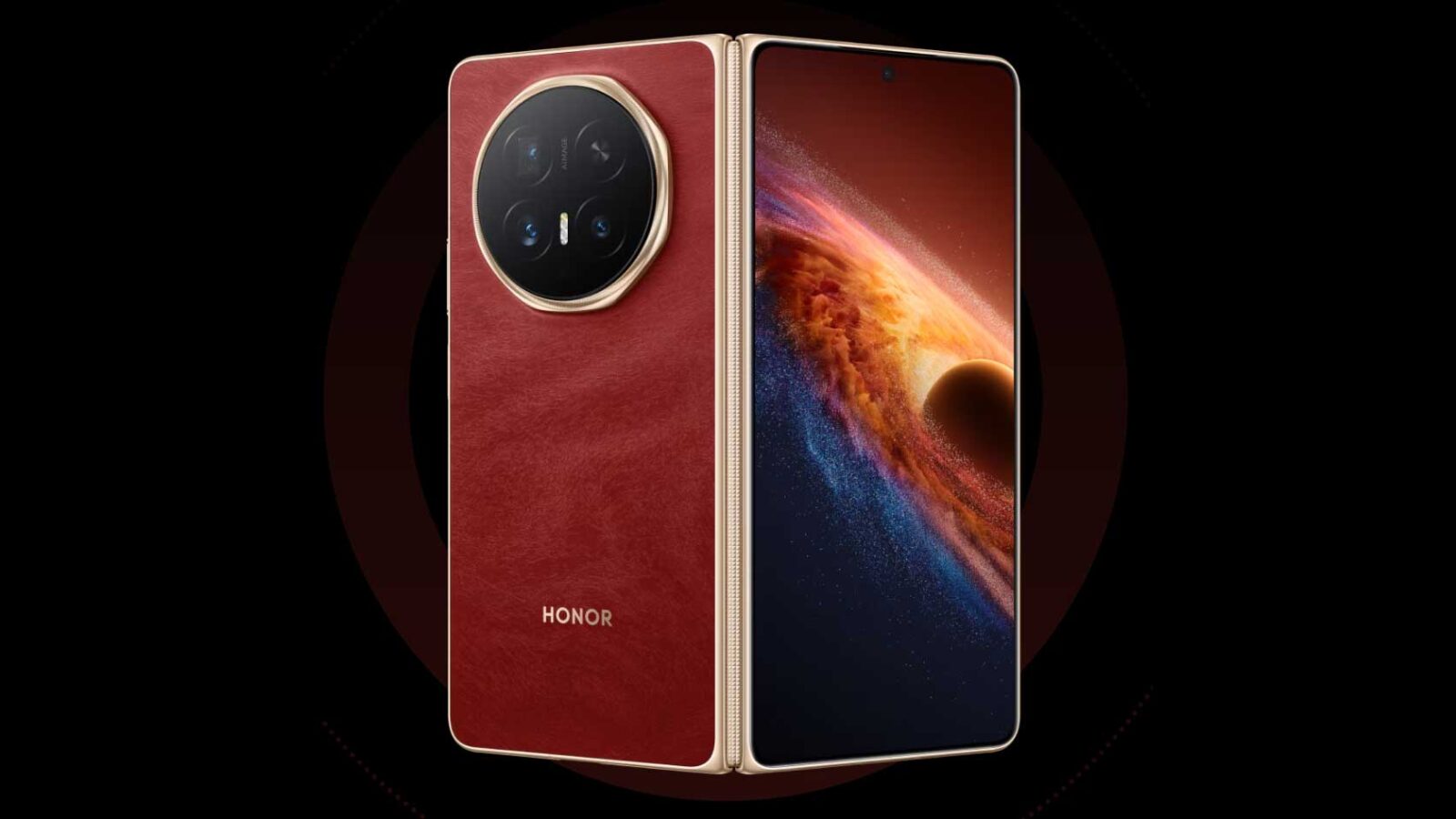
Companies such as HONOR have already spent several generations working out how thin a folding phone can be, how the hinge should work, how large the battery can become and, perhaps most importantly, how to make a foldable feel less like a technological experiment and more like an ordinary phone which happens toMobile, Smart Phone, Technology have a very large screen hidden inside it.
Which brings me to the HONOR Magic V6.
The numbers are getting rather silly
There was a time when owning a folding phone meant accepting that you were going to carry something resembling two smartphones strapped together.
That is becoming much less true.
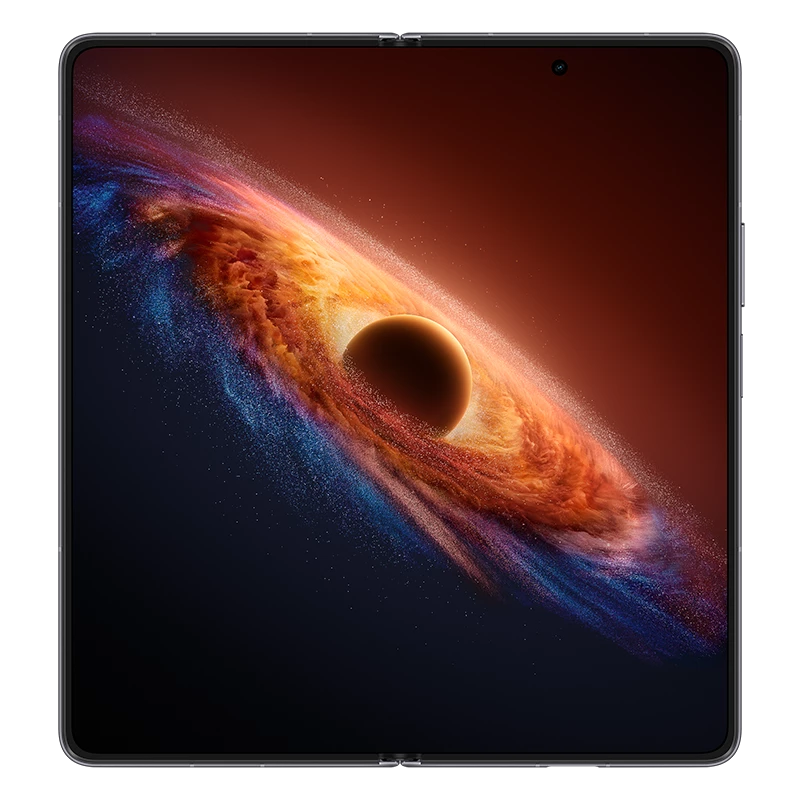
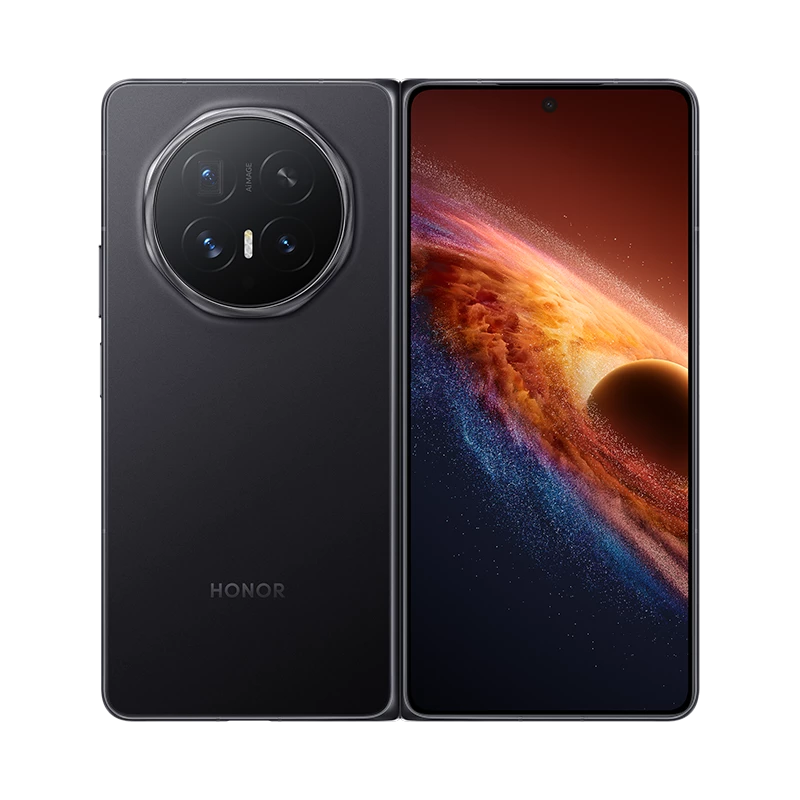
HONOR says the Magic V6 measures just 8.75mm thick when folded, opening to only 4.0mm, with the white version weighing 219g.
Think about that for a moment.
This is a device containing two displays, a complicated hinge mechanism and a 6,660mAh battery, yet HONOR has managed to get the folded thickness below 9mm.
Inside is a 7.95-inch folding display, while the outside has a 6.52-inch screen.
And I think that outer display matters more than it might initially appear.
One of the potential problems with foldables has always been the temptation to treat the outside screen as something you tolerate until you open the device.
At 6.52 inches, the Magic V6’s exterior display is essentially a normal smartphone screen.
You don’t need to unfold it every time you want to send a message, check an email or look something up.
But when you do want more space, that 7.95-inch display is waiting inside.
That, to me, is when the folding concept starts making considerably more sense.
Battery technology has changed too
Fitting a large battery into something this thin is another area where the technology has moved on enormously.
The Magic V6 uses a 6,660mAh silicon-carbon battery, with HONOR claiming up to 24 hours of continuous use of the internal display.
There is also 80W wired charging and 66W wireless charging.
The important thing here isn’t simply that 6,660 is a bigger number than another number.
Silicon-carbon battery technology allows manufacturers to increase energy density without simply making the physical battery larger.
For a conventional smartphone that is useful.
For a foldable, where practically every fraction of a millimetre matters, it becomes particularly important.
This is exactly the sort of engineering development that comes from manufacturers having spent years working on the problems peculiar to folding devices.
Then there is the hinge
The hinge has always been the slightly worrying bit of a foldable phone.
A conventional smartphone doesn’t contain a large mechanical joint running through the middle of its most expensive component.
A foldable does.
HONOR says the Magic V6’s Super Steel Hinge has been tested to withstand 500,000 folds, and the phone carries both IP68 and IP69 dust and water resistance ratings.
Obviously I haven’t personally attempted to fold one half a million times, nor would I particularly like to volunteer for the job.
But the interesting point is how much the conversation around foldables has changed.
A few years ago the question was whether folding screens could survive ordinary everyday use at all.
Now manufacturers are talking about hundreds of thousands of folds, water resistance, scratch resistance, drop protection and almost invisible display creases.
The experimental phase is disappearing rather quickly.
It is also a proper flagship phone
There is little point having an enormous folding display if everything behind it feels compromised.
The Magic V6 uses Qualcomm’s Snapdragon 8 Elite Gen 5 platform and HONOR is very clearly positioning the device as a productivity machine rather than simply something impressive to unfold in the pub.
There is also a 64-megapixel periscope telephoto camera, together with the increasingly inevitable collection of AI-assisted photography and productivity features.
But the thing that caught my attention wasn’t actually the processor, camera or even the battery.
It was Apple.
HONOR seems rather keen on Apple users
One of the most interesting sections of HONOR’s Magic V6 material actually describes the phone as “The Best Companion for Apple Devices.”
That seems an unusual thing for an Android smartphone manufacturer to shout about.
HONOR says the Magic V6 can work alongside the iPhone, iPad, AirPods, Apple Watch and Mac, including notification sharing between devices and the ability to use the unfolded Magic V6 as an additional display for a Mac.
There is something quite significant happening here.
Historically, the strongest argument for remaining with an iPhone hasn’t necessarily been the iPhone itself.
It has been everything surrounding it.
You might own AirPods, an Apple Watch, a MacBook and an iPad. Your photographs are in iCloud. Your messages synchronise. Your devices know about each other.
At that point, changing one device can feel rather like pulling a brick out of a wall and hoping everything else remains standing.
HONOR appears to understand that.
Rather than simply telling Apple users to abandon everything and come over to Android, it is trying to make the walls between those ecosystems rather less solid.
I would be particularly interested to see how well that works in reality.
And then there is the price
This is where things become particularly interesting.
Apple’s iPhone Duo starts at £1,999.
The official UK price of the HONOR Magic V6 is £1,999.99, so on paper there is practically nothing between them.
However, at the time of writing, HONOR is advertising an additional £500 discount through its UK store.
That immediately changes the conversation.
When you’re talking about devices at this end of the market, £500 isn’t exactly loose change found behind the sofa.
Check the current HONOR Magic V6 price and offers
HONOR says the Magic V6 can work alongside the iPhone, iPad, AirPods, Apple Watch and Mac, including notification sharing between devices and the ability to use the unfolded Magic V6 as an additional display for a Mac.
Offers change, of course, so it is worth checking the current price rather than assuming today’s promotion will still be available when you read this.
But it illustrates something important.
Apple may have created a lot of new interest in foldables, but there is already a very competitive market waiting for those potential customers.
This isn’t really about Apple versus Android
I don’t think the interesting question here is whether HONOR has “beaten” Apple or whether Android is better than iOS.
Those arguments tend to become rather tribal and rarely produce anything particularly useful.
The interesting thing is that Apple’s arrival changes the perception of the entire category.
For years, folding phones could be dismissed as niche devices for enthusiasts prepared to spend a lot of money on something unusual.
Apple has now effectively said that the format has a future.
That sends a lot of people looking at foldables for the first time.
And once they start looking, they are going to discover that Apple isn’t the beginning of this particular story.
It is joining halfway through.
The HONOR Magic V6 represents years of manufacturers experimenting with folding displays, hinges, batteries, cameras, software and materials and gradually removing many of the compromises that came with the earliest devices.
Does that make the Magic V6 better than the iPhone Duo?
I don’t know.
I haven’t had the opportunity to spend enough time with either device to make that judgement, and I’m certainly not going to pretend that I have.
But looking at what HONOR has managed to squeeze into something only 8.75mm thick, I would very much like to find out.
Apple may have just done its competitors a favour
There is a slightly amusing possibility in all of this.
Apple will undoubtedly spend an enormous amount of money explaining to the public why they should want a folding smartphone.
Advertisements will show people opening their phones into large displays. Apple Stores will be full of them. Reviews will explain the advantages. Television programmes and newspapers will discuss whether foldables are finally ready for ordinary consumers.
In other words, Apple is about to undertake a gigantic public education campaign on behalf of the entire foldable smartphone industry.
And some of those newly educated customers are inevitably going to look around.
When they do, phones such as the HONOR Magic V6 will be sitting there waiting for them.
Apple may have finally made the folding smartphone mainstream.
It might also have made its competitors considerably more interesting.
And I think I’d rather like to get my hands on a Magic V6 and see just how far folding phones have actually come.
Disclosure: I am a member of the HONOR affiliate programme. This article contains affiliate links. If you purchase a product through one of these links, The Gadget Man may receive a commission at no additional cost to you. This does not influence my editorial opinion, and I have not been paid by HONOR to write this article.
Discover more from The Gadget Man | AI & Tech News and Reviews | Matt Porter
Subscribe to get the latest posts sent to your email.