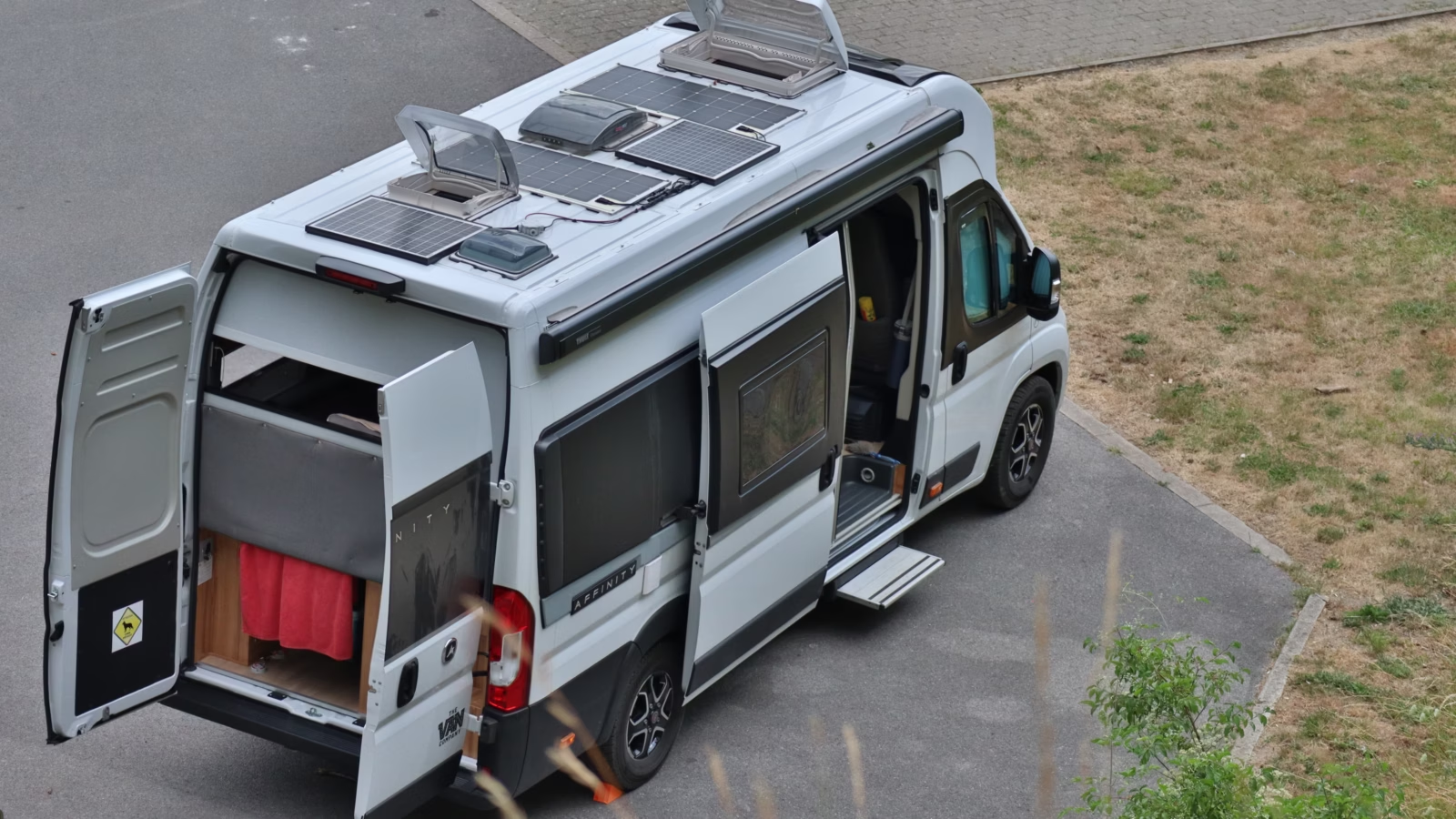
A well-designed solar inverter setup can turn a commercial van into a practical mobile workspace, supplying quiet power for laptops, lighting, chargers and specialist equipment. The challenge is keeping those devices running without overloading the inverter, flattening the battery or adding too much weight to one part of the vehicle.
Treat the panels, charge controller, battery bank, inverter and cabling as one connected system. Every component needs to suit both your daily energy use and the van’s physical limits.
Sizing Roof Panels for Continuous Inverter Load
Start with an energy audit based on watt-hours, not the inverter’s headline wattage. List each appliance, note its power draw and multiply that figure by the hours it runs each day. A 70 W laptop used for six hours consumes 420 Wh, while four 10 W lights running for five hours add another 200 Wh. Include routers, printers, chargers and ventilation equipment, then add around 15 per cent for inverter and cable losses.
Next, consider the difference between continuous output and peak demand. A 1,500 W inverter may support a collection of low-power devices comfortably, but equipment with a motor or compressor can draw much more during start-up.
Panel capacity must cover daily consumption during realistic daylight conditions. A 600 W array receiving four effective sun hours theoretically generates 2.4 kWh, although heat, shading, panel angle and charge losses reduce the usable figure. Roof vents, aerials and roof-mounted accessories can also cast small shadows with a surprisingly large effect.
Flexible and low-profile fleet solar panels may suit curved or weight-sensitive roofs. Before fixing anything in place, map the complete roof area and leave access for cleaning, inspection and future cable repairs. If winter operation matters, size the system using the poorer months instead of relying on an annual average.
Battery Chemistry Choices for Enclosed Cargo
Battery choice affects usable capacity, charging speed, maintenance and temperature tolerance. Lithium iron phosphate, often shortened to LiFePO4, is popular in mobile work setups because it offers a high usable capacity for its weight. A suitable battery management system also protects the cells against excessive charge, deep discharge, high current and unsafe temperatures.
Understanding how solar storage works can also help when planning a mobile setup, particularly when considering how surplus generation can be stored and used later. The basic principles are explained in this overview of battery storage and solar power.
Lead-acid options usually cost less at the outset, but they’re heavier and offer less usable energy from the same nominal capacity. Regularly taking a lead-acid battery below roughly half its charge can shorten its service life. A 200 Ah, 12 V bank may therefore provide close to 1.2 kWh of practical capacity, depending on its design and condition. A comparable lithium bank can generally supply a larger share of its stated 2.4 kWh capacity.
Temperature needs careful thought in enclosed cargo areas. Lithium batteries shouldn’t be charged below the limit set by their manufacturer unless the pack has low-temperature protection or heating. Lead-acid batteries need suitable ventilation where the battery type and installation instructions require it. Any battery should sit away from direct heat sources and be protected from tools, loose cargo and water.
A solar storage guide offers a useful overview of how batteries and inverters work together. Check that the charge controller, alternator charger and mains charger all support the chosen chemistry. Using the wrong charging profile can reduce capacity, trigger protective shutdowns or damage the bank over time.
Floor Space and Weight Allocation for Batteries
Plan the battery location before choosing the final capacity. A large energy bank can occupy valuable storage space and may weigh tens of kilograms, so its position affects handling, payload and access for maintenance. Check the vehicle’s plated limits, axle limits and available payload after allowing for occupants, shelving, stock, tools, water and all electrical hardware.
Mount heavy components low and close to the vehicle’s centre line where practical. This reduces their effect on the centre of gravity. Avoid placing the whole electrical system behind the rear axle, as that position can add more load to the rear axle than the component’s actual weight suggests. Secure batteries to a structure designed to take their mass during hard braking and sudden changes of direction.
Cable length matters too. Keeping the inverter near the battery reduces voltage drop on the high-current DC side, although the installation still needs suitable clearance and airflow. For example, a 2,000 W inverter operating from a nominal 12 V system may draw well over 160 A before losses are counted. That current demands correctly sized cables, short routes, sound terminations and circuit protection fitted close to the battery.
Vehicle choice sets the boundaries for the whole conversion. Businesses comparing Crafter vans for sale should look beyond the available load space and consider payload, wheelbase, roof height and the layout needed for their equipment. Different Crafter configurations offer different carrying capacities, so the weight of the batteries, panels, inverter, fittings and everyday cargo needs to be factored into the decision. A van with plenty of internal room may still have limited spare payload once the conversion is complete.
Sketch the installation to scale before ordering parts. Mark the battery enclosure, inverter, isolation points, distribution equipment and service clearance. That simple drawing often reveals blocked doors, inaccessible fuses or cable routes that would otherwise become expensive problems during fitting.
Real-Time Energy Monitoring from the Cockpit
A battery percentage on a small display is useful, but a proper shunt-based monitor gives you a much clearer picture. Installed in the battery’s negative connection, the shunt measures current flowing into and out of the bank. The monitor can then estimate state of charge and show live power use, consumed amp-hours and remaining run time.
Place the main display where it’s readable from the driving position without obstructing controls or visibility. Treat it as a stationary-use tool while parked, or rely on audible and visual alerts during travel. Many systems also send data to a phone or tablet, which can make reviewing previous days easier.
Set alarms around the operating limits of your equipment. You might configure a low-charge warning at 25 per cent, an alert for unusually high inverter draw and a high-temperature warning inside the electrical enclosure. These notifications can flag a forgotten appliance, restricted cooling vent or charging fault before work is interrupted.
Monitoring becomes more useful when you record a few normal working days. Compare solar generation on clear and overcast days, note the overnight energy loss and watch what happens when high-draw equipment starts. Suppliers of mobile solar systems show how generation, storage and load management come together in transportable installations.
Check the readings against a simple routine at the end of each shift. If the battery regularly finishes below 30 per cent, reduce consumption, add charging capacity or increase storage within the vehicle’s weight limits. If it reaches full charge by late morning, you may have spare energy for another task or scope to reduce panel capacity on a future build.
The best final test is a full working day with the van parked and disconnected from mains power. Run every normal device, record the lowest battery level and confirm that cables, terminals and the inverter remain within their specified temperatures. That trial gives you a useful baseline before the mobile workspace starts earning its keep.
Discover more from The Gadget Man | AI & Tech News and Reviews | Matt Porter
Subscribe to get the latest posts sent to your email.